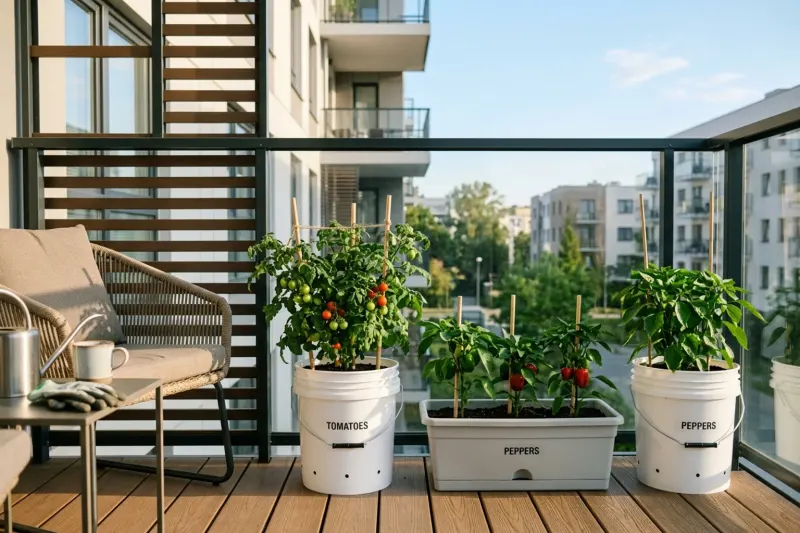
Walk down the utility aisle of any hardware store or supermarket, and you will see dozens of inexpensive plastic buckets, storage totes, and nursery containers that look tailor-made for container vegetables. When space is restricted to a small balcony, porch, or patio, lightweight plastics offer obvious advantages over heavy stone or fragile terra cotta. However, not all plastics behave identically under outdoor ultraviolet exposure, fluctuating temperatures, and the biological moisture of a living root zone. Selecting the right container requires balancing polymer stability, food-contact certifications, drainage physics, and root volume.
Decoding Resin Identification Codes on Plastic Pots
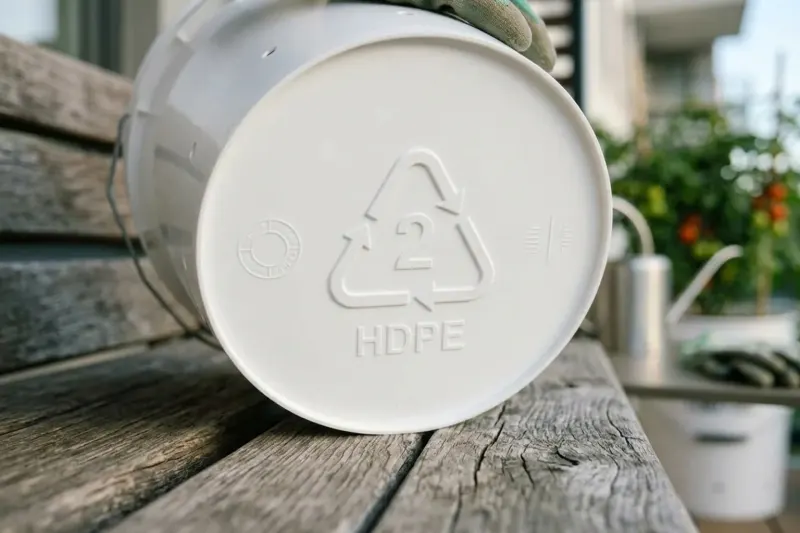
Every manufactured plastic container usually features an embossed Resin Identification Code (RIC): a number from 1 to 7 enclosed by a triangle of chasing arrows. Originating under the Society of the Plastics Industry and standardized by ASTM International, these numbers identify the base polymer rather than the container's safety for food contact. Understanding the underlying chemistry helps gardeners eliminate high-risk materials before planting.
| Resin Code | Polymer Type | Outdoor Stability | General Food-Gardening Suitability |
|---|---|---|---|
| #1 | Polyethylene Terephthalate (PETE/PET) | Moderate; breaks down under sustained solar UV | Short-term seed starting only; avoid multi-season outdoor use |
| #2 | High-Density Polyethylene (HDPE) | High; rigid, weather-resistant, non-porous | Recommended for long-term multi-season outdoor vegetable production |
| #3 | Polyvinyl Chloride (PVC) | Variable; often formulated with plasticizers | Avoid for food crops; plasticizer additives can migrate |
| #4 | Low-Density Polyethylene (LDPE) | High; flexible, moisture-resistant | Recommended for fabric-lined planters, grow bags, and tub liners |
| #5 | Polypropylene (PP) | High; heat tolerant, sturdy outdoor life | Recommended for standard nursery containers, tubs, and self-watering pots |
| #6 | Polystyrene (PS) | Low; brittle, photo-degrades readily in sunlight | Avoid for food crops; crumbles and sheds microplastics rapidly |
| #7 | Other (Polycarbonate, acrylic, blends) | Unpredictable; includes mixed or unclassified resins | Avoid unless explicitly verified BPA-free and certified food-contact safe |
High-density polyethylene (#2 HDPE) and polypropylene (#5 PP) represent the most reliable plastics for outdoor edible production. University cooperative extensions highlight these two polymers because their molecular structure remains chemically inert across typical environmental soil temperatures. Conversely, #3 PVC often includes phthalates to increase flexibility, and #6 Polystyrene photo-oxidizes when exposed to direct sunlight, causing mechanical embrittlement and shedding fine plastic fragments into potting media.
The Distinction Between Food-Grade and Utility Plastics
A common point of confusion among small-space growers is the difference between a standard recycling number and a genuine food-grade rating. An unrated hardware-store bucket and a bakery ingredient pail can both carry an embossed #2 HDPE stamp on the bottom. However, the resin code alone does not confirm that the final vessel is safe for continuous food contact.
Industrial utility buckets are routinely manufactured with chemical mold-release agents to speed up separation from metal injection molds. These industrial release chemicals, along with non-food-safe colorants and unverified recycled resin streams (regrind), are not evaluated under Title 21 of the Code of Federal Regulations (21 CFR Parts 174–178). In contrast, true food-grade plastic containers are manufactured using virgin resin pellets, certified food-safe dyes, and tested mold-release lubricants.
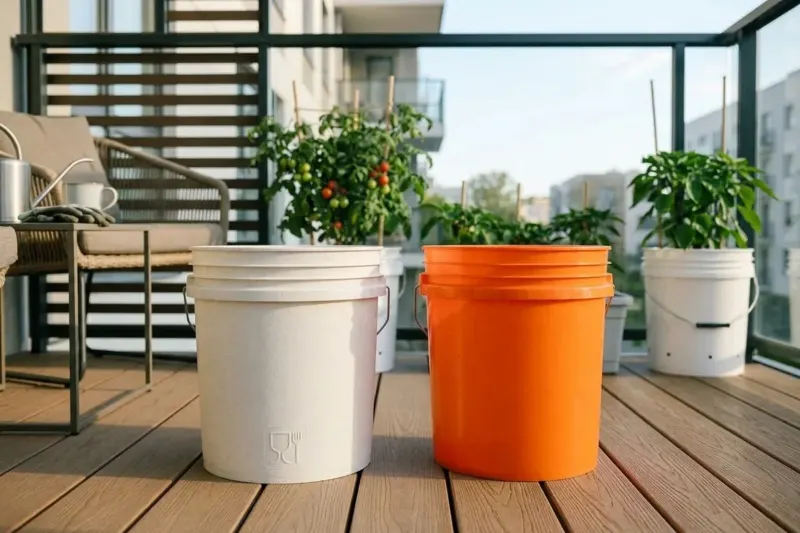
To verify that a container meets food-contact benchmarks, look beyond the triangular resin code. Examine the bottom base for explicit text stating 'Food Safe' or 'Food Grade,' the international cup-and-fork symbol, or an NSF International (National Sanitation Foundation) certification stamp. Agricultural supply houses, restaurant supply stores, and packaging distributors stock buckets bearing these verifiable designations. When using standard non-food-certified utility pails, gardeners accept an unverified variable: while the core HDPE polymer is chemically stable, secondary manufacturing additives remain unregulated.
Sourcing and Repurposing Used Containers Responsibly
Repurposing existing containers is an economical, sustainable way to build a productive vegetable garden on a small patio. However, container history dictates whether a used plastic tub is safe for edibles. Plastics are semi-permeable polymers that can absorb volatile organic chemicals, hydrophobic compounds, and petroleum residues into their surface matrix over extended contact.
Clean restaurant supply buckets—such as 5-gallon (19-liter) pails originally used to hold bulk pickles, soy sauce, frosting, or cooking oil—represent exceptional upcycled planters. These vessels are guaranteed virgin food-grade HDPE (#2) or PP (#5). Bakeries and commercial kitchens frequently discard dozens of these pails weekly and will often supply them to home gardeners at no cost or for a minimal donation.
Conversely, you should never repurpose buckets or storage totes that previously held commercial paint, drywall compound, pool chemicals, motor lubricants, or synthetic herbicides. Cleaning, scrubbing, or pressure-washing with household detergents does not reliably remove chemical residues that have diffused into the micro-pores of the container wall. Once filled with damp, biologically active potting soil, these absorbed chemicals can leach back out into the root zone.
Drainage Mechanics, Soil Volume, and Thermal Dynamics
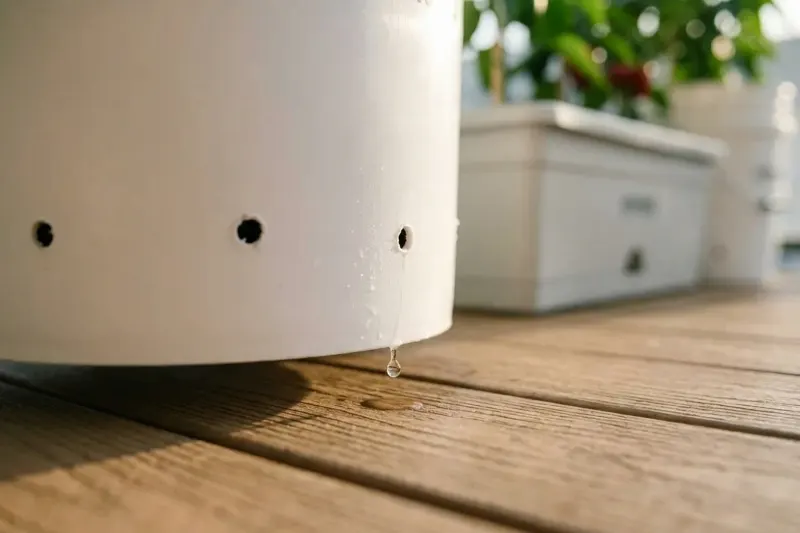
Even the safest food-grade plastic container will cause plant failure if root aeration, soil capacity, and solar exposure are mismanaged. Unlike porous unglazed clay or breathable geotextile fabric, solid plastic walls do not allow lateral gas exchange or moisture evaporation. All drainage and root respiration must happen through deliberate drainage openings and surface evaporation.
When converting solid-bottom pails or totes into planters, drill four to six 1/2-inch (12 mm) holes evenly spaced around the outer perimeter of the bottom base, plus two to four holes through the bottom itself. Placing drainage holes slightly up the lower sidewall (approximately 1/2 inch from the base) creates a tiny emergency reservoir while preventing the container bottom from sealing flat against smooth patio surfaces.
Container volume must match mature root architecture. Penn State Extension and University of New Hampshire Extension outline conservative minimum potting volumes for container crops:
- Shallow greens and radishes: 6 to 8 inches (15 to 20 cm) of soil depth in wide, shallow plastic trays or bins.
- Medium-rooted crops (peppers, bush beans, dwarf eggplants): 2 to 3 gallons (7.5 to 11.5 liters) of potting volume per plant.
- Large fruiting crops (determinate bush tomatoes, compact cucumbers, summer squash): Minimum 5 gallons (19 liters) of potting mix per plant, measuring at least 12 to 14 inches (30 to 35 cm) deep and wide.
Thermal regulation is the final critical factor in small spaces. Dark-colored plastic buckets absorb tremendous radiant energy when placed against brick walls, concrete decks, or metal balcony railings. In hot midsummer weather, root-zone temperatures inside dark plastic containers can exceed 100°F (38°C), suppressing nutrient uptake and damaging feeder roots. In intense sun, choose white, beige, or light-colored plastic containers to reflect ambient heat, or shade the container sides using a decorative burlap wrap while leaving the foliage fully exposed to sunlight.
Selecting Plastic Containers for Edible Crops
| Situation | Consider | Why |
|---|---|---|
| Growing deep-root fruiting crops (determinate bush tomatoes or eggplants) on a tight budget | Sourced 5-gallon (19 L) commercial bakery pails stamped #2 HDPE | Offers certified food-grade purity, full 12 to 14 inch depth for root spread, and heavy-duty walls at near-zero retail cost. |
| Cultivating shallow salad greens or radishes along a narrow balcony railing bench | Shallow rectangular food-storage tote or nursery flat made of #5 Polypropylene (PP) | Provides broad surface planting area with only 6 to 8 inches of soil depth, minimizing excess water retention and overall bench weight. |
| High-heat southern balcony exposure with intense midday sun reflection | White or light-colored virgin HDPE planters wrapped with exterior shade fabric | Reflects solar radiation to prevent substrate temperatures exceeding 95°F (35°C), protecting vulnerable fine feeder roots. |
| Repurposing utility storage totes found in a garage or secondhand shop with unknown history | Decline for edible vegetables; reserve exclusively for ornamental flowers | Unknown chemical storage history presents persistent contamination risks due to polymer absorption. |
Hypothetical Balcony Vegetable Station: Three-Container Food-Safe Layout
Consider a hypothetical 4-foot by 2-foot (120 cm by 60 cm) balcony nook receiving 6 hours of direct afternoon sun. The grower arranges two clean 5-gallon (19-liter) white food-grade HDPE bakery pails alongside a shallow rectangular #5 polypropylene (PP) storage bin. Sourcing empty frosting buckets from a commercial bakery often keeps acquisition costs minimal ($0 to $3 each). The grower drills six 1/2-inch (12 mm) holes around the lower sidewalls and bases of each bucket, plus eight drainage holes across the bottom of the shallow bin (estimated preparation time: 15 minutes total). Each 5-gallon bucket holds roughly 0.65 cubic feet (18.4 liters) of well-aerated potting mix; one bucket supports a dwarf determinate bush tomato ('Patio' or 'Tiny Tim') and the second holds a compact sweet pepper. The 32 cm by 40 cm polypropylene bin provides 7 inches (18 cm) of soil depth, holding roughly 0.45 cubic feet (13 liters) of mix for radishes and cut-and-come-again lettuce. The combined footprint of the three vessels measures approximately 3.8 square feet (0.35 sq m), fitting neatly within the allocated 8-square-foot space while ensuring adequate clearance for maintenance and air movement without risking chemical migration.
- 5-Gal Food-Grade HDPE Bucket (Dwarf Tomato)
- 5-Gal Food-Grade HDPE Bucket (Bell Pepper)
- Shallow #5 PP Greens Tray (Radish & Lettuce)
When this approach is not a good fit
This plastic container approach is unsuitable for high-wind rooftop sites where lightweight buckets easily topple without heavy ballast, for growers attempting to produce large taproot perennials or deep sprawling indeterminate vines that require 15+ gallons (57+ liters) of soil, or in situations where only unverified chemical-storage drums or brittle non-UV-stabilized plastics (#6 Polystyrene or unmarked totes) are available.
Sources & further reading
- Ask Extension (Cooperative Extension System): Container Vegetable Gardening in Plastic Bins
- University of New Hampshire Extension: Growing Vegetables in Containers Fact Sheet
- Penn State Extension: Container Vegetable Gardening - Four Keys to Success
- Alabama Cooperative Extension System: Five-Gallon Bucket Supply List
- University of Illinois Extension: Vegetable Containers
AI-assisted writing and concept images. Sources and automated checks support the process; they do not replace checking your own measurements.
How we create our guides · Suggest a correction