Automating property management isn't about setting up a "set it and forget it" machine; it is about building a highly complex, brittle, and human-dependent infrastructure that masks its internal chaos behind clean mobile dashboards. By 2026, the delta between those who view real estate as a service (RaaS) and those who view it as a collection of physical assets will widen. Real automation involves integrating IoT, smart locks, automated rent collection via ACH/Plaid, and predictive maintenance scheduling—all while balancing the reality that a single burst pipe at 3:00 AM on a Sunday still requires a human hand.
The Myth of "Passive" Income in 2026
The industry loves the term "passive income," but any veteran property manager will tell you that the passive nature of real estate is a function of how much you are willing to pay for management or how much you are willing to suffer through "micro-crises." Automation replaces the middleman, but it doesn't remove the responsibility.
When you automate, you aren't removing human error; you are shifting it. You are moving from a world where you personally receive a phone call about a broken sink to a world where you are debugging a failed API call between your smart lock provider and your PMS (Property Management System). The technical debt of a smart rental portfolio is rarely discussed, yet it is the primary reason why amateur investors exit the market within 24 months.
The Operational Architecture
A functional 2026 automated stack usually follows a four-pillar model:
- The Single Source of Truth (The PMS): Tools like AppFolio or DoorLoop function as the operating system. If these systems go down—which happens more often than their PR teams admit—your entire rental operation stalls.
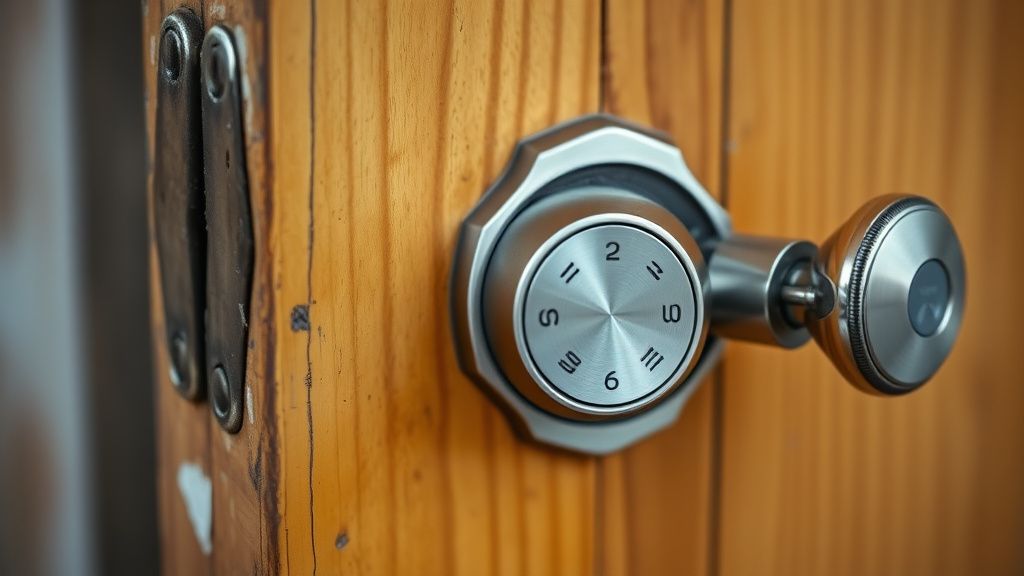
- The Physical Bridge (IoT): Smart locks (e.g., Yale, August) and noise monitoring (e.g., NoiseAware) are now table stakes for short-term and even long-term rentals.
- The Automated Collection Layer: Platforms that integrate with bank APIs to force direct debits. If rent isn't automated, your cash flow forecast is fiction.
- The Maintenance Triage: Instead of DIYing, successful operators integrate local contractor networks directly into their ticketing systems via Zapier or native API integrations.
Real Field Report: The "Integration Hell" Case Study
In early 2025, an investor managing 12 units in Austin, Texas, attempted to fully automate their move-out process. They utilized a combination of Schlage smart locks for guest entry, Airbnb/Vrbo for booking, and a custom-coded script to trigger cleaning crews on TaskRabbit via the cleaning company’s API.
The system worked perfectly for six months. Then, during a peak holiday weekend, the smart lock vendor updated their API version without backward compatibility. The result? Three separate guest parties were locked out, the automated cleaning crew was triggered three hours early while guests were still inside, and the PMS didn't report the error because the API heartbeat didn't fail—it just returned empty JSON objects.
The investor spent 48 hours manually reconciling accounts and issuing refunds. This is the "hidden" side of automation: you are now an amateur software engineer maintaining a brittle, multi-vendor ecosystem.
The Human Element: Why Tenants Hate Automation
There is a growing movement of "anti-automation" among long-term tenants. When a tenant has a problem with a radiator, they don't want to talk to an AI chatbot or fill out a Formstack submission that goes into a black hole.
We see this frequently in subreddits like r/landlord and r/PropertyManagement. Tenants are increasingly flagging "algorithmic management" as a reason for non-renewal. When you remove the human touch, you lose the ability to negotiate in good faith or understand context. If a tenant is one day late on rent because of a bank glitch, but your system automatically hits them with a $50 late fee and an eviction warning, you have destroyed the landlord-tenant relationship to save two minutes of administrative labor.
Counter-Criticism: The Efficiency Fallacy
Critics of the "tech-first" approach, particularly those in traditional real estate management, argue that the cost of maintaining the software stack outweighs the cost of a junior administrative assistant.
- The Argument: If you have under 20 units, the "workaround culture" required to keep your integrations running is a full-time job.
- The Reality: If you don't automate, you are limited to a small, local geography. Automation allows for geographical arbitrage—managing properties in high-yield markets thousands of miles away. You aren't automating to save time; you are automating to enable scale.
Scaling Challenges and "The Broken Pipe" Problem
The most significant failure point in any automated portfolio is the "Last Mile" of service. You can automate the lead intake, the background check (which, by the way, has massive ethical and bias concerns), and the lease signature. But the physical maintenance of a building is inherently non-linear.
- Vendor Reliability: A digital ticket sent to a plumber is not the same as a plumber showing up. In 2026, the best operators are those who build "human-in-the-loop" systems. They use automated dispatchers but keep a local "boots on the ground" contact who is compensated for quality, not just speed.
- Platform Instability: We have seen numerous cases on GitHub and GitLab where property managers have had to create custom wrappers for non-functional APIs. If your PMS doesn't have a public, stable API, you are building your business on rented land.
The Financial Cost of Being "Tech-Heavy"
Don't ignore the hidden overhead. Every SaaS tool has a subscription cost. When you layer your PMS, smart lock software, noise monitoring subscription, automated inspection tools, and CRM, you are effectively taking a 3-5% haircut on your Gross Operating Income (GOI) just to sustain the software.
Is this margin erosion worth it? Only if it increases occupancy rates or decreases "churn time" between tenants. If you automate your turnover process to save two days of vacancy, that usually pays for the software stack for the entire year. If you automate for the sake of feeling "modern," you are simply burning margin.
Best Practices for 2026
If you are building your portfolio today, follow these core principles:
- Own the Data: Export your data weekly. Never trust a cloud provider to keep your lease history or tenant correspondence safe.
- Minimize Dependencies: Every time you add a new third-party integration, ask yourself: "If this service disappears tomorrow, can I still manage the tenant?"
- The "Human-Override" Protocol: Always have a manual way to unlock a door, bypass a payment system, or pause a notification. Never let the system be the absolute authority.
- API First: Before choosing a hardware partner (smart locks, thermostats), check if they have a robust API. If they require you to use their proprietary, locked-down app, walk away.

The Future of "Algorithmic Renting"
We are entering an era where "dynamic pricing" will be the default, not just for Airbnb, but for long-term rentals. Software tools are already analyzing regional market data to adjust asking rents daily. While this maximizes revenue, it creates a massive trust deficit with the public.
The industry is currently facing scrutiny from regulators (FTC/HUD) regarding price-fixing and algorithmic collusion. If you decide to use AI-driven pricing engines, be prepared for potential legal discovery. The "automation" you use today might be the source of your legal liability tomorrow.
How do I handle emergency maintenance when I am fully automated?
Automation should only handle the dispatch, not the resolution. Your system should trigger an emergency alert to your primary contractor and a backup contractor simultaneously if a "high-priority" tag (like 'water leak') is detected. The software keeps the record, but a human must confirm the vendor has arrived.
Is it possible to scale to 50+ units without hiring a human manager?
Technically, yes. Operationally, it is risky. Most operators at that scale maintain a "Portfolio Assistant"—a low-cost remote worker whose only job is to watch the dashboards, verify the system's automated actions, and handle the "edge cases" where the software inevitably fails.
What is the biggest mistake new investors make with smart home tech?
Installing cheap, non-enterprise grade hardware. Consumer-grade Wi-Fi locks are notorious for battery drain and connection drops. In a rental unit, you need Z-Wave or Zigbee devices connected to a dedicated hub. If the Wi-Fi goes down—and it will—your consumer-grade lock is a paperweight.
Why do some tenants refuse to use apps for rent payment?
Privacy and technical barrier. Many older tenants or those without stable banking relationships find automated payment portals to be intrusive. Always provide a "manual" option, even if it carries a nominal service fee, to avoid legal disputes regarding "reasonable accommodations."
How do I choose between an all-in-one platform and a "best-in-breed" stack?
All-in-one platforms (e.g., Buildium, AppFolio) are safer but usually lock you into mediocre features. "Best-in-breed" stacks (e.g., using specialized tools connected via Zapier/Make) offer more power but break every time one of the APIs updates. If you aren't comfortable with technical troubleshooting, stick to an all-in-one.
Final Thoughts: The Reality of Friction
Automation is not a path to total freedom; it is a path to a different kind of management. You are moving away from managing tenants and toward managing data and systems. If you enjoy the process of setting up workflows, debugging API calls, and building processes, you will thrive in this environment. If you want to own real estate because you want to be "hands-off," realize that in 2026, the only way to be truly hands-off is to hire a property management company and accept a lower yield. The choice between "control through tech" and "delegation to humans" is the central tension of the modern landlord. Choose the path that matches your tolerance for technical complexity, not just your desire for cash flow.