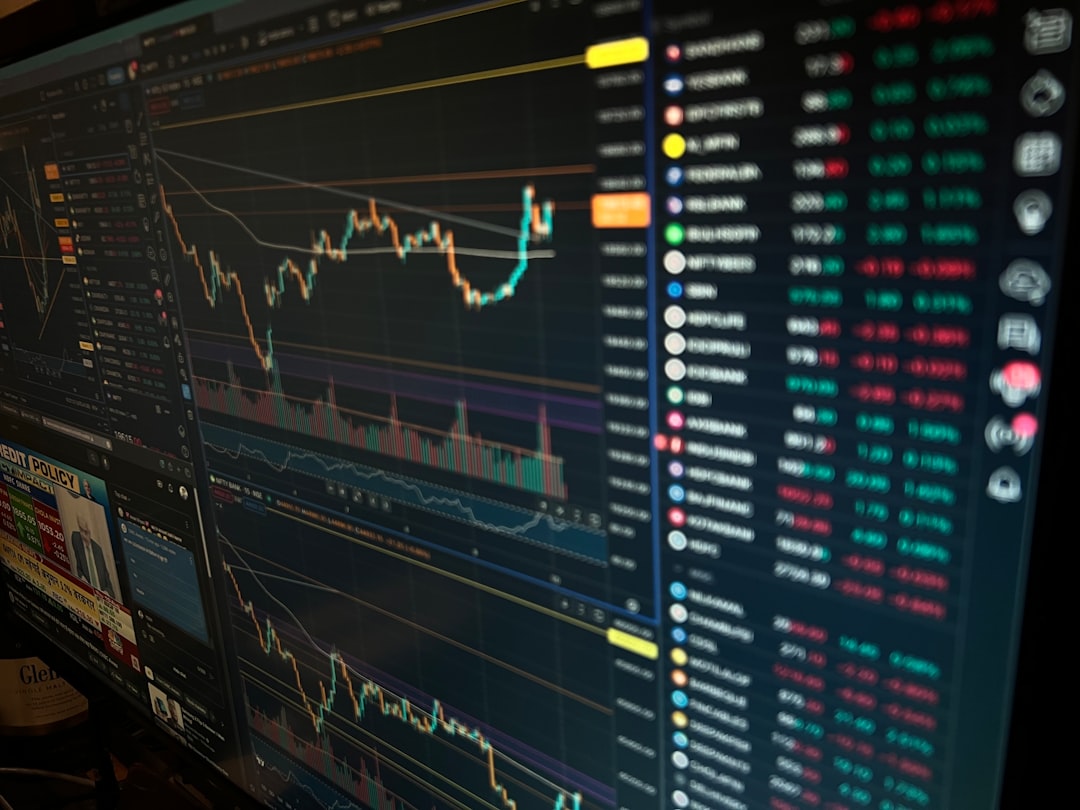
Building a custom rebalancing engine in Python is a rite of passage for the modern quantitative investor, yet it is often misunderstood as a purely mathematical exercise. In reality, it is an infrastructure challenge. By 2026, the delta between institutional-grade execution and retail-level "scripting" is defined by infrastructure, much like how How AI Is Changing Global Trade: The Future of Inventory Hedging highlights the need for resilience when navigating high market volatility.
The Anatomy of the Rebalancing Loop
At its core, a portfolio rebalancing engine is a state machine. It consumes a target allocation model, compares it against the "live" state provided by your brokerage API, calculates the delta, and generates order objects.
# Conceptual skeleton for state calculation
def calculate_delta(current_pos, target_pos, tolerance=0.05):
    """
    Returns dict of symbols and required trades.
    Tolerance prevents 'churn' where commission costs
    eat performance due to tiny drift.
    """
    trades = {}
    for ticker, weight in target_pos.items():
        drift = abs(weight - current_pos.get(ticker, 0))
        if drift > tolerance:
            trades[ticker] = weight - current_pos.get(ticker, 0)
    return trades
The logic above is trivial. The engineering nightmare begins when you move to production. What happens when the API returns a 429 (Too Many Requests)? What if the market moves 2% while your local script is busy calculating? What if the "Current Portfolio" state is stale due to a pending settlement?
The "Stale State" Trap
Most developers building their first engine fall into the "immediate gratification" trap. They write a script that queries the API, executes orders, and finishes. This assumes the network is perfect and the exchange never hiccups.
In professional environments, we operate under the assumption of "Eventual Consistency." You must treat your brokerage account not as a database you control, but as an external system that is often lying to you. A common workaround observed in open-source projects (check discussions on platforms like GitHub or QuantConnect) involves a "buffer state." Instead of querying the API directly for every loop, you maintain a local database (PostgreSQL or SQLite) that tracks the intent of your trades and compares it against the observed account state.
Infrastructure Realities and Operational Friction
If you look at the discussions on forums like Hacker News under the "algorithmic trading" tag, you’ll notice a recurring theme: scaling kills elegance.
A script that works for five ETFs in a single brokerage account will fail when you attempt to incorporate complex maneuvers, similar to why Why Institutional Capital is Moving to Layer-2 Liquidity Pools in 2026 requires advanced optimization to manage modern liquidity risks. The primary failure point is almost never the math; it’s the serialization and the API wrapper. Many popular wrappers (like alpaca-trade-api or generic ccxt implementations) have hidden quirks. For example, some APIs report total assets in a way that includes unsettled cash, which will trigger a margin call if your engine blindly attempts to buy based on "available" equity.
The Case for Modular Design
Never combine your data fetching, calculation, and execution into one block of code; instead, leverage the same modular thinking required to Turn Your Proprietary Data Into a Recurring Revenue Stream by isolating your core value drivers. Separate these concerns into independent micro-services if possible.
- The Observer (Data Layer): Monitors account balance and price feeds.
- The Planner (Logic Layer): Computes the drift and determines the required trade volume.
- The Executor (Safety Layer): Validates trade constraints (max order size, circuit breaker checks) and talks to the API.
Why this complexity? Because if your execution logic crashes while half your trades are open, you need a recovery mechanism. In the industry, we call this a "reconciliation loop." It checks the account status, compares it to the last intended state, and logs the discrepancy. If you don't build this, you are effectively trading blind.
Industry Controversies: The "Auto-Rebalance" Illusion
There is a massive debate in the quantitative finance community: Is automated rebalancing actually profitable after accounting for transaction costs and tax friction?
Some researchers argue that "Lazy Rebalancing" (doing it once a year or only when drift exceeds 10%) is statistically superior to high-frequency automated approaches. The "Counter-Criticism" here is that high-frequency rebalancing is often just a fancy way of saying "paying commissions to brokers." Many retail developers spend months building these engines, only to find that their returns are identical to—or worse than—a static Buy-and-Hold index fund.
"The hardest part of building a portfolio engine isn't the code. It's resisting the urge to over-optimize. Every time you change your target weight, you are essentially betting that your current model knows something the market doesn't. 99% of the time, you're just paying for slippage." — Anonymous Quant Developer, Discord #algo-trading community.
Scaling and Edge Cases
When you scale from one user to many, or from one asset class to several, you encounter "Concurrency Hell." If you have multiple threads or processes modifying the state of your portfolio, you risk race conditions.
- API Rate Limiting: You need a token-bucket rate limiter. If you blast the API, you get banned.
- Order Mismatch: You place a market order, but it executes at a price significantly different from your model expectation due to low liquidity. Does your engine handle "partial fills"? Does it treat a partial fill as a failure or a progress state?
- The "Black Swan" Factor: What happens if the price of an asset drops to zero or experiences a flash crash? Your engine needs a "Kill Switch" that prevents it from rebalancing into a falling knife.

Field Report: The 2023 "Ghost Order" Bug
In early 2023, several community-led projects using common Python API wrappers faced a synchronization issue. Due to a change in how a major brokerage reported "settled" vs "unsettled" funds, hundreds of retail bots began firing "insufficient funds" errors despite the account having the cash. The developers who had hard-coded their logic based on specific API fields saw their portfolios drift significantly for three weeks.
The lesson? Do not trust the metadata. Validate the cash balance through two different endpoints if possible. If the data isn't redundant, your strategy is fragile.
Security and Trust
The biggest risk to your engine is your own API keys. Hardcoding keys is the #1 way retail developers get their accounts liquidated.
Use environment variables, or better yet, a hardware-encrypted vault (like AWS Secrets Manager or HashiCorp Vault) even for personal projects. If your engine is running on a cloud instance (like an EC2 t3.micro), ensure your security groups are restricted to your specific IP address. There are bots scanning the internet 24/7 for exposed .env files or public Jupyter Notebooks containing keys.
Essential Checklist for the 2026 Developer
If you are starting this journey, prioritize your stack in this order:
- Logging: If it isn't logged, it didn't happen. Use Python's
logginglibrary effectively. - Persistence: Never store "current state" in memory variables.
- Simulation: Write a backtester that uses real historical trade logs (including commission fees) before going live.
- Validation: Implement a "sanity check" function that runs before every order is sent. (e.g.,
if order_value > account_equity * 0.5: throw Exception("Sanity Check Failed"))

The Human Element: Why We Build
Why do we spend hundreds of hours coding an engine for rebalancing? It’s rarely about the marginal alpha. It’s about the desire to remove emotion. By letting code dictate the moves, we avoid the "panic sell" or the "greed buy."
However, we must be careful not to fall in love with the system. We often see developers treat their engine like a "set-and-forget" machine. The reality is that markets evolve. The broker APIs update, the latency changes, and the economic environment shifts. Your engine is a living document. It requires maintenance, updates, and—most importantly—the humility to shut it down when the logic no longer fits the market reality.
FAQ
Is there a standard library or framework I should use for rebalancing?
Pandas for the math, Pydantic for validating the data from your API, and a robust logging system. Flexibility is your greatest asset.