
The business of securing High-Net-Worth (HNW) residential networks is a strange, high-stakes intersection of enterprise-grade engineering and the fragile, unpredictable reality of human domestic life. Unlike a corporate SOC (Security Operations Center), where you can enforce rigid GPOs and mandate hardware upgrades, the HNW home is a chaos of IoT-enabled refrigerators, legacy Sonos systems, and children’s gaming PCs—often leading to issues like when you learn why your Google Nest Hub is always disconnecting. To build a high-margin audit service here, you aren't just a technician; you are an anthropologist of digital privilege.
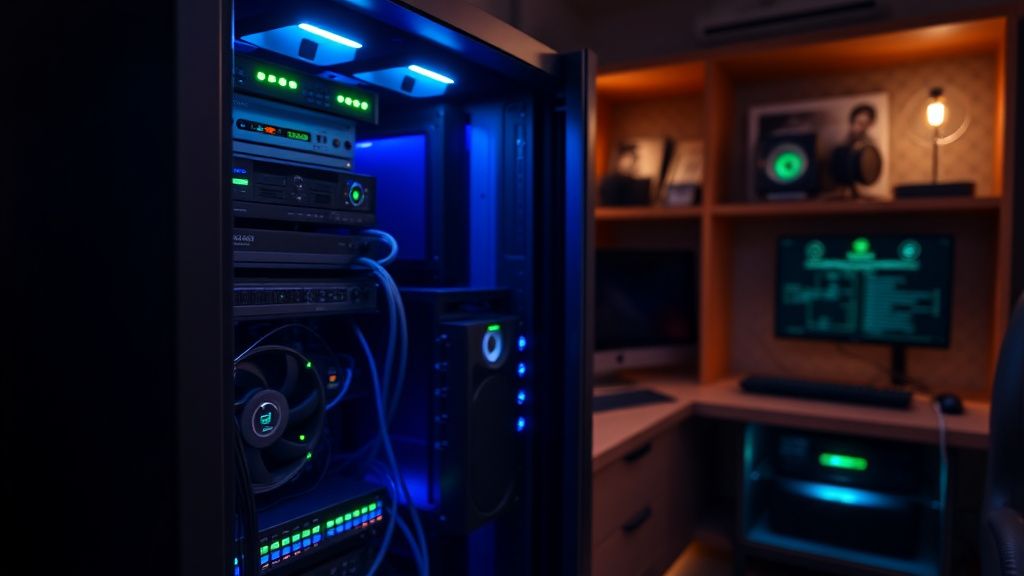
The Reality of "Gold-Plated" Networks
Most HNW home networks are "Gold-Plated" disasters. They are usually designed by high-end AV (Audio/Visual) installers—professionals who know how to make a 4K stream play perfectly but have no clue about VLAN segmentation or threat hunting. You will frequently find $50,000 worth of networking gear sitting behind a default-password gateway, with every smart lightbulb, camera, and thermostat on a flat network topology.
The "margin" in this industry doesn't come from the hardware you sell; it comes from the trust and forensic persistence you provide. When a client asks, "Why is my network slow?" and you discover their smart wine cellar controller is part of a botnet scanning the local subnet for NAS drives, the value proposition shifts instantly from "expensive tech support" to "digital asset protection."
Operational Framework: The Audit Workflow
A high-margin audit is not a vulnerability scan run by Nessus or OpenVAS. Any intern can do that. A premium audit is a physical and logical deep-dive that follows a specific methodology:
- Passive Discovery & Mapping: Do not run active scans initially. Many of the fragile devices in these homes (expensive legacy Crestron controllers or older IP intercoms) will crash if you hit them with aggressive Nmap packets. Start with traffic analysis via span ports or passive DPI (Deep Packet Inspection).
- The "Shadow IT" Hunt: You will find things the owner didn’t know existed. A housekeeper’s tablet, a forgotten smart-doorbell from three years ago, or a contractor's laptop still tethered to the "Guest" network.
- Physical Integrity Audit: Is the perimeter network actually protected? Are the outdoor PoE cameras physically accessible? Can a malicious actor bypass the gate intercom to plug into the internal LAN?
- Credential & Identity Hygiene: The most common failure point isn't a complex hack; it’s a reused password on a smart-lock dashboard, much like the vulnerabilities found when investigating why your Ring Doorbell keeps going offline. You must audit the human layer.

Real Field Report: The "Smart Home" Trojan
In a recent engagement for a family office in Silicon Valley, our team encountered a system that was functionally "un-hackable" by traditional standards—high-end firewalls, managed switches, the works. Yet, the client’s private financial data kept leaking.
The entry point? A "smart" irrigation system. The controller was purchased on a budget site by a landscaping contractor. It was bridged to the main network via a flat Wi-Fi connection, and it was beaconing out to a command-and-control server in Eastern Europe every hour. Because the irrigation software had no authentication, it was being used as a pivot point to sniff the traffic of the main office VLAN.
The Lesson: Security is only as strong as the cheapest, dumbest device in the chain. You cannot audit the network without auditing the procurement process of the homeowners.
Counter-Criticism: Is "High-Margin" Ethical?
There is a prevailing critique in the cybersecurity community that charging five-figure sums for home network audits borders on predatory. Critics on forums like Hacker News or Reddit's r/netsec often argue that these services are just "security theater for the rich."
They have a point, especially when you consider that a truly comprehensive home strategy now requires balancing everything from digital security to understanding why your home Wi-Fi is at risk from climate change. If you charge $20,000 for an audit and then upsell $50,000 worth of managed switches and redundant firewalls, you are moving from a professional consultant to a high-end vendor. The line is thin. To remain ethical, your service must be transparent and vendor-agnostic. If you aren't willing to recommend a $50 consumer-grade hardware fix over an enterprise solution because it hurts your "solution fee," you are failing your fiduciary duty.
The Problem of "The Update Cycle"
One of the biggest friction points is the "Update Dilemma." A high-end home network requires constant firmware management. However, you cannot simply "auto-update" everything.
- The Conflict: If you auto-update a high-end home cinema controller, you might break the HDMI handshake, leading to an angry client call at 9 PM on a Friday.
- The Workaround: You must implement a "staging environment" or a tiered update schedule. Do not touch the core AV control systems during the week. This adds massive operational overhead, which is exactly why clients pay for ongoing management, not just a one-time audit.
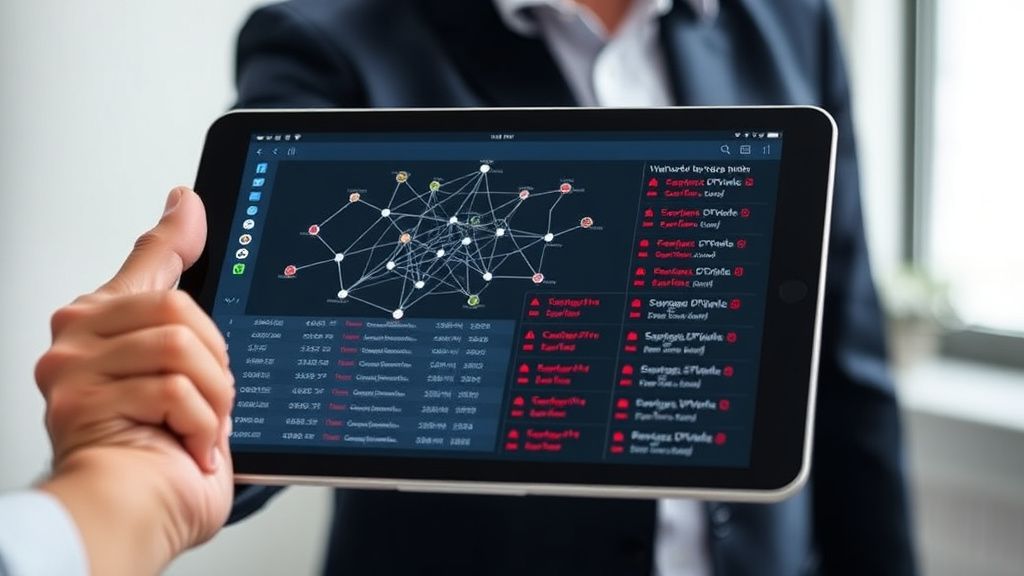
Building Trust Through "Non-Technical" Communication
The biggest barrier to scaling this service is not technical; it’s the inability of engineers to talk to clients. When you deliver your final audit report, never start with the technical vulnerability (e.g., "The CVE-2023-XXXX exploit allows RCE on your gateway").
Instead, use the language of risk and lifestyle continuity:
- "Your current setup allows a third-party application on your security camera to access the folders where you keep your tax documents."
- "If someone gains access here, they don't just steal data; they can unlock your physical front door."
The audit is a narrative document. The technical findings are the appendix. If the client doesn't feel the "danger" in their living room, they won't pay for the remediation.
The Scaling Failure: When Standardization Kills
Many firms try to productize these audits into a standardized "SaaS-style" offering. They fail. You cannot standardize a home that has been wired and re-wired by four different low-voltage contractors over the last decade.
- Engineering Compromise: You will constantly encounter "technical debt" where you have to leave a vulnerability open because the client refuses to upgrade a $15,000 legacy lighting control system that would cost another $20,000 to replace.
- Documentation Chaos: If you rely on automated discovery tools, your documentation will be a lie. You must manually verify the patch state of every critical device. If a device doesn't support firmware updates, it must be air-gapped or isolated in a "dead-end" VLAN.
Monetization Strategy
Do not sell a "Cybersecurity Audit." Sell a "Digital Privacy and Safety Review."
- The Entry Tier (The "Discovery" Phase): A fixed-fee audit that results in a "Network Health and Risk Assessment." This is your loss leader.
- The Remediation Phase: Hourly or project-based work to segment the network and harden the perimeter.
- The Recurring Tier (The "Peace of Mind" Fee): A monthly retainer for monitoring, firmware management, and threat hunting. This is where the real margin exists. If you can automate the monitoring, your margin climbs toward 70-80%.

Troubleshooting the "Broken" Audit
If a client claims their "Internet is slow" after your audit, and you know your firewall isn't the bottleneck, you are entering the "Support Nightmare." This happens constantly.
- The "Double NAT" Problem: Sometimes, in an effort to secure the network, consultants create complex NAT chains that destroy the performance of peer-to-peer video conferencing apps like Zoom or FaceTime.
- The Fix: You must maintain a rigorous log of all changes. If the client calls, you need to be able to roll back in seconds. If you don't have a change management system for a home network, you will lose the contract, no matter how "secure" the network is.
How do I handle clients who refuse to let me segment their devices?
This is a classic "business acceptance of risk" scenario. Document the risk in a formal Risk Acceptance Form. Explain that by keeping devices on the main VLAN, they are accepting the possibility of cross-device infection. If they sign off, you have covered your liability. If they don't, you shouldn't take the job.
What is the most critical tool for a residential audit?
Beyond standard tools like Wireshark and Nmap, a professional-grade physical network tap is indispensable. You need to see the traffic without altering it. Also, having a solid, portable, isolated lab environment (like a small Mikrotik router and a hardened laptop) to test suspicious IoT firmware in isolation before deploying it is a huge competitive advantage.
Are residential audits legally different from corporate audits?
Yes. In a home, you are dealing with PII (Personally Identifiable Information) and, more importantly, the physical safety of the family. You are operating in a gray area of privacy law. Ensure your contract includes strong indemnification clauses. You are not a police force; you are a service provider. Never "hack back" or attempt to trace an attacker yourself.
How do I handle the "Everything broke after the update" issue?
This is why you never update on a Friday. Implement a "canary" testing system. If possible, keep a duplicate of the client's core controller (e.g., a spare Crestron processor) in your lab. Update the lab unit first. If it breaks, you haven't touched the client's home. If it works, schedule the deployment during a time when the house is empty.
Is hardware sales necessary for high margins?
Not necessarily, but it helps. The real margin is in the "Professional Services" component—the deep architectural knowledge required to segment a home without breaking the convenience. If you are just a "box shifter" selling firewalls, you are easily replaceable. If you are the person who understands the delicate balance between high-end home automation and network security, you are irreplaceable.