
Matter has arrived, and with it, the promise of a "universal" smart home language. But beneath the polished marketing veneer of the Connectivity Standards Alliance (CSA) lies a brutal operational reality: interoperability is not synonymous with security. For the enterprise sector, this fragmentation presents a paradox—a high-density attack surface masquerading as a convenience. Monetizing privacy in this ecosystem requires moving beyond simple firewalls; it demands a full-stack Managed Security Service (MSS) approach that treats every smart bulb and thermostat as a potential endpoint compromise.

The Matter Illusion: Why "Secure by Design" Isn't Enough
Matter relies on IPv6 and local-first communication. It removes the dependency on fragile, proprietary cloud bridges. On paper, this is a massive win for privacy—data stays local. But in the real world, "local-first" is a nightmare for network administrators. When devices stop phoning home to a manufacturer’s cloud, they stop receiving silent, automated security patches. They become static, unmanaged nodes in an enterprise network.
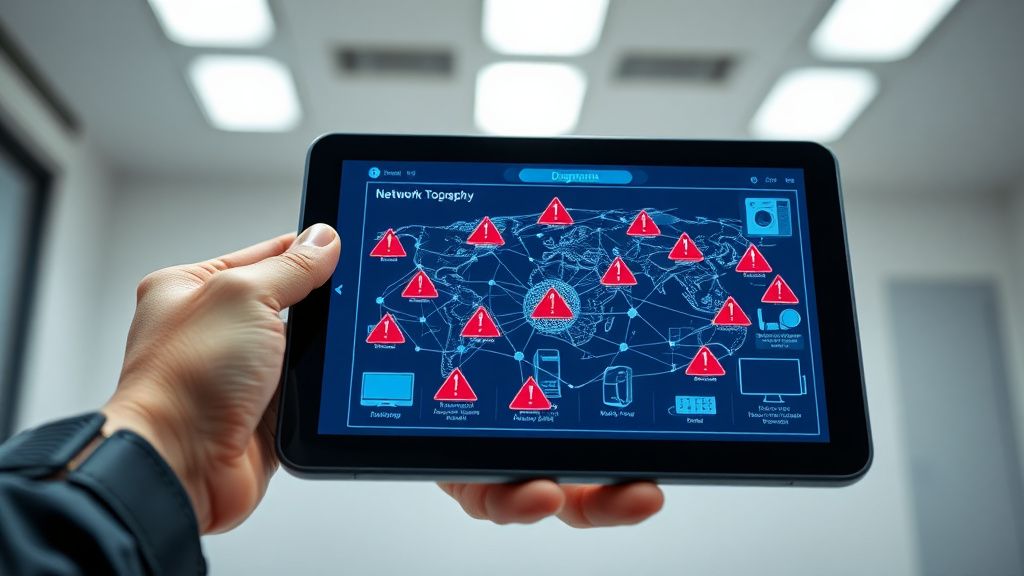
The monetization opportunity here isn't in selling hardware, as there are often higher margins found in The 2026 Solar Strategy: Why Battery Integration is Now Your Most Profitable Asset or specialized consultancy services. It’s in selling the visibility that Matter intentionally abstracts away. Enterprise clients are currently hemorrhaging data to "shadow IoT"—devices employees bring into the office or install in corporate-adjacent residential properties. These devices communicate via mDNS or DNS-SD, often broadcasting their presence and capabilities to any listener on the local subnet.
The Operational Reality of Scaling Smart Homes
If you attempt to manage 500 Matter devices using standard consumer-grade routers, you are guaranteed failure, much like how Why Wi-Fi 7 Enterprise Projects Often Fail (And How to Fix Them) highlights the pitfalls of poorly planned network infrastructure. Consumer hardware isn't designed for the multicast traffic volume generated by Matter clusters. We see this constantly on subreddits like r/HomeAutomation or in GitHub issues related to chip-tool connectivity: "Everything works great until you add the 30th device, then the network starts dropping packets and the latency hits 4000ms."
To monetize this, your service architecture must move the security boundary from the perimeter to the device-identity level.
The Stack: Building the Managed Security Service
An enterprise-grade service for Matter-enabled environments requires a three-pillar approach:
- Identity Orchestration (PKI at the Edge): Matter uses Distributed Compliance Ledger (DCL) and unique device attestation certificates. Your service should act as a private Certificate Authority (CA) or a relay for Matter-certified vendor credentials. If a device fails attestation, it shouldn't just be warned; it should be quarantined via VLAN steering automatically.
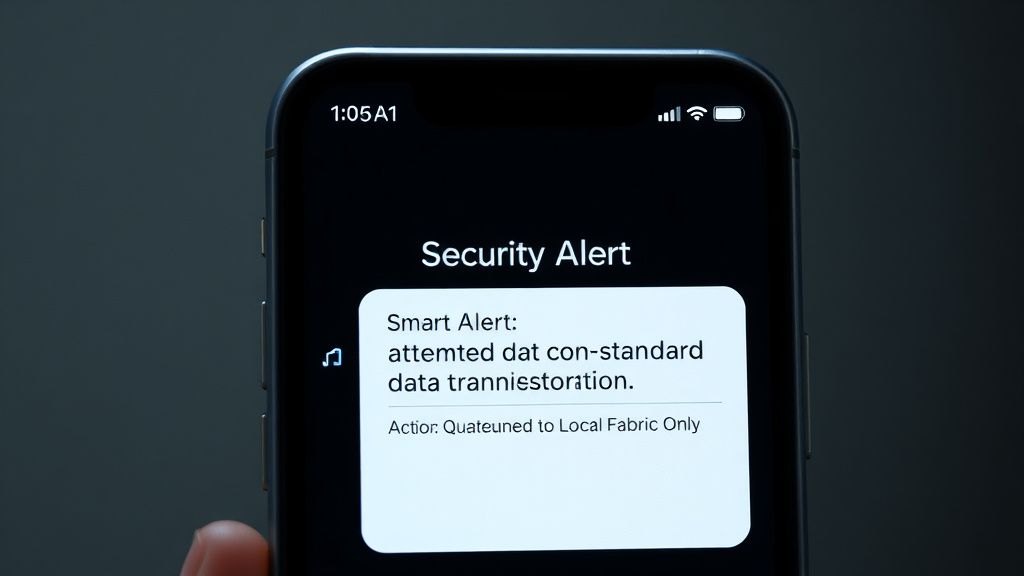
- Traffic Introspection (The "Noise" Filter): Since Matter uses multicast, you need high-performance packet inspection that doesn't break the local mesh. The goal is to detect "beaconing" behavior—where a smart lock tries to reach out to an unauthorized IP address outside the local fabric.
- Lifecycle Management (The Patch Gap): Because Matter devices don't have standard "Windows Update" cycles, your service must include a "Firmware Lifecycle Registry." You are paid to monitor CVE databases for the specific hardware vendors and push OTA (Over-the-Air) firmware updates when vendors release them, or trigger an isolation alert if a device is flagged as "End of Life/Insecure."
The Economics of Privacy as a Service (PaaS)
How do you charge for this? You cannot sell "privacy" as a one-time feature; instead, consider how The Blueprint for Building a High-Ticket, Bio-Optimized Wellness Consultancy emphasizes recurring value to sustain long-term business growth. It must be a subscription tied to the risk density of the installation.
- Tier 1: Visibility & Compliance: Auditing the IoT footprint, ensuring devices meet DCL standards, and providing a monthly report on "What is talking to whom."
- Tier 2: Active Quarantine: Automatically moving devices that exhibit anomalous behavior into a "Sandbox VLAN" where they can talk to the controller but cannot reach the WAN or internal enterprise resources.
- Tier 3: Full Lifecycle Management: Managing the OTA update schedule, handling the onboarding/offboarding of decommissioned devices (a massive hole in current security where old devices are sold on secondary markets with corporate secrets still in their storage).
Counter-Criticism: Is This Just "Middleware Bloat"?
The loudest criticism from the open-source community—specifically those maintaining projects like Home Assistant or OpenThread—is that "enterprise-grade" security for Matter is an oxymoron. They argue that by layering proprietary management tools on top of an open standard, you are just recreating the "vendor lock-in" that Matter was designed to kill.
There is significant merit to this. If your service requires a proprietary controller that hijacks the Matter Fabric, you are essentially becoming the new "walled garden." We have seen this play out with the collapse of several smaller smart-home hubs where, once the server side went down, the physical devices were left "bricked" or locked into a specific state. To survive this criticism, your MSS must be platform-agnostic, favoring API-based integration over hardware-based interception.

Failure Points and Operational Friction
If you are building this service, you need to prepare for the "support nightmare." Matter’s biggest weakness is not the protocol itself, but the implementation variance between manufacturers.
- The "Sleepy End Device" Problem: Many Matter sensors are battery-powered and "sleep" to save power. They only wake up to send signals. If your security scanner attempts to ping them while they are asleep, the system will mark them as "Offline/Down." Your support team will be flooded with false-positive alerts. You need an intelligent polling engine that understands the state-machine of each device type.
- Fragmentation of Commissioning: Matter commissioning is notoriously finicky. If a user tries to pair a device that is already part of another fabric, the handshake often fails with a cryptic
0x00000002error. Your service needs an abstraction layer that can "factory reset" and re-commission devices without the user having to manually push buttons on devices hidden behind walls or ceilings.
The Human Element: Managing User Expectation
Privacy is often marketed as a "set and forget" feature. It isn't. It is a series of trade-offs.
When your security service blocks a smart fridge because it’s trying to send telemetry data to a server in a region with poor data privacy laws, the user doesn't say "thank you." They say, "Why won't my fridge connect?"
You must invest in Contextual Feedback Systems. Instead of generic "Connection Blocked" notifications, your service needs to provide actionable insight: "Your refrigerator is attempting to send data to an unverified third-party server. We have blocked this to protect your network. Would you like to allow it for 24 hours?"
This is the bridge between technical security and human trust. The moment you start acting like an intrusive firewall that breaks things, you lose the user. The moment you act like a transparent protector that educates them, you build loyalty.
Future-Proofing: The Regulatory Wave
We are currently in a "Wild West" phase of IoT security. However, regulations like the EU’s Cyber Resilience Act and various NIST standards in the US are beginning to force manufacturers to take security seriously.
Your enterprise service should position itself as the "Compliance Engine." If a company is sued because a smart lightbulb was used as a pivot point for a ransomware attack, the first question from the auditor will be: "Was the device patched? Was it segmented?"
If you have a log that shows you tracked the vulnerability, attempted the patch, and alerted the client, you are no longer a "smart home gadget"—you are an insurance-grade compliance tool.
How do I handle devices that don't support Matter?
In an enterprise environment, you shouldn't. You should enforce a policy that only Matter-certified (or Matter-bridged) devices are allowed on the secure IoT network. Everything else must reside on a legacy, air-gapped VLAN with no internet access. Trying to secure non-standard protocols is a "death by a thousand cuts" scenario.
Does this service slow down the network?
If implemented correctly, no. Matter uses a local fabric. If your security logic is placed at the edge (the gateway level), the packet inspection adds negligible latency—typically under 5ms. If you are routing traffic through a cloud proxy, you will see a massive drop in performance and a spike in "device offline" errors. Keep it local.
What is the biggest security risk in a Matter-enabled home?
It is almost always the "commissioning window." When a device is put into "pairing mode," it is essentially an open door. If your service doesn't monitor for unauthorized pairing attempts or set strict time-limited windows for commissioning, you are leaving the network vulnerable to physical intruders who can simply wait for an employee to put a new device in pairing mode.
Why not just use a standard VLAN-based segmentation?
VLANs are static; modern IoT is dynamic. A device moves from one state to another (e.g., a lock transitions from "locked" to "unlocked"). A standard VLAN doesn't care about the state of the device. An enterprise-grade MSS needs to be state-aware, adjusting permissions dynamically based on the device's current operation.
How do I deal with the "Shadow IoT" problem?
By implementing "Device Fingerprinting." Use MAC address profiling, mDNS packet analysis, and OUI lookups to identify devices the moment they connect to the network. If a device isn't on your "Authorized Inventory" list, automatically trigger a notification to the admin and deny the device gateway access until it is verified.
Is the "Privacy First" market actually profitable?
Currently, it’s a B2B play. Consumers are rarely willing to pay for security, but enterprises are willing to pay for "Risk Mitigation." Focus on law firms, high-net-worth residential projects, and government-contractor offices where the data leakage of a smart camera is a catastrophic liability.