
Building a high-ticket "bio-optimized" consulting practice targeting Ultra-High-Net-Worth (UHNW) individuals is not about selling diet plans or gym memberships; it is about selling "biological sovereignty." In a world where your clients have mastered their finances—often by exploring high-tech sectors like Quantum Computing Finance—their health remains the final frontier. They aren’t looking for another vegan cookbook; they are looking for precise, data-driven metabolic mastery that reconciles plant-based nutrition with high-performance strength cycles. This requires a shift from "coaching" to "clinical systems architecture."

The Taxonomy of the UHNW Client: Why They Fail With Standard Protocols
Standard health advice assumes the client has time to meal prep, track every calorie in MyFitnessPal, and endure the social friction of "explaining why they don't eat meat" at a board dinner. UHNW clients live in a different reality, one where modern business pivots, such as the trend where the wellness industry is pivoting from mass products to high-ticket consulting, define the luxury market. They operate on high-stakes schedules where cognitive load is the most valuable resource.
When you approach this demographic, you are dealing with "systemic exhaustion." They are often high-achievers who treat their body like a failing asset. The friction in the plant-based, strength-optimized niche is massive because the industry is polarized between "bro-science" bodybuilding (often heavy on animal proteins) and "virtue-signaling" plant-based wellness (often catabolic and low-protein).
To succeed, you must bridge the gap:
- The Catabolic Crisis: Most plant-based programs for the wealthy lack leucine-rich protein density, leading to muscle wasting. You need to leverage fermented protein isolates, algae-derived amino acids, and strategic supplementation that mimics the mTOR activation usually reserved for animal-based protein.
- The "Dinner Table" Problem: Your client cannot be the "weird guy" at a power lunch. You need to design protocols that are invisible. If they travel, they need "travel-proof" nutrient stacks.
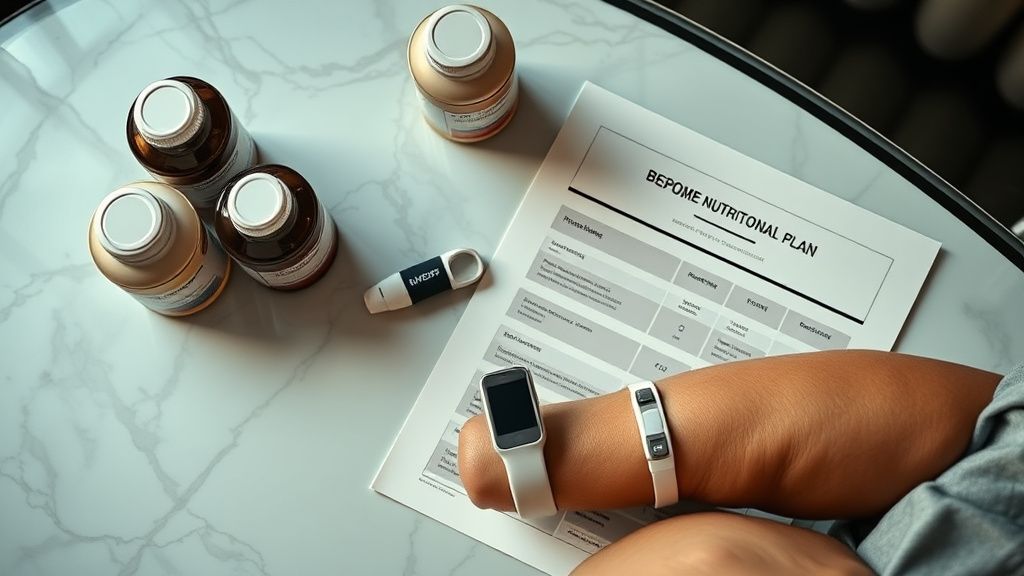
- The Data Paradox: UHNW clients love devices. Continuous Glucose Monitors (CGMs), Oura rings, and Whoop straps are everywhere. If your coaching doesn't align with their raw data, you lose credibility instantly.
The Operational Architecture: From Fitness to Systems Engineering
You aren't a trainer; you are a "Biological Systems Integrator," applying the same level of strategic rigor that experts use to scale a modular workspace installation business for higher profits. A consulting practice in this space functions more like a Hedge Fund than a personal training studio. You need to standardize your input metrics:
- Baseline Diagnostics: Move beyond basic blood work. Require deep-tissue heavy metal testing, microbiome sequencing, and epigenetic clocks (like Horvath’s). If you aren't looking at IGF-1 levels and SHBG (Sex Hormone Binding Globulin) specifically in the context of plant-based pathways, you aren't doing the work.
- The "Strength Cycle" Infrastructure: UHNW clients are terrified of injury. They cannot afford three weeks of physical therapy. Your programming must focus on "minimal effective dose" (MED) strength training—utilizing eccentric loading and time-under-tension protocols that prioritize joint longevity over 1RM vanity metrics.
- The Logistics of Compliance: If the plan isn't executable via their private chef or their assistant, it fails. You need to provide "Chef-Ready" SOPs (Standard Operating Procedures) for their household staff.
Real Field Report: The "Silicon Valley Burnout" Case Study
In 2022, I consulted for a principal at a venture capital firm who had adopted a strictly plant-based diet for "ethical reasons" but had seen his testosterone plummet by 30% and his recovery scores on his Whoop strap plateau.
The Failures:
- Micronutrient Mismatch: He was consuming high-lectin plant diets that caused sub-clinical inflammation, which the CGM showed as erratic blood glucose levels despite "clean" eating.
- Protein Timing: He was eating 60% of his protein at dinner. During his intense morning strength sessions, he was effectively training in a catabolic state.
The Fix: We didn't change his ethics; we changed his "metabolic architecture." We introduced post-workout essential amino acid (EAA) stacks that didn't violate his plant-based constraints but triggered the necessary muscle protein synthesis (MPS). We shifted his carbohydrate load to his pre-sleep window to manage cortisol. Within 60 days, his recovery scores normalized. He didn't want a cheerleader; he wanted a diagnostic engineer.
The Dark Side: The Ethical and Economic Conflicts
There is a significant tension in this business. You are being paid to optimize human biology, but you are also incentivized to keep the client "optimized" for their job, which might be the very thing causing their stress.
Furthermore, there is a "platform instability" inherent in this niche. You are reliant on medical technology (CGMs, blood panels) that is often in a gray area regarding health insurance and medical practice laws. Many consultants work in a "wellness" capacity to avoid the licensure requirements of being a doctor or dietitian, but this leaves you legally fragile. If a client has a cardiac event while on your "bio-optimized" protocol, the line between "coach" and "culprit" vanishes.

Counter-Criticism and Industry Debate
The "Plant-Based Strength" movement is currently caught in a war of attrition. Critics—often from the functional medicine camp—argue that the reliance on ultra-processed plant isolates (pea protein, soy isolates) to hit protein targets is essentially "vegan junk food."
- The Criticism: "You are recommending synthetic powders to solve a problem that shouldn't exist if the person ate a balanced diet."
- The Reality: The UHNW client doesn't care about "natural" in the romantic sense; they care about "performance-aligned." If eating 200g of tofu is socially and digestively impossible, the supplement is the tool. The real debate shouldn't be about the powder—it should be about the biological cost of that powder. Are we trading long-term gut health for short-term strength gains? We don't have the 20-year longitudinal data on high-volume EAA supplementation yet, and that is a massive blind spot.
Strategies for Monetization: Beyond the Hourly Rate
If you are billing by the hour, you are already failing. This is a high-ticket, high-accountability niche.
- The "Chief Biological Officer" Retainer: Charge a flat monthly fee (think $3,000–$10,000 range) that covers 24/7 access. You are not their trainer; you are their health concierge.
- Household Integration Fees: Charge extra to interface directly with their private chefs and house managers. This removes the friction for the client and makes you indispensable.
- The "Quarterly Deep Dive": Upsell quarterly in-person visits where you coordinate a full diagnostic day—imaging, blood work, and physical assessment—followed by a comprehensive strategy overhaul.

Managing Scaling Issues and Community Friction
The biggest struggle for practitioners in this space is "Scaling Friction." When you get to 10+ clients, the manual labor of reviewing their Oura/Whoop/CGM data becomes a nightmare.
- The Workaround Culture: Many consultants I know are building custom dashboards using tools like Notion or Airtable linked to Zapier/Make. They aren't waiting for a "universal app" because, frankly, the current health-tech ecosystem is too fragmented. The "API Drama" is real—companies like Whoop or Oura often change their data export protocols, breaking your monitoring stack overnight.
- The Support Nightmare: Clients in this bracket expect immediate responses. You need a triage system. If they have a "bad night of sleep," they will text you at 6:00 AM asking why. If you don't have a standardized SOP for how to handle these "existential health crises," you will burn out within six months.