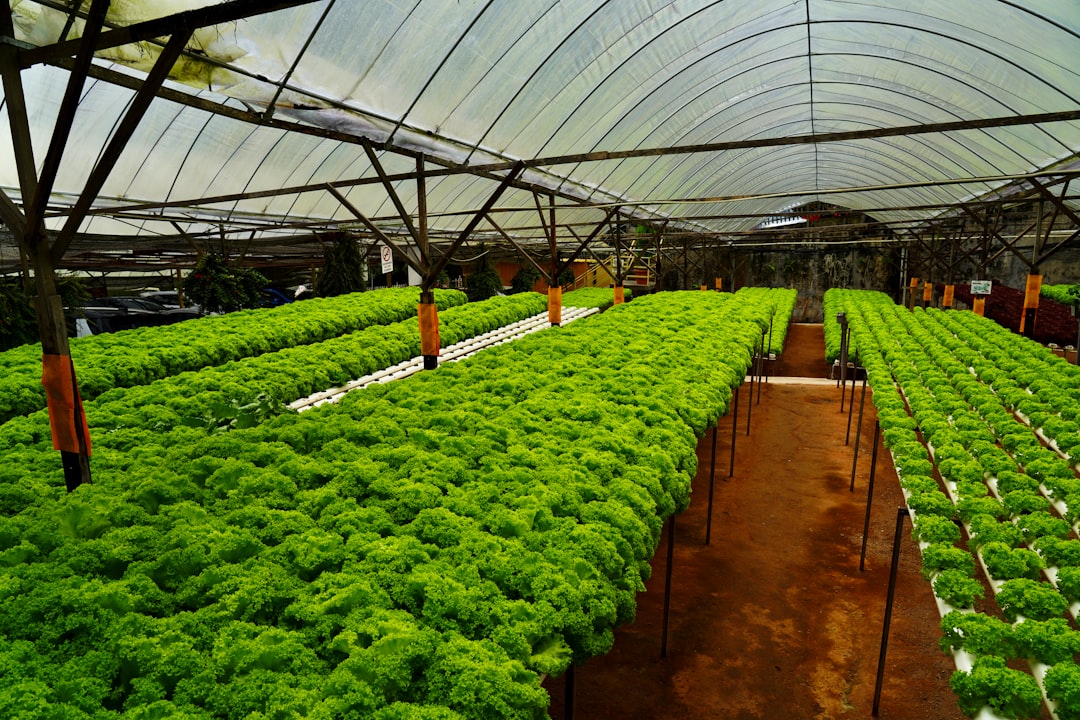
The transition from passive hydroponic hobbyism—typically defined by Kratky methods and low-maintenance jar gardens—to a commercially viable urban micro-farm is a pivot point where biology meets industrial engineering. By 2026, the barrier to entry has lowered, but achieving profitability has become as complex as building a profitable home efficiency consulting business in a saturated market. Success today is about mastering operational friction, much like those who study how to build a sustainable B2B AI prompt engineering agency to overcome early-stage business hurdles.
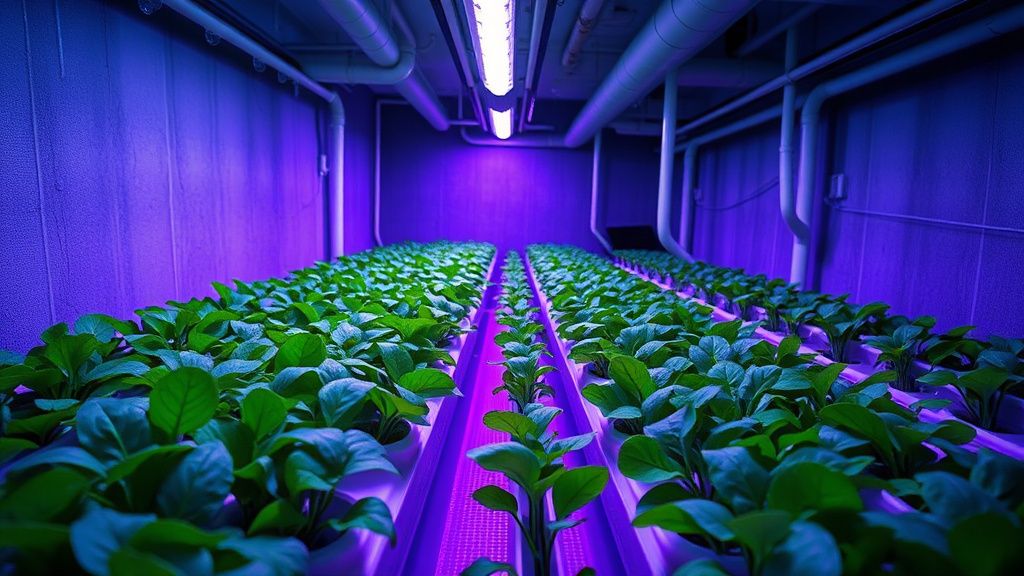
The Myth of "Set and Forget"
Passive systems, such as the Kratky method, rely on the depletion of the nutrient solution and the development of an "air root" zone as the reservoir level drops. While mathematically elegant, it fails the moment you attempt to scale. In an urban micro-farm context, the lack of active aeration leads to hypoxia during high-temperature spikes—a common event in poorly ventilated urban apartments or garages.
The primary operational failure in 2026 isn't the light or the variety of lettuce; it is osmotic stress and root zone stability. When you scale from four plants to four hundred, the variance in water temperature across a single rack becomes a technical liability. If the reservoir in the bottom corner of your rack is five degrees warmer than the one at the top, your harvest cycles will desynchronize. You are no longer just farming; you are essentially managing a distributed logistics network, a concept similar to how modern traders are mastering cross-border arbitrage in 2026.
Technical Debt: The Hidden Cost of DIY Infrastructure
Many urban farmers start with repurposed food-grade buckets. This is a classic "startup trap." While cheap, these buckets are notoriously difficult to clean. If you are aiming for high-yield, you need to turn over crops every 21–35 days. If 20% of your labor time is spent scrubbing calcium carbonate deposits out of textured plastic, your cost-per-gram of yield renders you uncompetitive against local vertical farms.
Professional growers are moving toward high-performance infrastructure, much like the shift seen in building a profitable DCaaS business that requires robust, specialized hardware. The "workaround culture" of using repurposed containers leads to biofilms, which inevitably harbor Pythium (root rot).
"I spent three months trying to scale using stackable storage bins from a big-box retailer. It worked until the summer heat wave hit. The weight of the water made the plastic flex, the seals broke, and I lost $400 in plants and a hardwood floor in one afternoon. Don't cheap out on your containment." — Comment from a user on the r/Hydroponics subreddit, 2025
The 2026 Profitability Matrix: It’s Not About Lettuce
If you are still trying to sell head lettuce in a major metro area in 2026, you are likely failing, a lesson in market adaptation similar to why traditional cybersecurity is failing enterprises. The market for generic crops is dominated by automated operations, much like how businesses are now exploring white-label AI chatbots for SME monetization to stay ahead of the curve.
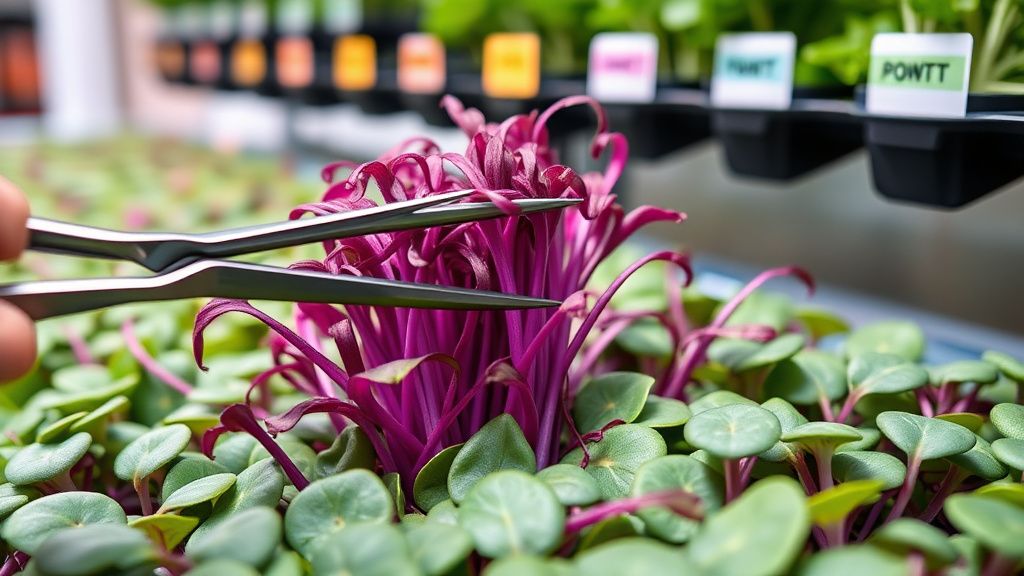
The profitability "sweet spot" has shifted toward high-value culinary specialty crops:
- Micro-herbs: Shiso, lemon basil, and rare mint varieties.
- Edible flowers: Nasturtiums and borage, which command premium pricing from high-end pastry chefs.
- Functional ingredients: Specifically high-potency sorrel or specialized mustard greens that have a short shelf life, making them impossible for large-scale industrial farms to ship across state lines.
Engineering for Resilience: The Modularity Mandate
To achieve high yields, you must treat your farm as a distributed system. Do not build one giant reservoir. If you have a pump failure or a contamination event (a single spider mite infestation or a nutrient lockout), a monolithic system will destroy your entire crop.
Instead, adopt a modular manifold approach. Even in "passive" setups, you should maintain a centralized nutrient monitoring point. Use low-cost, open-source sensors (like those based on ESP32 microcontrollers) to track pH and EC (Electrical Conductivity). By creating a "headless" monitoring system, you can receive alerts on your phone before a nutrient spike burns your root zone.
The Human Factor: The "Support Nightmare"
Most urban farm tutorials ignore the reality of human error. The biggest cause of failure isn't the technology; it's the lack of documentation. When you have multiple people involved, or when you are tired after your day job, you will forget to check the pH. You will miss the refill cycle.
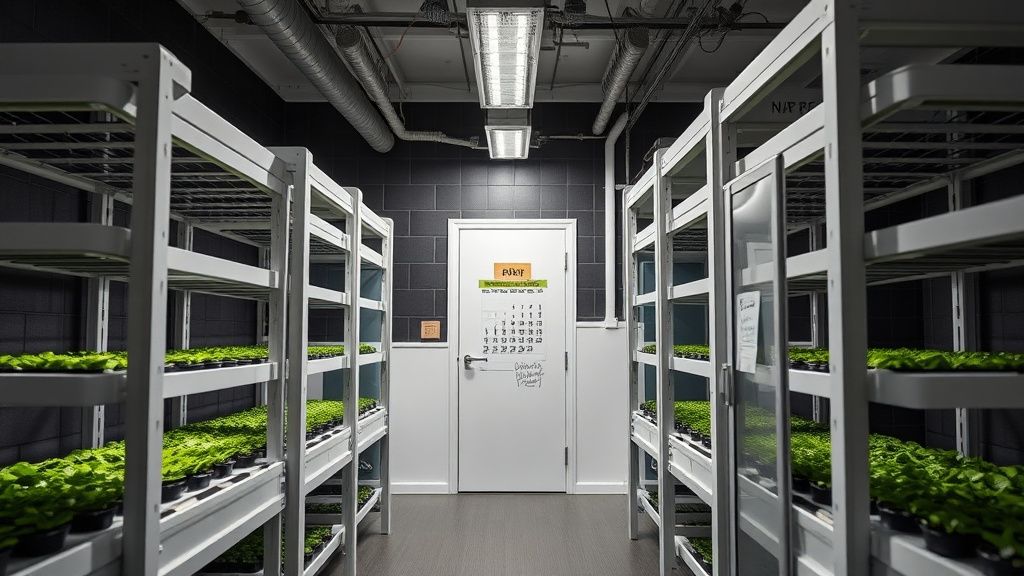
Successful farms in 2026 are those that implement Standard Operating Procedures (SOPs). If it isn't written on a checklist stuck to the wall, it didn't happen.
Common Operational Friction Points:
- The "Calcium Lockout" Loop: Beginners often ignore the hard water content in their city tap. Over time, the nutrient solution becomes saturated with calcium, locking out magnesium and iron. The plants look sickly, and the beginner adds more fertilizer, accelerating the failure.
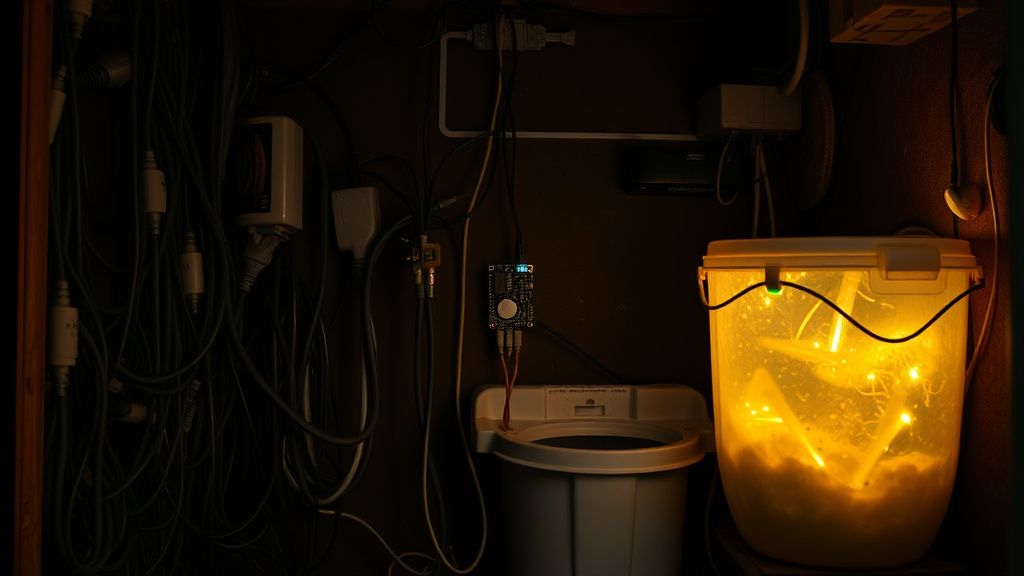
- Infrastructure Creep: You start with a shelf. Then you add a light. Then you add a fan. Soon, you have a "spaghetti" of power strips that are fire hazards and impossible to troubleshoot. Use industrial-grade power distribution units (PDUs) from the start.
- The Moderation Trap: Online communities are often full of conflicting advice. One thread says "flush your plants," the next says "never flush." You must prioritize peer-reviewed agricultural science over "bro-science" found in discord servers.
Real Field Report: The Case of the "Hyper-Local" Pivot
In early 2025, an urban farming collective in Chicago attempted to supply a large local restaurant chain using passive NFT (Nutrient Film Technique) systems. They failed within six months. Why? They tried to grow high-volume kale. The margins were too thin, and the restaurant required daily, predictable deliveries. Their passive system suffered from "oscillation": sometimes the yield was perfect, sometimes the plants bolted because of a 48-hour heat wave in the warehouse.
They pivoted to High-Density Micro-herbs and installed a simple cooling fan system tied to a basic thermal switch. They focused on "just-in-time" harvesting for three local sushi restaurants. By reducing their footprint by 70% and increasing their crop value by 400%, they became profitable. The lesson: Don't farm for volume; farm for velocity.
Counter-Criticism: Is "Urban Farming" Even Sustainable?
There is a growing movement of skeptics who argue that urban indoor micro-farming is an energy-intensive "hobby" masquerading as a solution for food deserts. Critics point out that the carbon footprint of the electricity required to run high-intensity LEDs, combined with the plastic waste of hydroponic components, often exceeds that of field-grown organic produce shipped from a few hundred miles away.
As an operator, you must account for this. If you are running your lights on grid power derived from coal, you are not necessarily "green." The most successful 2026 micro-farms are integrating solar arrays or purchasing renewable energy credits to justify their "urban sustainability" branding. If you ignore this, you risk being "cancelled" by a market that is increasingly savvy about greenwashing.
Scaling the Workflow: From Hobby to Business
When you decide to scale, the hardware is the easy part. The hard part is the customer acquisition cost (CAC). You will spend more time emailing chefs, managing inventory, and dealing with spoiled shipments than you will spent looking at your plants.
- Inventory Tracking: Use a simple digital log (Notion or Airtable works) to track planting dates. If you don't know the exact age of every tray, you will harvest at the wrong time.
- The "Sample" Strategy: Chefs don't care about your philosophy. They care about flavor profile and consistency. Drop off samples for free. If the quality is better than their distributor (it usually is), you've won.
- Waste Management: What do you do with the root balls and unsold product? A high-yield farm produces a significant amount of organic waste. If you aren't composting, you're missing a secondary revenue stream or, at the very least, a way to reduce your own costs.
How do I deal with constant "nutrient burn" despite following the bottle's instructions?
The instructions on fertilizer bottles are almost always based on commercial-scale greenhouses with perfect climate control. In a small, potentially fluctuating urban environment, those concentrations are often too high. Always start at 50% of the recommended dosage and use an EC meter to establish your own baseline.
Is it really possible to be profitable without automation?
Yes, but only at a small, "boutique" scale. Once you hit a certain rack volume, the manual labor of pH balancing and refilling becomes the bottleneck. You don't need expensive commercial automation, but you do need "primitive" automation: timers, automated water top-off valves (float valves), and consistent record-keeping.
What is the biggest mistake you see new urban farmers make in 2026?
Overestimating market demand. They grow what they like to eat, rather than what the local high-end market needs. You should have your buyers lined up before you plant your first seed. Never grow on speculation.
Why does my reservoir get "slimy" even when I use chemicals?
That "slime" is a biofilm—a colony of bacteria and fungi. Chemicals, even fungicides, are temporary fixes. You are likely lacking a dark reservoir (light leaks encourage algae) or adequate dissolved oxygen. If the water isn't moving, it’s dying. Even in "passive" systems, a small aquarium air stone goes a long way.
How do I handle potential city health inspections?
This varies wildly by jurisdiction. In many cities, you are classified as a "food processor" even if you are just growing lettuce. Treat your facility like a commercial kitchen: hairnets, sanitized footwear, and strict separation of "dirty" and "clean" zones are not optional if you want to scale into high-end retail.