
The dream of the "AI Gold Rush" has shifted from selling shovels to renting out the digital equivalent of mining rigs, a transition that aligns with the broader move to optimize niche assets like those explored in the guide on how to build and sell AI browser extensions for a 5x profit in 2026. Building a high-margin compute rental business based on local-only Large Language Model (LLM) infrastructure isn’t about buying a rack of H100s and hoping for the best—it’s about navigating a chaotic ecosystem of hardware depreciation, thermal management, and the brutal reality of software fragmentation.
The Operational Reality of "Local-Only" Compute
When you strip away the hype, an AI compute business is essentially a specialized hosting company. The "local-only" constraint—meaning infrastructure you physically own and manage, rather than renting AWS or GCP—changes the economic equation entirely. You are trading the convenience of cloud-native elasticity for the brutal reality of CapEx (Capital Expenditure) and maintenance.
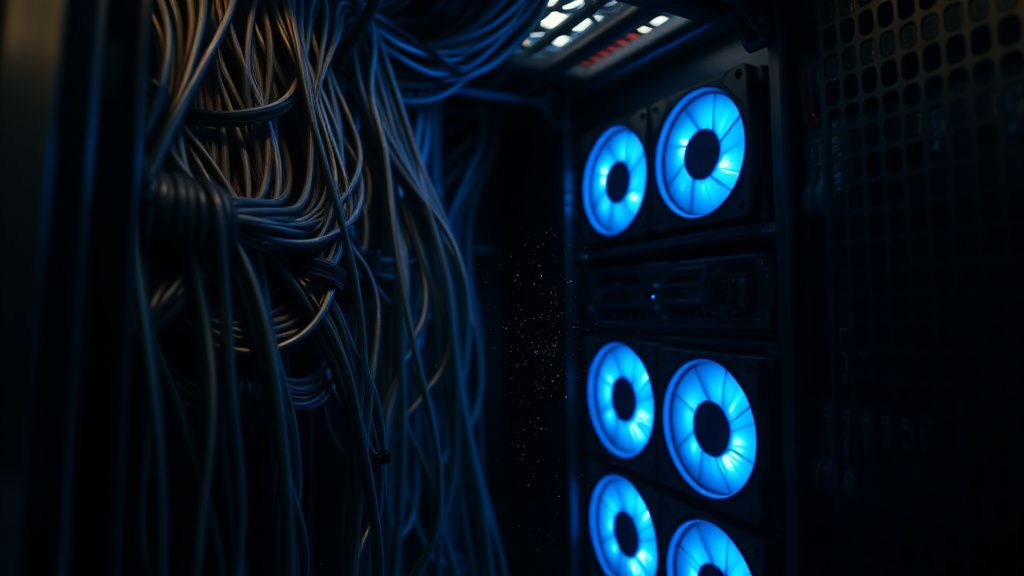
The margins in this business are built on a simple arbitrage: the difference between the depreciated cost of your hardware over 24-36 months and the hourly rate you can charge for specialized inference or fine-tuning services, much like the sophisticated strategies used by those mastering cross-border arbitrage in 2026. Unlike general-purpose cloud providers who optimize for generic workloads, a high-margin business here is found in "niche acceleration"—offering low-latency, privacy-compliant hardware for companies that literally cannot send their data to an API-based cloud.
The Hardware Paradox: Consumer vs. Enterprise
The biggest trap for newcomers is the assumption that you need enterprise-grade hardware. If you visit the r/LocalLLaMA subreddit or browse the GitHub discussions on text-generation-webui, you’ll quickly realize that the industry is polarized.
Enterprise gear (NVIDIA A100s, H100s) has the advantage of massive VRAM (80GB+) and NVLink interconnects, allowing for high-performance tensor parallelism. However, the barrier to entry is astronomical. Conversely, the "consumer-grade" route (RTX 3090/4090 rigs) offers a significantly better price-to-FLOP ratio, but at the cost of stability, rack density, and power efficiency.
The "Stability Tax"
When you build a rental business, "uptime" isn't a marketing buzzword; it’s your entire product. Consumer GPUs lack the ECC (Error Correcting Code) memory found in A-series cards. In a long-running fine-tuning job, a single bit-flip caused by cosmic radiation or voltage instability can ruin a 12-hour training run. If you are renting out compute, your customers will not care that "it's a consumer card problem." They will demand a refund.
- The Workaround Culture: Successful operators build "check-pointing" into their middleware. If your infrastructure layer doesn't save the model state every 30 minutes, you are inviting failure.
- Thermal Management: Consumer cards are designed for individual desktop airflow, not the dense, stacked environment of a server rack. If you haven't accounted for custom cooling shrouds or specialized chassis (like the 4U industrial cases designed for workstation GPUs), your hardware will throttle, and your margins will evaporate as your GPUs die premature deaths.
Economics of Scaling: The Maintenance Debt
Let’s be clear: this is not a "set it and forget it" business. The maintenance debt in local AI infrastructure is staggering, mirroring the hidden fiscal risks discussed in The Debt-as-a-Service Trap: How P2P Platforms Could Trigger a 2026 Liquidity Crisis. You are essentially a full-stack engineer, a network admin, and a hardware technician rolled into one—skills that would also serve you well if you decided to pivot toward building a profitable DCaaS business.
- Driver Fragmentation: NVIDIA’s CUDA ecosystem is a moving target. An update to the driver can break Docker containers running older versions of PyTorch. If you have 50 GPUs across 10 machines, you need a robust container orchestration strategy. Most small operators rely on Kubernetes (K8s) with the NVIDIA Device Plugin, but K8s is notorious for its steep learning curve and overhead.
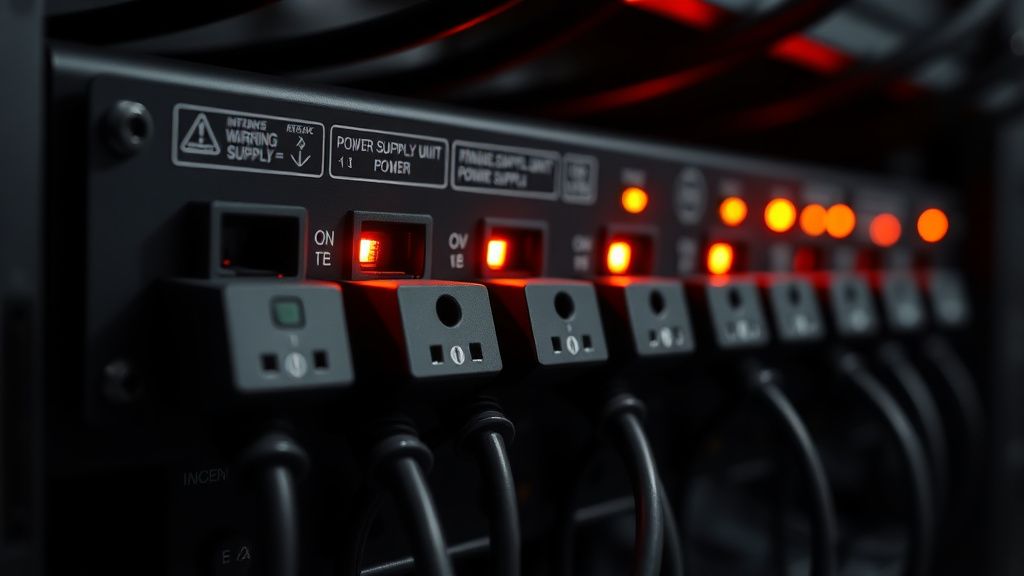
- The Cooling/Power Bottleneck: In many urban centers, the cost of the electricity required to keep these rigs running and cooled can exceed 30% of your operational budget. You aren't just selling "compute"; you are selling "energy conversion."
The "Privacy-First" Edge Case
The only way to achieve "high margin" is to find a moat. General compute rental is a race to the bottom, dominated by players like Lambda Labs or RunPod who have better economies of scale. Your competitive advantage lies in compliance and geography.
- Sovereign AI: Companies in highly regulated sectors (law, medicine, defense) are terrified of data leakage. They want the power of LLMs but refuse to use OpenAI’s API. They are willing to pay a 2x-3x premium for hardware that is physically separated from the internet (air-gapped) or located in a specific jurisdiction.
- The "Workaround" Reality: You will find that customers often try to bypass security protocols. Building a "trusted compute" environment requires strict IAM (Identity and Access Management) and audit logging—features that are often overlooked by DIY hardware enthusiasts.
Community Backlash and the "Cloud-Washing" Trap
If you look at Twitter/X threads regarding AI compute marketplaces, you’ll see constant tension between "decentralized" providers and users. Users frequently complain about "bait and switch" tactics where a service promises an A100 but provides a virtualized slice that doesn't hit the expected performance metrics.
- The Trust Gap: The community is hypersensitive to false advertising. If your documentation suggests you offer "full GPU isolation" but you’re actually using software-level partitioning (like NVIDIA MIG), you will face a PR nightmare on forums like Hacker News.
- The "Support Nightmare": When a user's fine-tuning job crashes at 3 AM because of a kernel panic on your host machine, you will be the one on the other end of the support ticket. If you don't have an automated way to re-provision the instance and notify the user, you will lose that customer immediately.

Building the Stack: A Practical Framework
If you are committed to this, your architecture needs to prioritize recoverability over raw speed.
- Bare Metal vs. Virtualization: Do not use heavy hypervisors. Use Linux with Docker/Apptainer. Every layer of abstraction between the user's workload and the GPU is another point of failure and a potential latency hit.
- The API Layer: Build a simple, robust API for instance lifecycle management. If users have to manually configure SSH keys and drivers, you have already lost. Look at tools like
RunPod-likeorchestration or open-source alternatives that allow you to manage GPU pools efficiently. - Monetization Strategy: Do not price by the hour only. Price by "reserved slots." The high-margin play is selling long-term access to a cluster, not fighting for spot-instance crumbs on the open market.
Real Field Report: The "Garage" Cluster Failure
In 2023, a group of independent developers attempted to launch a distributed compute network using consumer-grade RTX 4090s. They underestimated the power draw. During a peak load test, their main PDU tripped, causing a hard shutdown of 20 machines.
The resulting "dirty" power-down corrupted the file systems of five machines, and their data recovery process took four days. They lost their entire primary customer base in that single event because they lacked a redundant UPS system and an automated failover strategy.
Lesson: The biggest risk is not the AI model; it’s the physical infrastructure. If you don't treat your garage or datacenter as if it's a professional mission-critical site, your business will fail when you reach your first scaling inflection point.
Counter-Criticism: Why Local-Only might be a losing game
Critics of the "local-only" model argue that you are fighting the tide of hyper-scalers. NVIDIA’s DGX Cloud and AWS are integrating so deeply into the software stack (like NVIDIA’s AI Enterprise software suite) that "bare metal" rentals will soon become synonymous with "legacy" or "hobbyist" gear.
There is also the "Hype vs. Reality" problem. Many new entrants assume there is a massive market for LLM training. The reality? Most users only need inference. Inference is a commodity. If you aren't offering a specialized service—like custom fine-tuning or proprietary model hosting—you will struggle to compete with providers who have infinite bandwidth and automated load balancing.
FAQ
Is it actually profitable to rent out consumer GPUs?
Why do most local AI businesses fail within the first year?
What is the biggest technical challenge in this business?
How do I handle security if I don't use cloud-standard tools?
Is "Local-Only" really a selling point?
The Verdict: Is the Hype Justified?
The infrastructure side of AI is currently in its "Wild West" phase. There is a massive demand for compute, but the barrier to entry is transitioning from "knowing how to code" to "knowing how to build and maintain high-density data centers." If you can master the latter, you can maintain high margins. If you view this as a plug-and-play passive income scheme, you are going to be disappointed by the first broken fan or the first corrupted RAID array.
The successful operators in this space are those who treat their setup with the seriousness of a commercial ISP. They have redundant power, they have automated kernel patching, and they have strict SLA agreements. Anything less is just a very expensive, very noisy hobby.