
The transition from a solo "energy nerd" conducting weekend blower door tests to a scalable, profitable consultancy is not a linear progression of buying better equipment. It is an exercise in managing the friction between high-end building science and the messy, often neglected reality of residential construction. By 2026, the market has moved past the "low-hanging fruit" of basic weatherization; clients now demand deep decarbonization, performance guarantees, and integration with complex systems, much like those explored in Is Your Smart Home Secure? The New Strategy for Managed Security Services. Success in this sector requires navigating the gap between theoretical heat-loss calculations and the actual behavior of a house built in 1978 that has been renovated by three different contractors, none of whom understood vapor barriers.

The Operational Reality of Field Audits
If you are still operating as a lone auditor, your biggest bottleneck isn't the lack of lead generation; it’s the "data-to-action" gap. Most audits fail because they result in a 40-page PDF report that sits in the client’s inbox unopened. To scale, you must stop selling "audits" and start selling "project roadmaps."
In the field, the struggle is almost always between the precision of your sensors and the unpredictability of the site. I’ve seen countless junior auditors get trapped in the "accuracy loop"—spending four hours measuring insulation R-values in an attic with a laser distance measurer, when a quick thermal imaging sweep and a professional judgment call would have sufficed. The market doesn't pay for 1% accuracy; it pays for actionable intelligence that solves comfort and billing issues.
The "Hidden" Cost of Scaling: Scaling requires moving from manual data entry to a structured CRM-backed workflow. If your team is still using Excel spreadsheets to track customer blower door results, you are one typo away from a liability nightmare. The industry is shifting toward platforms like HEMS (Home Energy Management Systems) integrated with cloud-based diagnostic tools, similar to how professionals are optimizing modern infrastructure through resources like The 2026 Solar Strategy: Why Battery Integration is Now Your Most Profitable Asset. But be warned: the moment you force your field techs to interface with a complex app while they are crawling under a dusty subfloor, the data quality drops.
Case Study: The "Efficiency Trap" in Multi-Family Retrofits
Consider the case of "Project Oakwood," a mid-sized apartment complex from the 1990s where a consultancy firm promised a 30% reduction in energy usage through envelope sealing. The firm relied on automated modeling software that failed to account for "stack effect" in the elevator shafts.
When the blower door tests were finished, the firm pushed for aggressive air sealing. However, they failed to account for the mechanical ventilation strategy, leading to a spike in CO2 levels and indoor humidity within six months. The result? A reputation-damaging lawsuit and a total loss of the client's trust. The lesson here is that building science is not modular; if you change the airflow, you must change the ventilation, a principle as critical as troubleshooting complex hardware like the Roborock S8 Pro Ultra Offline? How to Fix Firmware Update Issues. Professionals who scale without accounting for the entire mechanical system end up as "leakers" of trust.

The Pivot to Consulting: Why Audits Are Only the Hook
To reach profitability by 2026, the audit must function strictly as a "lead magnet," using high-value strategies like those discussed in How to Build a High-Ticket Metabolic Coaching Practice Using Data-Driven Fasting. The real margin lies in "Project Oversight." You aren't just telling the client what to fix; you are managing the contractor who is doing the work.
The Contractor Conflict: You will inevitably clash with local HVAC and insulation contractors. They view you as a "snitch" who points out their sloppy install work. Successful firms don't fight this; they build a "Verified Partner" network. You only recommend contractors who are willing to perform "Blower Door Guided Retrofits," ensuring the same standard of technical excellence required to fix appliance issues, such as a Breville Barista Pro E01 Error: Troubleshooting and Repair Steps. If a contractor refuses to do a mid-job inspection, you stop referring them. This creates a closed-loop ecosystem where your audit dictates the quality of the installation, and the installation proves the validity of your audit.
Scaling Challenges: The Talent Deficit
Finding people who understand both the physics of heat transfer and the social skills to explain "thermal bridging" to a frustrated homeowner is the hardest part of the business. You will likely face a high turnover rate.
Why? Because the work is grueling. It involves:
- Dealing with hoarder houses or pest-infested attics.
- Communicating with angry homeowners when your audit reveals that their $15,000 furnace replacement did absolutely nothing to fix their cold bedroom.
- Managing the immense frustration of "ghosting" from HVAC contractors who don't want to fix their own mistakes.
Counter-Criticism: Is the "Professionalization" of Audits Killing Innovation?
There is a rising debate in the building science community regarding the over-reliance on ASHRAE standards and high-end software. Critics—often veteran handymen and older contractors—argue that "over-engineering" the audit process creates an adoption barrier.
"We are turning energy efficiency into a luxury service for the wealthy," says a prominent thread on a major construction forum. "We need more people doing 'good enough' sealing, not high-cost, hyper-accurate audits that nobody can afford."
The counter-argument is that as we transition to heat pumps and electrification, a "good enough" approach can lead to catastrophic hardware failure. If you undersize a heat pump because you overestimated the envelope efficiency of a drafty Victorian, you have done the client a disservice that costs them thousands in emergency heating bills. The balance, as always, is in the middle: rigorous data for the system design, but pragmatic implementation for the envelope work.
Technical Debt and The 2026 Infrastructure
As we look toward 2026, the landscape is heavily influenced by the rise of "Smart Homes." You are no longer just auditing insulation; you are evaluating the data coming off smart thermostats and energy monitors.
The Pitfalls of IoT Integration: Clients will demand to know why their "Smart" home is using more energy than expected. Often, the answer is "learned habits" or poorly configured automation schedules. If you don't understand the API side of these systems, you are essentially flying blind. You need to be able to pull data from apps, cross-reference it with your blower door results, and explain the discrepancy to the client. This is where "Energy Consulting" becomes "Home Performance Management."
Strategies for Long-term Profitability
- Subscription-Based Maintenance: Instead of a one-off audit, offer a "Performance Monitoring" subscription. You get access to their smart meter/thermostat data and provide a quarterly health report.
- Focus on Niche Markets: General residential audits are a race to the bottom. Specialized audits for historic preservation, net-zero retrofits, or moisture-damaged properties command a much higher premium.
- Automated Reporting Tools: Stop writing custom reports. Use tools that allow for modular report building, where you can swap in specific recommendations based on common building typologies (e.g., "1920s balloon frame," "1980s tract home").
The Human Element: Managing Expectations
The most successful consultancies I've observed are those that master the "expectation audit." Before you ever step foot on the property, the client should know that an audit will not result in a "magic button" solution. It will result in a list of trade-offs. The hardest part of the job is explaining to a client that insulating their attic is more effective than replacing their windows, even if the windows "look" older and draftier. You are selling invisible physics, and people hate paying for things they can't touch.

Navigating the Regulatory Minefield
By 2026, expect localized energy codes to become increasingly draconian. You need to be the "expert-in-the-room" for local inspectors. If your audit documentation can satisfy the local building department's HERS (Home Energy Rating System) requirements, you become an indispensable partner to builders. Do not treat the local inspector as an enemy; treat them as the gatekeeper whose life you are making easier by providing a paper trail that confirms code compliance.
Why do most energy efficiency businesses fail in the first 24 months?
Most fail because they treat their business as a service provider (hourly work) rather than a product provider (the report/the outcome). When you sell your time, you are capped. When you sell a comprehensive retrofit strategy that guarantees a specific ROI, you shift to value-based pricing, which is the only way to scale sustainably.
Is high-end diagnostic equipment worth the investment?
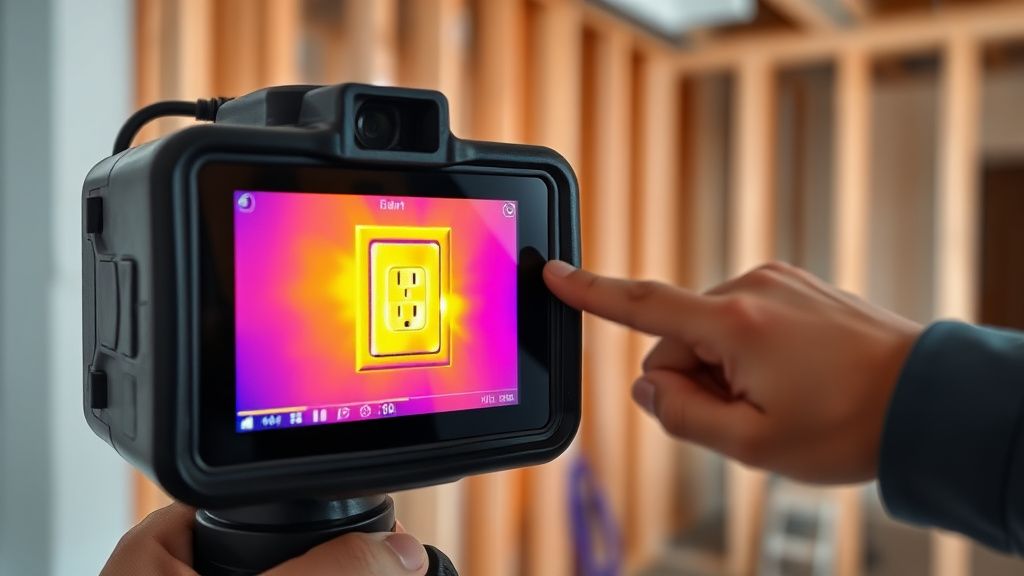
Yes, but only if you have the technical knowledge to interpret it. A $10,000 thermal camera is just a very expensive paperweight if you don't understand the relationship between relative humidity, temperature gradients, and emissivity. Do not spend money on hardware until you have mastered the underlying physical principles of building science.
How do I handle clients who want an audit just for a tax credit?
These are "checkbox" clients. You should have a streamlined, low-cost "Compliance Only" audit package for them. Do not spend your premium advisory hours on clients who aren't interested in actual performance. Keep your high-value consulting slots open for the clients who are committed to actual energy transformation.
What is the biggest mistake auditors make with report delivery?
Providing a 40-page, technically dense manual. Your client is a human, not a structural engineer. They want to know: 1) What is wrong? 2) How much will it cost to fix? 3) When will it pay for itself? If you can't summarize your findings in a one-page "Executive Summary" that highlights those three points, your conversion rate will remain abysmal.
Should I partner with local utility companies?
Utility partnerships are a double-edged sword. While they provide a steady stream of leads, they also come with immense administrative overhead and strict reporting requirements. Only pursue these if your internal data management is already automated. Using utility programs as your only source of revenue is a high-risk strategy, as funding cycles change and programs get defunded on short notice.
Final Thoughts on Resilience
The energy efficiency industry is prone to "hype cycles"—from the early days of weatherization to the current rush for heat pump integration. Do not get caught in the hype. Stay focused on the fundamentals of building envelopes: air sealing, insulation, and moisture control. If you master these three things, you will be in demand regardless of which piece of technology is currently trending. The houses of 2026 are just as leaky and poorly built as the houses of 2006; they just have more expensive equipment in them that is currently failing due to the poor building envelope. That gap is where your profit lives.