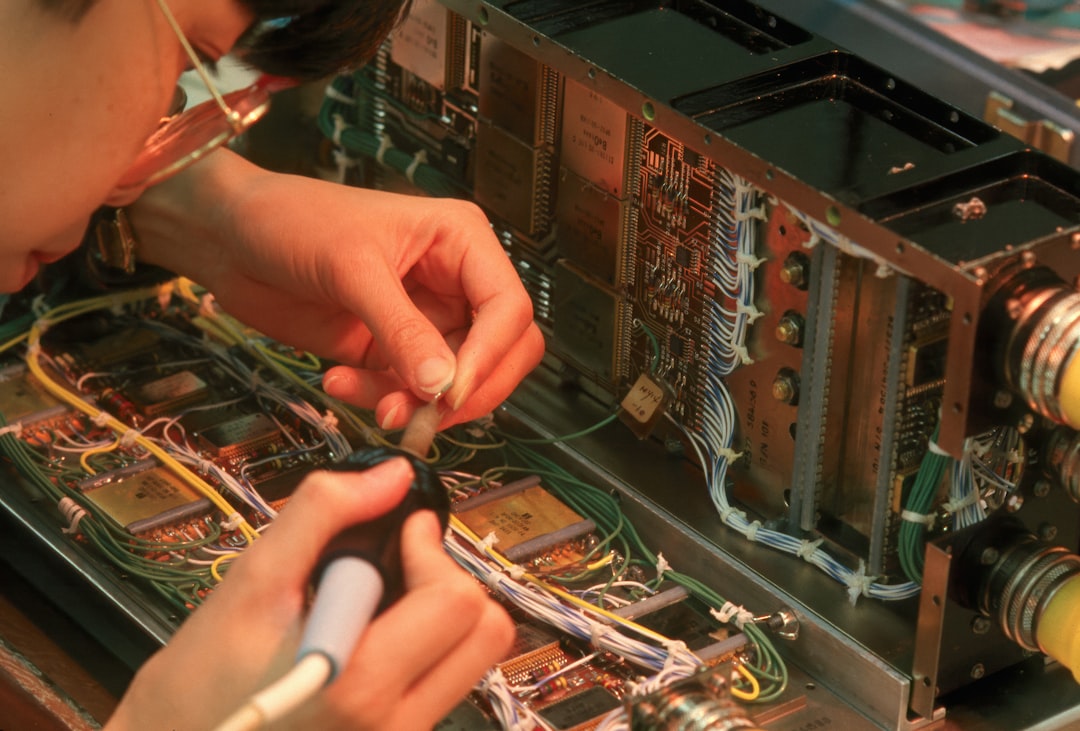
The smart appliance era promised a frictionless domestic utopia, but the reality for most homeowners is a $3,000 "internet-connected" brick that stops cooling because of a failed thermistor or a clogged inverter board. Building a specialized repair service for smart fridge cooling failures is not just about turning a screwdriver; it is about managing the intersection of legacy mechanical refrigeration and fragile, over-engineered IoT software. There is a massive, underserved market here: manufacturers have moved toward "non-repairable" modular designs, leaving an opening for technicians who can diagnose proprietary firmware issues and supply-chain-constrained electronic components.
The Anatomy of the "Smart" Failure
When a standard fridge dies, the problem is usually mechanical, similar to how owners of other smart devices face common issues, such as a Roborock S7 Error 1: How to Fix LiDAR Turret Obstructions Quickly or a Ring Doorbell Pro Offline After Wi-Fi Change? Here’s How to Fix It. When a smart fridge dies, the failure point is often abstracted. You might be dealing with a "no cool" symptom that has absolutely nothing to do with the refrigerant cycle. It could be a failed cloud handshake that puts the main control board into a safe-mode shutdown, or a faulty humidity sensor in the crisper drawer reporting a catastrophic error to the inverter, causing the entire system to dump power to protect the compressor from non-existent overheating.
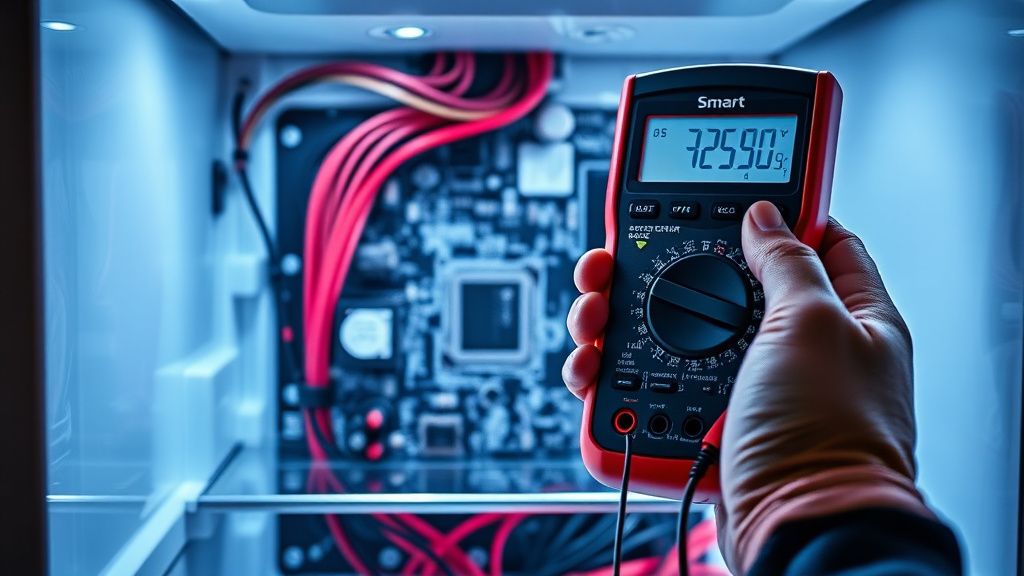
The operational reality of this business is that you are not just a repairman; you are a cross-domain engineer. You need to understand HVAC fundamentals, but you also need to be a digital troubleshooter. A recurring issue in the field—frequently documented in threads on sites like ApplianceBlog and Hacker News—is the "Ghost Error." This occurs when the fridge’s UI displays a specific error code that doesn't correspond to any official service manual, or worse, points to a component that is currently backordered for six months.
The "Right to Repair" Tug-of-War
The biggest hurdle in building this service is the wall built by the OEMs (Original Equipment Manufacturers). Large players like Samsung and LG have historically locked their diagnostic software behind proprietary interfaces. If you want to pull the error logs from a modern French-door smart unit, you often need a specific manufacturer-branded dongle or an active technician portal account.
Many independent shops attempt to bypass this using "workaround culture." This involves reverse-engineering the serial communication protocols between the UI board and the main inverter. If you want to scale, you have to decide: do you play by the manufacturer’s rules and pay for their restrictive technician certifications, or do you build a reputation as the "rebel" shop that fixes what the authorized centers say is "unfixable"?
- The Authorized Path: Access to genuine parts, official schematics, and service bulletins. The downside? You are legally restricted by their policies, and you often have to push for unit replacements rather than component-level repairs, much like when a Roborock S8 Pro Ultra Offline? How to Fix Firmware Update Issues occurs and requires a specialized fix.
- The Independent Path: Total freedom, the ability to do board-level soldering, and the option to source aftermarket (often higher-quality) capacitors and boards. The downside? Supply chain volatility. If you can't get a genuine control board, you are left explaining to a customer why their $4,000 fridge is failing, a situation as annoying as dealing with a Keurig K-Elite Descale Light Won’t Turn Off? The Step-by-Step Fix or the maintenance required to How to Properly Descale Your Breville Barista Express and Fix the 'Clean Me' Light.
Real Field Report: The Case of the "Looping Firmware"
In early 2023, a cluster of smart refrigerators in the Pacific Northwest started failing simultaneously. The symptoms were consistent: the interior lights would blink, the display would freeze, and the compressor would cycle on and off every 30 seconds. Authorized repair centers were quoting customers for a full inverter replacement ($800 + labor).
An independent group of technicians identified that this was not a hardware failure at all. It was a botched firmware update pushed via the fridge’s internal Wi-Fi. The units were stuck in a boot loop. By using a TTL-to-USB adapter to reflash the firmware, technicians proved that modular troubleshooting is a skill—much like learning How to Fix Ecovacs Deebot Error 4: Quick Repair Guide and Why It's a Growing Side Hustle or mastering How to Automate Dividend Reinvestment on Interactive Brokers for Maximum Returns to optimize your personal finance, or perhaps adopting strategies like the Debt Avalanche vs. Snowball: How to Pay Off Debt Faster and Save Thousands to clean up your balance sheet while you explore How Small Business Owners Can Rebalance Assets Without Triggering a Massive Tax Bill, From DIY to Profit: The Brutal Operational Reality of Scaling Vertical Farms, Why High-Ticket Isometric Training Is the Future of Sustainable Strength Coaching, Beyond Wearables: How to Scale a High-Ticket Circadian Health Consulting Business, or Beyond Passwords: How to Set Up Enterprise-Grade Biometric Security for Your Home Server. serial adapter and a community-provided firmware image (sourced from a leak on a GitHub repository), these independent shops were able to "reflash" the boards manually. They charged a fraction of the cost of a replacement board, effectively capturing the entire market in that region for three months. This is the gold standard of this business: solving a problem that the manufacturer created but refuses to own.
Infrastructure Stress: Scaling Your Service
The primary point of failure for new businesses in this space is not technical; it’s logistical. Smart fridge cooling failures have high "call-back" rates. If you replace a control board but fail to notice that the harness connector was slightly corroded due to moisture, the new board will fail within weeks. The internet is littered with angry Reddit threads from homeowners saying, "I paid $500 for a repair and it lasted six days."
To thrive, you need to implement a "Systematic Validation Protocol":
- Thermal Integrity Check: Always check the door gaskets and air circulation paths before blaming the electronics. Sensors often report "fail" because the cooling load is too high due to a leaking seal.
- Voltage Stability Testing: Many smart boards are hyper-sensitive to power surges. If you don't install a surge protector as part of your "fix," you are setting yourself up for a warranty claim when the customer’s home power grid fluctuates.
- The Communication Chain: If you communicate via Discord or a private forum with other techs, keep a repository of common failure patterns. If you see ten reports of a specific model failing for the same reason in one week, you know to stock up on that specific board before the prices spike on the secondary market.
Counter-Criticism: The Ethics of "Board Level" Repair
There is a growing debate in the industry regarding component-level repair. Some experts argue that when you bypass manufacturer safety protocols by soldering your own capacitors onto a board designed to be replaced as a whole, you are assuming legal liability for potential fire hazards.
"When you take the cover off a power supply unit and start replacing individual diodes," says one veteran tech in a LinkedIn discussion, "you aren't just fixing a fridge. You are re-engineering a safety-certified device. If that fridge starts a kitchen fire, the insurance investigators are going to look for non-OEM modifications. Guess who they find first?"
This is a valid risk. Your service must be built on a foundation of professional-grade standards. If you are soldering, you must use high-quality components, follow IPC standards, and document everything. Never present a "hacked" repair as an "official" fix. Transparency with the client is your best legal defense.
Monetization and Revenue Streams
Don't rely solely on labor fees. The money in smart appliances is in the data and the service contract.
- Preventative Maintenance Subscriptions: Offer a "Smart Care" package. For a flat annual fee, you remotely monitor their device status (if their API allows) or perform an annual "digital health check" where you clear out the dust from the condenser coils and run a diagnostic dump to catch impending failures before the compressor burns out.
- Refurbished Parts Inventory: Keep a "parts graveyard." When you strip a unit that is physically damaged (e.g., a dented frame), save the control boards and sensors. These become your profit engines. You can sell tested, used boards on eBay or use them for "flat-rate" repairs where a new part is unavailable or exorbitantly expensive.
Common Pitfalls and Why Most Fail
- Ignoring the "Hidden" User Experience: You walk into a house where the family is frantic because their food is rotting. They don't want a lecture on Ohm's Law. If you don't have a standardized "triage" communication script, you will lose the customer before you even touch the fridge.
- Over-relying on Online Docs: Official manuals are often wrong or outdated by the time they reach the field. Trust your own diagnostic tools (AMP meters, pressure gauges, serial port monitors) over the "Service Manual" every time.
- Ignoring UI Frustrations: Sometimes the cooling is fine, but the interface says it isn't. Customers will assume the unit is broken if the app tells them the temperature is 50°F when it’s actually 38°F. Know how to reset the smart hub module independently of the cooling cycle.
The Future: Modularity or Obsolescence?
As we look at the next generation of smart fridges, the trend is toward "Software-Defined Refrigeration." The cooling cycle is becoming a subsidiary function of the app. This is terrifying for the consumer but lucrative for the specialized repair tech. As long as these devices are connected to the internet, they will have "buggy" moments, and as long as they have power supplies, they will have hardware failures.
You are not competing with manufacturers; you are competing with the inconvenience of the appliance. If you can provide a fix that takes 24 hours instead of waiting three weeks for a "certified" part that is currently stuck on a cargo ship, you will own your local market.