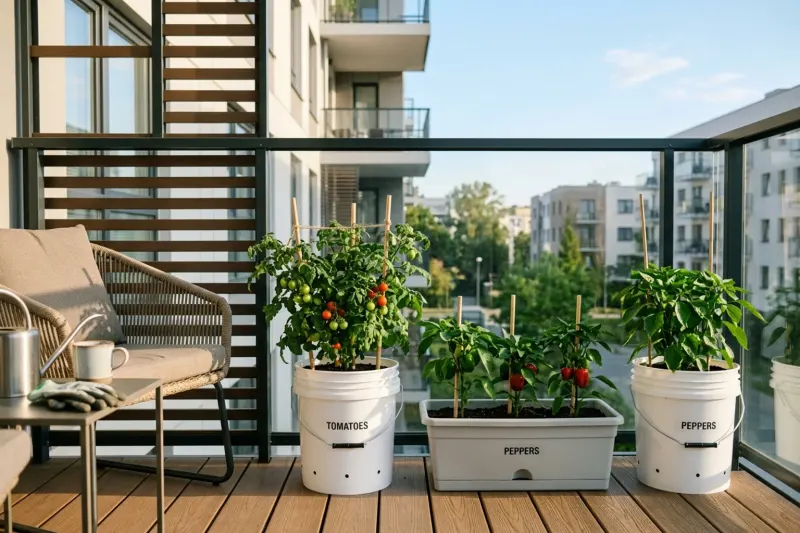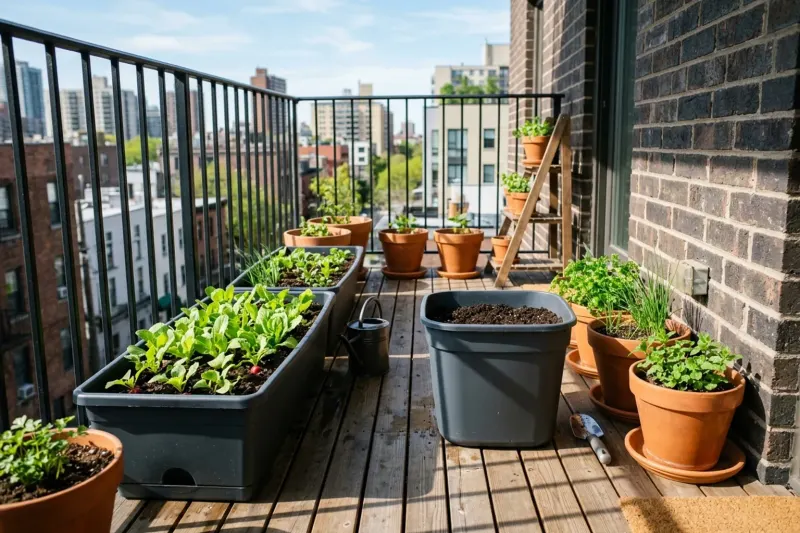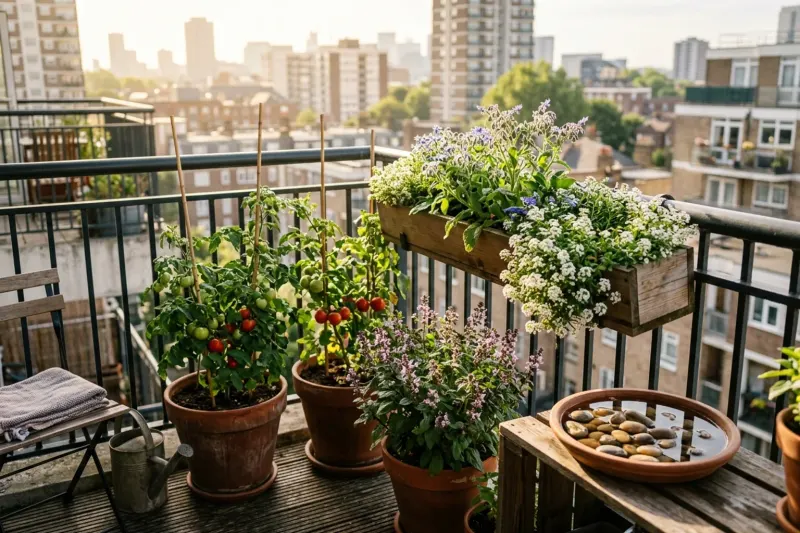
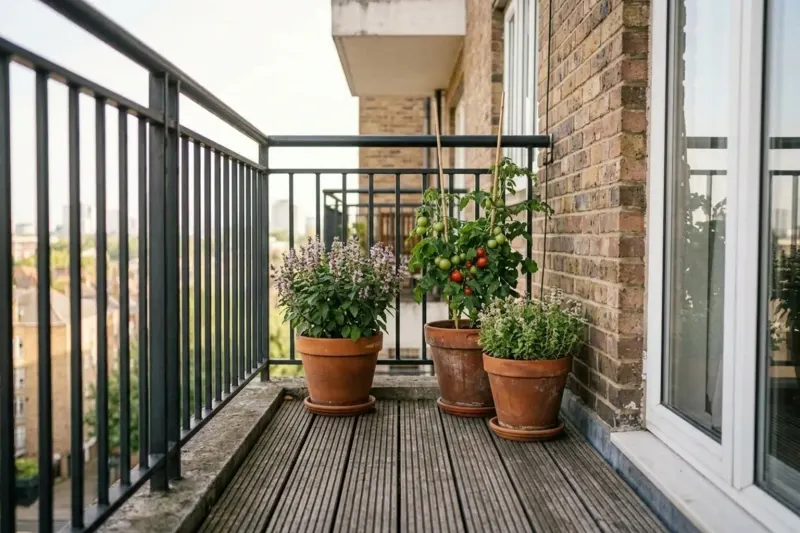
A pot of flowers beside your vegetables can make a balcony more welcoming to visiting insects. Start with the growing conditions you actually have: the hours of sun, the wind, and enough space for both plants to reach their mature size. Flowers are one part of the plan. They cannot correct an undersized container, unsuitable weather or a crop that needs different care.
Check what your crop needs
Before adding companion flowers, look up how your particular vegetable is pollinated. Tomatoes have self-fertile flowers; many cucumbers need pollen moved between separate flowers. Some cucumber varieties set fruit without pollination, so the variety label matters as much as the crop name.
Do not diagnose a dropped flower from insect activity alone. Weather, watering, plant maturity and other growing conditions can also affect fruit set. Check the crop guidance from your local extension service before adding another plant or trying hand pollination.
For a useful observation, watch the same flowering pot at different times on a few suitable days. Note which flowers are open and whether insects visit. A quiet ten-minute look is a planning exercise, not a test that proves a plant attracts more pollinators.
Related guide: Choosing Food-Safe Plastic Pots for Vegetables
Make room for flowers
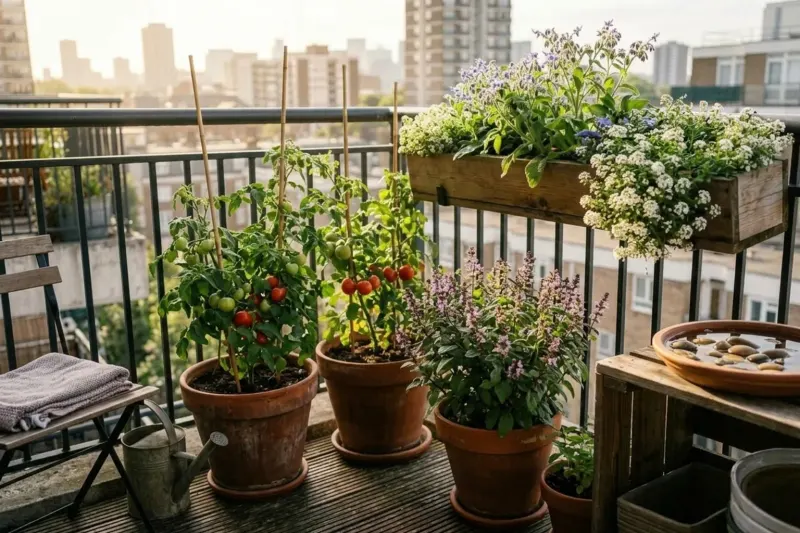
Choose flowers for the available light and the space they will occupy when mature. A small nursery plant can outgrow a narrow trough. Check its label for eventual height, spread, pot needs and local suitability before choosing a position.
A separate flower container is often the simpler starting point: it lets you manage water and root space without crowding the vegetable. Sharing a pot can work in some combinations, but a flower is not free space-wise simply because its leaves sit below the crop.
Try a few flower forms and flowering seasons appropriate to your location instead of filling every gap with the same plant. Ask a local nursery or extension service about compact, locally suitable choices. Avoid buying a large mix before seeing how the first containers fit around doors, drains and the walking route.
Related guide: Timing Container Vegetables Using Local Frost Dates
Let a few herbs bloom
If you already grow basil, chives or other herbs, consider leaving part of the planting to flower. Keep a separate plant for leaf harvest if flowers would interfere with how you use the herb. Flowering times vary by species, weather and local growing conditions.
| Your priority | A practical starting point | What to check |
|---|---|---|
| Regular basil leaves for cooking | Keep a harvest plant separate from a flowering plant | Enough space and suitable light for both |
| A very narrow balcony | One compact flowering container | Mature width and a clear walking route |
| Flowers across more of the season | Choose plants with different local flowering periods | Regional bloom times, not a generic national calendar |
Sweet alyssum can be considered as a flowering plant, but it is not a culinary herb. Do not treat every plant in a pollinator display as edible. Match each pot to the plant rather than applying one minimum depth to all species.
Find a sheltered position
Look for a position that meets the plant's light needs and is less exposed to gusts. Start with containers placed securely on the floor. Keep exits, door swings and access routes open, and follow the building's rules about balcony loads and planters.
A wall may offer shelter, but observe your own balcony before assuming it is a calm spot. Do not create a windbreak by balancing heavy pots on a railing or adding unsupported tall screens. A more sheltered arrangement can still be unsuitable for a plant that needs more sunlight.
An insect water station is optional, not a requirement for this plan. If you choose one, follow local pollinator and mosquito guidance and keep it clean; stones do not make water drown-proof. This guide does not recommend adding pesticides or improvised chemical doses to a water dish.
Keep the whole container garden healthy
Give the vegetables their own adequate rooting space and check moisture in each container. Crowding more plants into a small pot adds another watering and root-space decision; it does not guarantee better pollination or a harvest.
Before buying supplies, list what you already have: suitable pots with drainage, growing mix intended for containers, a watering container and a place to put each mature plant. Prices vary, so price the actual containers and plants locally instead of treating a sample budget as a quote.
Avoid spraying open flowers where insects are visiting. If a pest problem needs treatment, identify it first and follow local guidance and the product label. An evening application or an organic label does not by itself establish that a treatment is harmless to pollinators.
Keep a simple note of what flowers when and what fits comfortably. That makes next season's choices more useful than a crowded arrangement chosen only for a photograph.
Choose a first change that fits your balcony
| Situation | Consider | Why |
|---|---|---|
| Vegetables already fill their containers | Add one separate flower pot if space allows | Avoid assuming the existing pot has spare root space. |
| The balcony gets strong gusts | Observe a sheltered floor-level position near a wall | The actual wind and access route matter more than the floor number. |
| Flowers appear but fruit does not | Check the variety and crop-care guidance | Lack of insects is only one possible explanation. |
Example: one flower pot beside an existing crop
Suppose you have an established container tomato and space for one additional pot. Mark the new pot footprint on the floor, then check the door swing and walking route. Choose a flowering plant whose mature size and light needs fit that position. Keep it in its own container and observe both plants before adding more. This is a hypothetical planning example, not a tested layout or a promise of increased fruit set.
When this approach is not a good fit
This approach needs adjustment on enclosed balconies that insects cannot enter, sites with unsuitable light, and spaces where added pots would block access or breach building rules. Choose plants for your climate and check local guidance if stinging insects are a concern.
Sources & further reading
- Penn State Extension - Container Vegetable Gardening: Four Keys to Success
- Penn State Extension - Protecting Our Pollinators
- University of Minnesota Extension - Companion Planting in Home Gardens
- Tufts Pollinator Initiative - Container Gardening for Pollinators
- Pollinator Partnership - Balcony Gardens
- Texas A&M AgriLife - Benefits of Pollinator-Attracting Companion Plants
AI-assisted writing and concept images. Sources and automated checks support the process; they do not replace checking your own measurements.
How we create our guides · Suggest a correction