
The landscape lighting industry occupies a strange, lucrative niche between high-end architectural landscaping and electrical contracting. It is a business that thrives on the "wow factor" of a finished evening display, yet its real profitability hides in the unglamorous, often grueling realities of ground-level installation: cable trenching, voltage drop calculations, and the eventual, inevitable oxidation of sub-par connectors. To build a high-margin firm here, you must move beyond the "wire-and-bulb" handyman mindset and think like a systems integrator—much like those featured in Turning Under-Cabinet Filtration Into a High-Margin Plumbing Business, who understand the long-term physics of infrastructure and client psychology.

The "System Integrator" Mindset vs. The "Fixture Hanger"
Most DIYers and entry-level contractors treat landscape lighting like a decorative hobby—they buy a kit from a big-box store, daisy-chain 15 lights to a transformer, and walk away. That is a liability, not a business. The "High-Margin" model starts with a refusal to use cheap materials.
In the real world, the enemy is not the sun; it is moisture. Your profit margin is eroded by "warranty calls." If you have to go back to a client’s property four times in the first year to replace a burnt-out driver or a corroded wire nut, your hourly rate for that job effectively drops to near minimum wage. High-margin businesses standardize on:
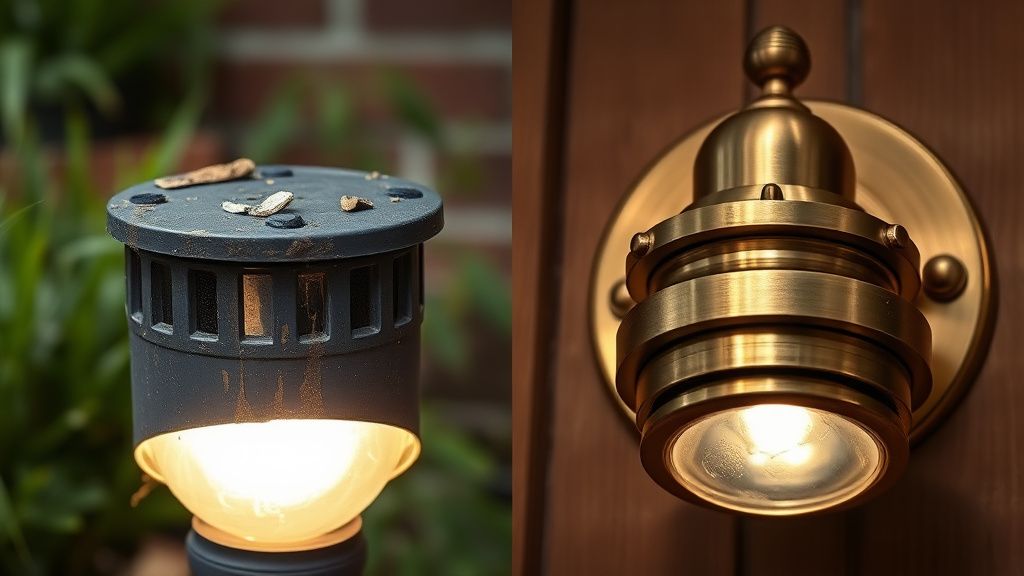
- Marine-grade brass or copper fixtures: These withstand soil acidity and sprinkler water.
- Grease-filled wire connectors: If you aren’t using genuine 3M DBY/DBR connectors or similar proprietary gel-filled kits, you are setting your business up for ground-fault failures.
- Voltage drop awareness: You must master the math of the "home run" wiring method. If you ignore voltage drop, the lights closest to the transformer will be brighter (and burn out sooner) than those at the end of the line.

Operational Reality: Why Most Startups Fail
The failure rate in this sector is remarkably high, often because contractors struggle to replicate the specialized service models discussed in Why Most Ergonomics Consultants Fail to Scale (And How to Fix It) or due to general poor project management. When you transition from DIY to professional, you discover the "trenching friction." Hand-digging through root-heavy soil in the heat of July is a different beast than installing a light on a workbench.
The Scaling Trap: Many contractors try to scale by hiring unskilled labor for trenching, but often find it more efficient to pivot toward high-value electrical systems similar to the ones explored in Why Smart Electrical Panel Upgrades Are Becoming the New Gold Rush for Contractors. This often leads to the "severed cable" syndrome, where a laborer drives a spade through your main line, and the diagnostic process eats your entire profit for the job. The best firms use mechanical trenchers, even for small jobs, to maintain consistency and speed.
The Hidden Cost of Moderation: Platform-based lead generation (like Angi or Thumbtack) is a minefield. You will find that these platforms reward the "lowest bidder," which is the antithesis of a high-margin model. Instead, rely on "Light-Walk" consultations. You don't quote over the phone. You charge a design fee for a night-time demo. Bringing a portable transformer and a few demo fixtures to a client's yard at 8:00 PM creates a psychological "ownership" of the effect. By the time you hand over the quote, they are already imagining their dinner party guests walking through that illuminated path.
The Economics of Maintenance Contracts
A "one-and-done" install is a service transaction. A maintenance contract is an annuity. The high-margin play is to position the system as a "living asset" that requires care.
Most clients don't know how to change a landscape bulb or how to reset a smart-timer after a power outage, just as many consumers struggle with connectivity issues, often requiring help like Alexa 'Device Is Unresponsive': Step-by-Step Fixes and Pro Diagnostics. By building a subscription model—where you return twice a year to clean lenses, adjust aim, and check connections—you stay top-of-mind. This creates a feedback loop: you are there to see if a tree has grown over a light, much like a technician identifying systemic issues when troubleshooting an Alexa Pulsing Red Light? How to Fix Your Unresponsive Smart Speaker, allowing you to suggest an upgrade or an additional fix.ture. You aren't just a contractor; you are a consultant.

Field Report: The "Oxidation Crisis"
In 2022, a notable thread on the Irrigation & Lighting Professionals forum highlighted a common catastrophe: a contractor who used "waterproof" plastic connectors from a popular consumer brand. Over two years, the heat-cycling caused the plastic to become brittle, and the "waterproof" seal failed. The result was a systemic failure of 40% of the lighting system across 15 high-end properties.
The lesson here—and the reason some firms refuse to touch another contractor's work—is that troubleshooting someone else’s bad wiring is a nightmare. It is almost always more profitable to rip out a failing system and start fresh than to chase "ghost faults" in a corroded wire path. If you are starting out, document your wiring paths with photos and GPS markers. If you don't know exactly where your cable is buried, you are flying blind in the future.
Counter-Criticism: Is "Pro" Worth the Markup?
Critics of the high-margin model often argue that the price delta between DIY (approx. $15/fixture) and pro (approx. $150+/fixture installed) is unjustified. They point to the ubiquity of affordable smart-bulbs and plug-and-play kits on Amazon.
The industry’s counter-argument—and the one you must articulate to your clients—is Sustainability and Serviceability.
- The DIY path: The fixture dies in 18 months, the user can't find a matching replacement, and the whole system becomes an eyesore.
- The Pro path: The client is buying a system where parts remain available, drivers are field-replaceable, and there is a professional entity with a warranty to call.
You are not selling the fixture; you are selling the absence of frustration.
Navigating the Technology Shift: WiFi, Bluetooth, and Smart-Home Integration
The integration of smart-home ecosystems (Lutron, Control4, Hue) has added a layer of complexity. Customers now demand app-based control, astronomical clocks, and even color-changing capabilities.
- The Danger: Smart components are the first point of failure. A traditional magnetic transformer is essentially a rock—it lasts 20 years. A smart-controller is a computer. Computers fail, firmware updates break things, and WiFi signals don't penetrate stone walls.
- The Solution: Build modularly. Use a robust, analog low-voltage system as the backbone, and add smart control on the "front end" (at the transformer/timer level). Never bury a smart device or a complex junction in the dirt. Keep the "intelligence" accessible in a waterproof box above ground or near the home’s exterior.
Troubleshooting and Managing Client Expectations
You will inevitably face the "dim bulb" complaint. Sometimes it is a dying LED; often, it is just a dirty lens. The psychological impact of a dirty lens—covered in lawn-mower kick-up or mud—is immense. Educate your clients during the sale: "This is like a luxury car. It requires regular detailing to maintain the performance."
If you are currently managing a business that is struggling with low margins, audit your "call-back" logs. Are you getting the same complaints from the same clients? If so, your install standard is likely the culprit, not the hardware. Tighten your connection protocols. If you are still using twist-on wire nuts, stop immediately. Move to heat-shrink crimp connectors or high-end silicone-filled hubs.
The Path to Recurring Revenue: The "System Refresh"
The highest margins aren't in the initial install—they are in the "System Refresh" after year three. This is when you sell the client on upgrading their old, dim 2700K LEDs to higher CRI (Color Rendering Index) lamps, or adding "moonlighting" (fixtures placed high in trees). Because you already have the transformer and the main cable runs, your overhead for these upgrades is minimal. Your profit margin on a "refresh" project can easily exceed 60%, whereas a standard installation often sits in the 30-40% range due to heavy material and labor costs.

How do I justify charging $200 per fixture when the client can buy a set of 10 for $100 on Amazon?
You aren't selling the fixture; you are selling the "installed reliability" and the warranty. Explain the total cost of ownership. A DIY kit will likely require replacement in 2 years, whereas your brass fixtures with lifetime warranties—backed by your maintenance contract—are a 15+ year investment.
What is the biggest mistake beginners make with voltage drop?
Beginners often calculate voltage based on the length of the cable between the first and last light. You must calculate the total distance from the transformer to each fixture, treating each run individually. If your voltage at the fixture is below 10.5V, your LED life will be severely shortened, and the color temperature will shift significantly.
Should I offer color-changing (RGB) lights for residential projects?
Only if your target demographic is high-end or party-oriented. RGB lights have a higher failure rate and are significantly more complex to troubleshoot. For most residential clients, a consistent, high-CRI (90+) warm white (2700K) look is more "architectural" and carries a higher perceived value.
Why do my connectors keep failing even when I use waterproof nuts?
Usually, it’s improper installation. You must strip the wire to the correct length and ensure the connector is fully seated. Most failures occur because the technician didn't ensure the wire insulation was fully enclosed within the gel. If the copper is exposed to air, moisture will find it, and corrosion will follow.
What is the best way to handle "after-hours" emergency calls?
Have a clear policy in your contract. A "blinking light" is not an emergency. A system-wide outage due to a tripped GFI is a billable service call. Define these clearly during the sign-up phase so that when a client calls at 10 PM because one fixture is out, you have a professional, pre-agreed boundary to point to.