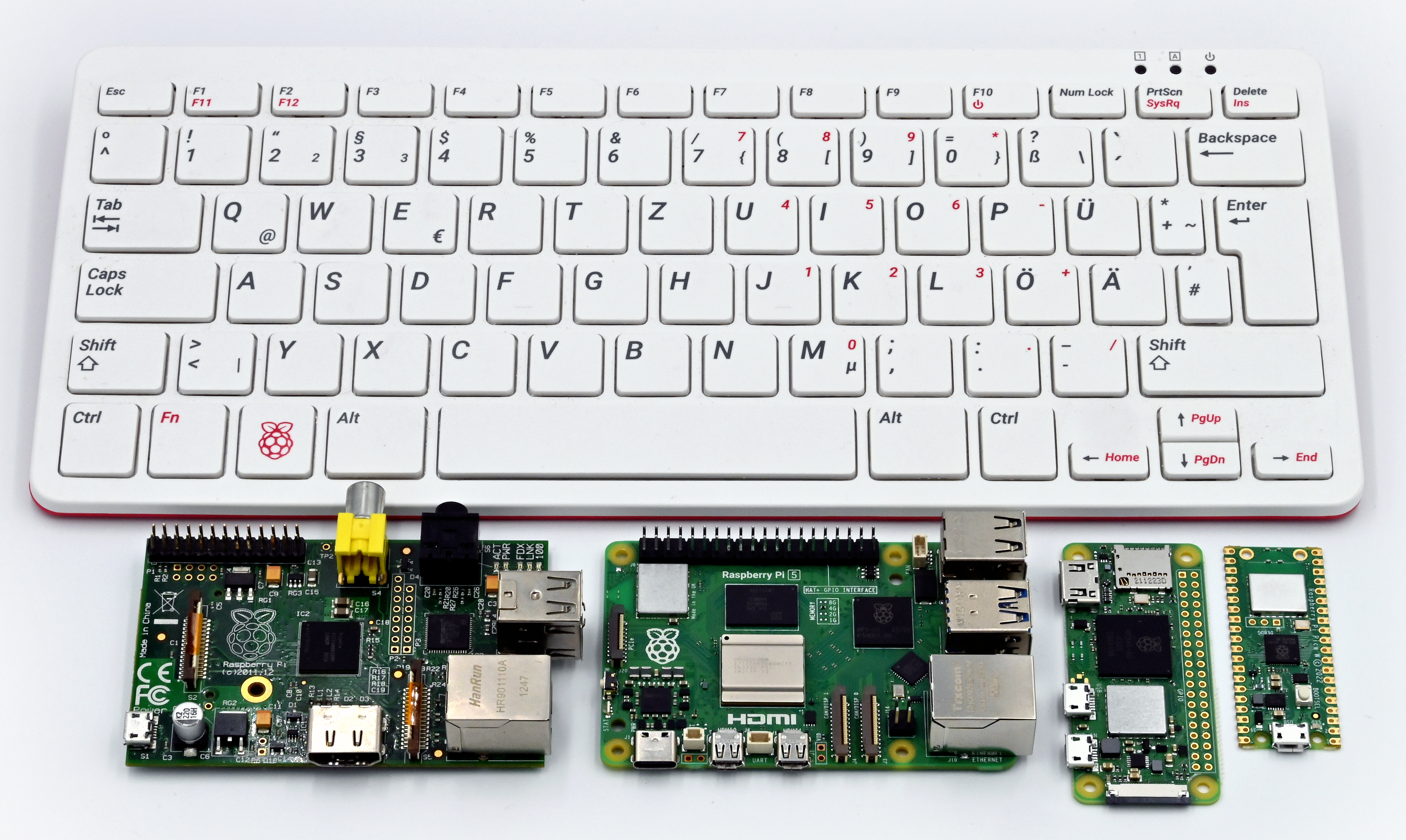
Deploying a Large Language Model (LLM) on a Raspberry Pi 5 for enterprise-grade home security is a paradoxical engineering feat. You are essentially bridging the gap between high-latency cloud reliance and the erratic, resource-constrained reality of edge computing. While the promise of "local privacy" is the primary driver, the operational friction of balancing inference speed against power consumption—and the inevitable failure modes of local hardware—remains the greatest hurdle for any serious implementation.
The Architectural Fallacy: Why Edge LLMs Break
The marketing narrative suggests that moving security logic from AWS or Azure to a credit-card-sized board is a straightforward upgrade in autonomy. The engineering reality, however, is a persistent battle against memory bandwidth. The Raspberry Pi 5, even with its 8GB of RAM, is not a GPU powerhouse. When you attempt to run a quantized model (like Llama-3-8B or Phi-3) to interpret home security events, you are not just building a service; you are building a system that is constantly on the verge of thermal throttling and memory-paging-induced lockups.
If your security service requires real-time object recognition (e.g., distinguishing between a stray cat and a package thief), a raw LLM is often the wrong tool—or at least, a very slow one. We see a significant divide in community forums like r/LocalLLaMA and various GitHub issue trackers where users attempt to bridge Vision Transformers (ViT) with LLMs. The consensus in threads like “Why is my inference taking 4 seconds per token?” is almost always the same: you are hitting the I/O wall.
Hardware Reality and Thermal Constraints
To run an LLM reliably, the Pi 5 requires a cooling solution that moves beyond the stock heatsink. The "enterprise" requirement here necessitates stability. If the system enters a thermal runaway state during a security event, you have no redundancy; just as you'd struggle with a faulty smart home device, remember that troubleshooting your hardware is essential for maintaining a reliable security ecosystem.
- Active Cooling: The standard PWM fan is insufficient for sustained inference. Serious deployments often utilize custom M.2 NVMe HATs for faster swap space, but even then, the PCIe 2.0 interface on the Pi 5 creates a bottleneck.
- Power Stability: Using the official 27W USB-C power supply is non-negotiable. Any voltage sag during an intense inference spike leads to silent kernel panics—the "hidden death" of security appliances, similar to how power loop issues can render a doorbell useless.
The "Monetization" Mirage: Is There a Market?
When discussing monetizing local security, we run into the Trust vs. Convenience paradox. Most homeowners don't want to manage an LLM node; they want an app that "just works," much like how professional technicians prioritize reliability when they refurbish appliances for profit. If you are building this for enterprise deployment, such as legally structuring a multi-member DAO for your freelance team, the value proposition shifts from "privacy" to "uptime."
Monetization is rarely direct, though it often involves troubleshooting complex hardware, much like fixing a Nespresso machine that won't stop blinking. Instead, it follows a service-contract model:
- Managed Maintenance: Charging for the "health" of the edge node (monitoring temperature, logging inference failures, managing model updates).
- Custom Fine-Tuning: The real value isn't the model itself, but the proprietary dataset of patterns, which requires a stable environment similar to how one must optimize network latency for peak performance.
- Hardware Lifecycle Management: Charging for the physical box, the cooling kit, and the eventual hardware refresh.
Field Report: The "Garage Door" Failure
In a recent deployment scenario documented in a private sysadmin mailing list, a user attempted to use a Pi 5-hosted Mistral-7B instance to "describe" security camera footage. The latency, at 0.5 tokens per second, rendered the system useless for an immediate break-in notification. The system was "secure" in the sense that data stayed local, but it failed the fundamental requirement of security: immediacy.
The lesson here: The LLM should never be the primary trigger. It should be the analyst. Use lightweight classical computer vision (OpenCV/YOLOv8) to detect movement, and use the LLM to interpret what is happening after the event is triggered.
Counter-Criticism: The "Local-First" Fallacy
There is a growing chorus of critics—specifically within the cybersecurity auditing community—who argue that local LLMs offer a false sense of security. If your Raspberry Pi 5 is not properly segmented via VLANs or protected by a hardened firewall (e.g., pfSense or OPNsense), you are merely shifting the threat surface. An exposed API endpoint on your LLM service, if compromised, allows an attacker to manipulate your security logic or gain a foothold in your local network.
Furthermore, the "monetization" of this service is often criticized as being predatory. Selling a "privacy-focused security box" to non-technical homeowners creates a liability nightmare. If the system fails to report a burglary because the model was "hallucinating" or because the Pi was busy swapping memory, who is liable? The developer? The hardware manufacturer? There is no clear legal framework for "AI-Assisted Security Failure."

Technical Implementation: The Workaround Culture
Because native LLM support on ARM64 is still maturing, the "workaround culture" is in full swing.
- Ollama vs. llama.cpp: Most production-leaning users have abandoned heavier inference engines in favor of
llama.cpp. The sheer efficiency of the C++ implementation is required to keep the CPU load manageable. - The Swap Strategy: Many developers are configuring a 16GB ZRAM swap partition. It’s not as fast as RAM, but it prevents the "OOM Killer" (Out of Memory) from nuking your security service during a complex reasoning task.
- Model Distillation: Don't run the full model. Use smaller, distilled models (e.g., Q4_K_M quantization). You lose nuance, but you gain the ability to run at 3-5 tokens per second.
Why Developers Are Abandoning "Cloud-Only"
The shift toward local LLMs for security is driven by "API fatigue." We have seen developers move away from OpenAI or Anthropic for security tasks because of the unpredictable pricing spikes during "false positive storms." When a neighbor's tree branch triggers your camera 200 times a night, and your LLM-based security provider bills you per token, your home security cost becomes a variable line item that can exceed your utility bills. Local hardware turns this into a fixed cost—your electricity.
The Scaling Problem
The moment you scale from one home to ten, the Raspberry Pi 5 strategy starts to fracture. You cannot effectively "manage" 100 Pi 5s remotely without a robust orchestration layer. This is where most projects die. They function in the lab, but they fail when they have to be updated via git pull across a fleet of unstable, consumer-grade internet connections.

FAQ
Is a Raspberry Pi 5 actually powerful enough to run an LLM for real-time security?
What is the biggest failure point in these systems?
How do I stop the LLM from hallucinating an intruder?
Why do most people give up on this project after two weeks?
llama.cpp drops or an OS update changes a kernel parameter, something breaks. It is a hobbyist’s dream but a support technician's nightmare.Is there a viable business model for this beyond "selling the box"?
What is the best way to handle networking for these local nodes?
Does the quantization of the model matter that much?
Final Thoughts: The Stability vs. Innovation Trade-off
The industry is currently obsessed with "running everything locally." There is a romanticized view of a disconnected, private home fortress. The reality is that we are in a transition period. The hardware is just barely catching up to the software, and the software is still too hungry for the resources available on a sub-$100 board. If you approach this as a learning exercise, it is the most rewarding technical journey you can take. If you approach it as a way to "replace" professional security, be prepared to spend 80% of your time fixing the system and 20% of your time actually monitoring it. The "enterprise" grade security you seek is not found in the AI; it is found in the redundancy, the cabling, and the boring, unsexy aspects of infrastructure that developers love to overlook.