
The optimization of human biology for "high-performance wealth generation" is a paradoxical space. It sits at the intersection of Silicon Valley’s obsession with biohacking, the brutal efficiency of Wall Street's "lunch-is-for-wimps" culture, and the emerging medical consensus on glycemic control. Building a custom low-carb meal prep plan isn't about dieting for aesthetics; it is about managing your primary operating system—your brain—to avoid the metabolic crashes that compromise decision-making in high-stakes environments.
The Metabolic Foundation of Decision Fatigue
Most professional "performance" diets fail because they are treated as static documents. In reality, your biometric baseline is a moving target. If you are a founder scaling a company or a trader managing a portfolio, your cortisol spikes—often induced by market volatility or board room pressures—directly influence how your body processes glucose. When you consume high-glycemic carbohydrates, you trigger a rapid insulin response. This is followed by a reactive hypoglycemia—a blood sugar crash.
In the context of wealth generation, that crash is expensive, often leading to the common pitfalls explored in Why Most AI Affiliate Funnels Fail at $10k MRR: The Hidden Operational Reality. It is the moment in the afternoon where your cognitive flexibility drops, your patience thins, and you become prone to "loss aversion" errors or impulsive strategic pivots. A low-carb protocol aims to flatten that curve, maintaining a steady-state energy supply through ketones and fat oxidation.

Step 1: Establishing the Biometric Baseline
You cannot optimize what you do not measure. Before shifting to a low-carb (or ketogenic) protocol, you must establish your personal glycemic profile. General health advice suggests <50g of net carbs, but your specific metabolic flexibility might require 30g or 80g to remain "optimal."
- Continuous Glucose Monitoring (CGM): Do not rely on finger-prick tests. Invest in a device like a Dexcom or Libre 3 for a 30-day "calibration period."
- Mapping the Response: Record not just food, but the correlation between specific carb sources and cognitive performance. Does a side of quinoa lead to a 10-point drop in your executive function score three hours later?
- The "Wealth-Productivity" Audit: Track your output. Does your ability to synthesize complex documents fluctuate with your glucose levels, much like how Is Your Blog Content Being Sold to AI? What Creators Need to Know for 2026 details the risks to your digital intellectual property? This is your most important metric.
Designing the "Low-Friction" Prep System
The greatest barrier to high-performance eating is the "decision tax," a concept that also plagues those who ignore Why Automated Personal Brands Are Failing in 2026. Spending 20 minutes deciding what to eat is 20 minutes stolen from deep work. Your system must be automated.
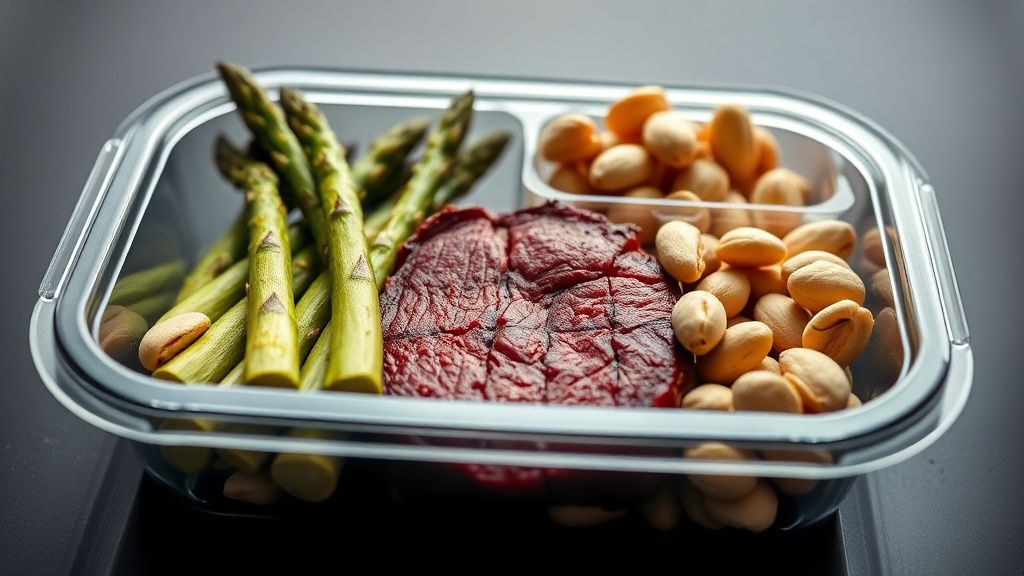
- The Batch-Scale Problem: Avoid the "Sunday Meal Prep Trap," where you spend four hours cooking and end up with food that tastes like refrigerated cardboard by Wednesday. Instead, use a "component-based" approach. Prepare proteins (sous-vide steaks, poached chicken breasts) and fats (olive oil emulsions, nut butters) separately from vegetables.
- The Workaround Economy: If you travel for work, your plan must include "emergency fail-safes." This involves identifying the "clean" options at high-end hotel restaurants or airport lounges (e.g., steak/fish with zero-carb sides). Do not be the person who breaks their protocol because of a lack of planning; treat dietary compliance with the same rigor you apply to managing a portfolio, such as How to Build a Dividend Growth Portfolio for Long-Term Passive Income.
Field Report: The Engineering Compromise
In a recent thread on a private Discord server for quantitative analysts, a recurring theme emerged regarding the "Low-Carb Fog." Several users reported that while their energy remained steady, their initial transition into low-carb living resulted in a "short-term memory deficit" that lasted for approximately 14 days.
One systems architect noted: "I moved to strict keto to gain mental clarity, but the electrolyte depletion caused me to miss a critical bug in our deployment. I felt stable, but my processing speed felt throttled. I had to pivot to a cyclical approach—carb-loading on weekends—to maintain the high-frequency thinking required during the week."
This highlights a critical operational reality: Strict low-carb is not a universal performance multiplier. It is a tool that requires "maintenance windows." If your job requires high-intensity bursts of creative problem-solving, your brain may demand glucose during the recovery phase, not the output phase.
Counter-Criticism: The "Optimization Trap"
Industry skeptics, including many sports nutritionists who focus on high-output athletes, argue that the "biohacking" approach to nutrition is a form of neurosis that replaces one distraction (unhealthy eating) with another (endless optimization of gut biomes and insulin spikes).
The criticism holds weight: If you spend 10% of your total work week researching your next meal, calculating net carbs, and tracking CGM data, have you actually increased your wealth generation capacity? Or have you simply moved your "decision fatigue" from the boardroom to the pantry? The most effective high-performers eventually move to a "Heuristic-Based System" rather than a "Data-Obsessed System."
- The Heuristic: Never eat anything that causes a brain-fog crash, regardless of the data.
- The Data: Use it only when you feel your performance drifting.

The Scaling Failure: Infrastructure Stress
Scaling a personalized meal plan is difficult because it assumes a controlled environment. Once you leave your home or your office kitchen, the world is designed to make you fail. Vending machines, networking lunches, and celebratory dinners are inherently "carb-dense."
Many professionals encounter "Social Friction" when they begin to prioritize their bio-metrics over communal dining. A common workaround found in developer communities is the "Social Buffer": skip the carb-heavy appetizers, order a premium protein, and frame it as an "intermittent fasting" preference. It effectively manages the optics of not eating while adhering to your performance requirements.
Technical Failure: The Micronutrient Gap
A frequent issue found in GitHub issues related to bio-tracking software is the "hidden deficiency." People cut carbs, lose weight, and improve focus, but neglect magnesium, potassium, and sodium.
- The Symptom: "Brain fog," muscle cramps, and heart palpitations.
- The Reality: Low-carb diets are diuretic. You lose electrolytes faster than you replenish them.
- The Fix: You must account for electrolyte supplementation as a line item in your "operating budget." If your "meal plan" doesn't include a strategy for salt/potassium, it will eventually cause a systemic failure—no matter how clean your keto meal prep is.

The Economic Impact of "Clean" Fueling
If we calculate the "Cost of Acquisition" for a high-performance meal plan, we must consider more than just the cost of groceries. We must include:
- Time Cost: The hours spent per week on prep.
- Tooling Cost: CGM subscriptions, blood panels, and smart kitchen appliances.
- Opportunity Cost: The social/business networking moments sacrificed for "optimal" eating.
For the high-performance individual, the return on investment (ROI) is only positive if the cognitive gain translates to a measurable increase in billable work or decision quality. If your net income is not increasing because you are "optimized," you are simply paying a premium for a lifestyle, not a performance hack.
Maintaining Trust in the System
When things go wrong—and they will, whether it’s a bad batch of chicken, a forgotten supplement, or a slip into a high-sugar weekend—the biggest mistake is "Trust Erosion." This is the psychological state where one failure leads to total abandonment of the system.
The most successful practitioners of this lifestyle use a "Version Control" mentality. If the diet fails one day, don't revert to factory settings (processed junk). Debug the issue:
- Did I sleep less than 6 hours?
- Was the stress level too high for a caloric deficit?
- Did I ignore the hydration requirements?
Treat your body like a server. If the server goes down, you don't throw the server out; you look at the logs and patch the vulnerability.