
Zone 2 training is currently the "holy grail" of the biohacking and fitness industrial complex. By 2026, the industry has shifted from selling generic "fat loss" programs to selling "biological age reversal." Zone 2—exercise performed at a heart rate where you can maintain a conversation but feel the effort—has been elevated from a basic aerobic base-building tool to a non-negotiable pillar of longevity. For coaches and platforms, monetizing this isn't just about prescribing bike rides; it’s about managing data friction and the strategies outlined in The Longevity Coaching Evolution: Scaling High-Ticket Health Practices in 2026.
The Institutionalization of Breathless Conversations
The business model of Zone 2 in 2026 relies on a simple paradox: it is physiologically easy but operationally difficult. When a client is told to "stay in Zone 2," they inevitably drift into Zone 3, the "black hole" of training where they are working too hard to recover but not hard enough to build elite capacity. The monetization opportunity here isn't the workout; it’s the moderation.
Most apps today claim to use "AI coaching" to keep users in check, but look at the Reddit threads on r/Zone2 or the GitHub issues for DIY HRV tracking projects. You will find a common theme: "The app didn't alert me until I was already halfway through a tempo run." The technical limitation of PPG (photoplethysmography) sensors—the green lights on the back of your watch—is a significant pain point. During high-intensity bursts, these sensors often lose signal or report "cadence lock" instead of heart rate. Monetizing coaching requires solving this data noise, which is why the most successful practitioners are moving toward professional-grade wearable integration (like WHOOP, Garmin, or chest-strap connectivity) rather than relying on phone-based estimations.

The Economics of Compliance: Why "Cheap" Doesn't Scale
If you are building a coaching business, stop trying to sell "plans." Plans are free on YouTube. You are selling a feedback loop. In 2026, the high-end market—the executives and biohackers willing to pay $500–$1,000 a month—are looking for "frictionless accountability."
The failure point for most mid-tier coaching businesses is the "data-analysis bottleneck." If a coach has to manually review 50 athletes' TSB (Training Stress Balance) charts every Sunday, the business model breaks. The most successful models use automated triage, much like the systems used to Build an Autonomous Content Factory: The 2026 AI Affiliate Strategy:
- The Threshold Filter: Automated alerts flag sessions where the user spent more than 10% of their "Zone 2" workout in Zone 3 or above.
- The Human Touchpoint: The coach only intervenes when the data triggers a "recovery debt" or a "compliance drift" alert.
- The Content Layer: The business monetizes the "Why," not just the "How." This includes deep-dive newsletters or video modules explaining mitochondrial biogenesis—the same kind of high-value education often found in Why Decentralized Micro-Grids Are Ending the Era of Utility Monopolies—which keeps clients from churning.
Real Field Report: The "Mid-Life Crisis" Pivot
In the fall of 2025, a boutique coaching firm in Boulder, Colorado, attempted to pivot entirely to remote, app-based Zone 2 programming. Their internal Slack logs (leaked during a mid-winter retreat) painted a grim picture of "subscriber attrition."
The problem? The onboarding process was too technical, a common hurdle for businesses struggling to integrate AI, similar to the challenges faced in Why Traditional Exporting Is Failing in Southeast Asia: The AI Strategy for 2026. Users were overwhelmed by the need to find their Lactate Threshold (LT1) before they could start. The firm’s "Zone 2 Baseline Test" required a 30-minute steady-state run with a chest strap. 30% of users failed to set it up correctly, and the support tickets clogged the system.
"We tried to automate the lactate threshold estimation, but the variance between user hardware was too high," one lead coach wrote in a Discord channel. "People are using $30 Amazon heart rate monitors and expecting lab-grade precision. When the app tells them they are in Zone 2 but they feel like they’re sprinting, they don't trust the algorithm. They trust their breath. And when the math conflicts with the feeling, the math loses."

The Counter-Criticism: Is the Hype Just Marketing?
The skepticism around Zone 2 monetization is growing. Critics argue that "Zone 2" is becoming a marketing buzzword used to upsell expensive testing kits (like portable lactate meters) that are largely unnecessary for the average person.
The debate currently raging on platforms like Hacker News and in independent physiology forums is centered on "over-optimization." When does tracking your metabolic health become orthorexic? When does the stress of trying to stay in Zone 2 counteract the benefits of the exercise?
- The Pro-Coach argument: "Without the tracking, the user is just guessing. If they are guessing, they aren't building mitochondria; they are just getting tired."
- The Anti-Optimization argument: "Zone 2 is just 'easy cardio.' People have been doing this for centuries without a $400 watch or a monthly subscription. We are commodifying common sense."
As a business owner, you must navigate this by positioning your service as an efficiency engine. You aren't selling "cardio"; you are selling the "most effective path to a longer healthspan." If your messaging is purely technical, you will lose the masses. If it is too "woo-woo," you will lose the data-driven clientele.
Scaling the "Human-in-the-Loop" Model
To scale, you need to minimize the time between "data generation" and "coach insight."
The Infrastructure Stack:
- Data Aggregation: Use platforms like TrainingPeaks or WKO5 (or their 2026 successors) that offer robust APIs. Building your own app from scratch is a death trap; you will spend all your revenue on API maintenance and bug fixes.
- The "Workaround" Culture: You will find that users often try to cheat the system—like doing their "Zone 2" on a hilly trail where heart rate spikes are inevitable. Don't punish this. Document it. Your value is in explaining why a hilly trail is different from a flat road for metabolic adaptation.
- Subscription Fatigue: In 2026, the subscription model is under pressure. Offering "Longevity Credits" or per-cycle pricing is becoming more popular than the "evergreen monthly fee."
Why Users Churn (And How to Stop It)
Churn in the longevity space usually happens for three reasons:
- The Plateau: The client doesn't see "results" fast enough. (Zone 2 is slow, boring, and invisible.)
- The Boredom: 45 minutes on a bike is a drag.
- The Complexity: The technology feels like a chore.
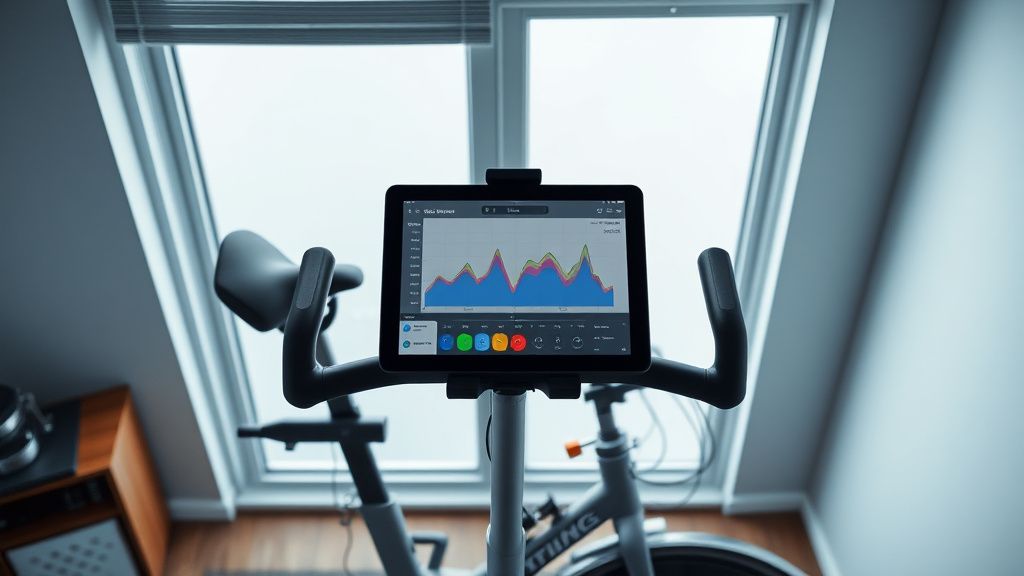
To monetize effectively, you must solve the "Boredom Problem." This is why the most successful coaches aren't just selling training; they are selling community. They host "Zone 2 virtual rides" on Discord or Strava groups where people can chat while they train. By enabling the "conversational pace" that Zone 2 requires, you are effectively building a social network. The community becomes the product, and the training is just the reason they show up.
The Institutional Reality of Privacy and Trust
When you collect heart rate, sleep, and HRV data, you are sitting on a goldmine of sensitive health information. In 2026, the regulatory landscape is shifting. If you aren't GDPR-compliant or if your data handling feels "loose," you won't last long.
Users are becoming increasingly paranoid about where their health data goes. If your app shares data with third-party insurers (a dark pattern seen in some emerging platforms), you will face a PR disaster. Transparency is your greatest marketing asset. If you can show users that their data is isolated, encrypted, and owned by them, you build the kind of trust that keeps them paying for years.

Navigating the Ecosystem: Integration or Isolation?
There is a constant tension in the industry: Should you build a "walled garden" or integrate with the giants?
If you build a walled garden, you lose the mass market because people don't want to switch to your app just to track one type of run. If you integrate with Apple Health or Google Fit, you are at the mercy of their API changes.
The smartest monetization strategy in 2026 is "Middleware Coaching." You don't ask the user to use your app for everything. You ask them to use their existing gear (Garmin, Oura, WHOOP) and you build an interface that ingests that data and spits out actionable, human-readable insights. You become the "expert filter" for their chaotic stream of raw data.
The Future of "Active Recovery" Monetization
As we look toward the latter half of the decade, the focus is shifting toward "Metabolic Flexibility." Zone 2 is just the entry point. The real money is in the "Upsell." Once a user has mastered their aerobic base, they need:
- Strength integration: Balancing zone 2 with resistance training to prevent sarcopenia.
- Nutrition timing: Matching fueling to metabolic output.
- Biomarker tracking: Connecting the physical training to blood work (ApoB, HbA1c).
If you are only selling Zone 2 coaching, you have a narrow runway. Use the Zone 2 relationship to build trust, then expand the ecosystem into a comprehensive longevity dashboard.
How do I handle clients who constantly "drift" into Zone 3?
Don't frame it as a failure. Frame it as "Training Load Management." Use the data to show them that their aerobic efficiency actually decreases when they go too hard. Show them the charts. Data is a neutral third party that stops you from being the "bad guy."
Is selling Zone 2 coaching ethical if I'm not a licensed physiologist?
This is a gray area. Ensure your disclaimers are ironclad. Market yourself as a "Performance Coach" or "Longevity Consultant" rather than a medical professional. Avoid giving medical advice, and stick to the principles of exercise science. If you cross that line, you invite liability that your business insurance won't cover.
How do I price my services in a market saturated with cheap AI apps?
Stop competing on price. If you charge $20/month, you are competing with algorithms. If you charge $200+/month, you are selling "human judgment." AI can tell you what your heart rate is, but it can’t tell you why your sleep was bad or why you’re feeling unmotivated today. Sell the coaching, not the tracking.
What is the biggest mistake new coaches make in this space?
Over-complication. They want to track every variable (RMSSD, HRV, VO2max, etc.) to look professional. The client doesn't care about the variables; they care about the outcome. Keep the dashboard clean and provide one clear "action for the week."
Is "Zone 2" just a fad that will fade by 2027?
The name might change, but the physiology is permanent. The trend is moving toward "measurable longevity." Whatever the next buzzword is, the core need—a data-backed, effective way to improve long-term health without burning out—will remain. Build your brand around the result, not the terminology.