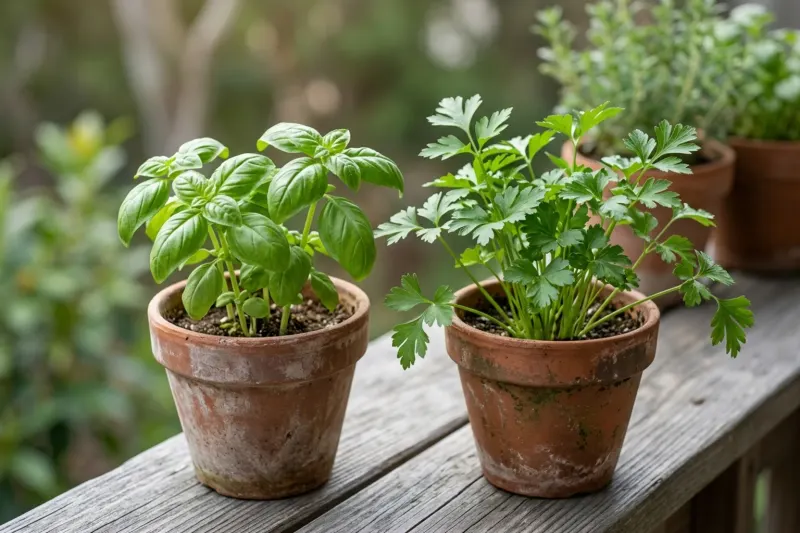
When soft-bodied insects cluster along the tender shoots of potted basil, parsley, or mint, your next move depends on colony density and leaf structure. Rinsing sturdy herbs with a steady stream of water dislodges light populations, while curled foliage shielding heavy colonies requires selective pruning and a commercial contact spray. Aphids thrive in sheltered container microclimates. Balcony railings, exterior brick walls, and window frames trap radiant heat and block the predatory beneficial insects that regulate pest numbers in open ground. Because container herbs grow in limited soil volumes with restricted root systems, unchecked aphid feeding saps vigor, curls growing tips, and coats foliage in sticky honeydew. Taking prompt, calibrated action protects culinary leaves while avoiding leaf burn or chemical residue on homegrown edibles.
Confirming Aphid Activity on Potted Foliage
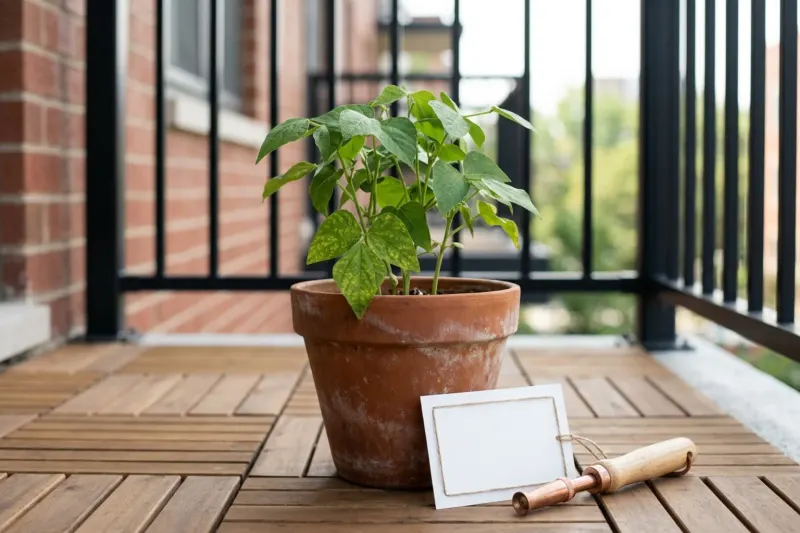
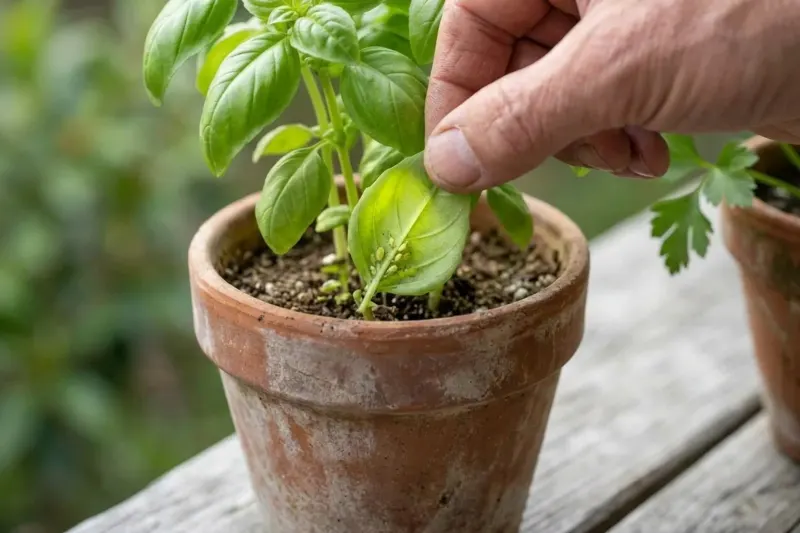
Before reaching for any spray bottle or pruner, inspect the plant closely to verify aphid activity. According to the University of New Hampshire Extension, aphids are small, pear-shaped, soft-bodied insects measuring 1/8 inch (3 mm) or less, equipped with piercing-sucking mouthparts. Depending on the species and host herb, their color ranges across pale green, yellow, brown, black, and pinkish-red. They congregate on succulent stems, fresh leaf buds, and leaf undersides where delicate vascular tissue is easiest to pierce. As aphids feed, they excrete excess plant sugars as sticky honeydew. This sugary residue regularly fosters black sooty mold fungus, which discolors culinary foliage and impedes sunlight absorption. Potted herb growers often spot tiny white flakes before seeing the insects; these are cast-off exoskeletons shed by developing nymphs as they molt, often trapped in lower leaf axils or stuck to honeydew. Hanging yellow sticky cards can alert you when winged adults migrate toward a balcony or windowsill. However, as the University of Connecticut IPM points out, sticky cards trap only dispersing winged adults and cannot measure whether a sedentary colony is actively multiplying. Regular visual scouting of stem tips and leaf undersides remains necessary for detecting wingless clusters before feeding distorts foliage.
Mechanical Washing and Container Isolation
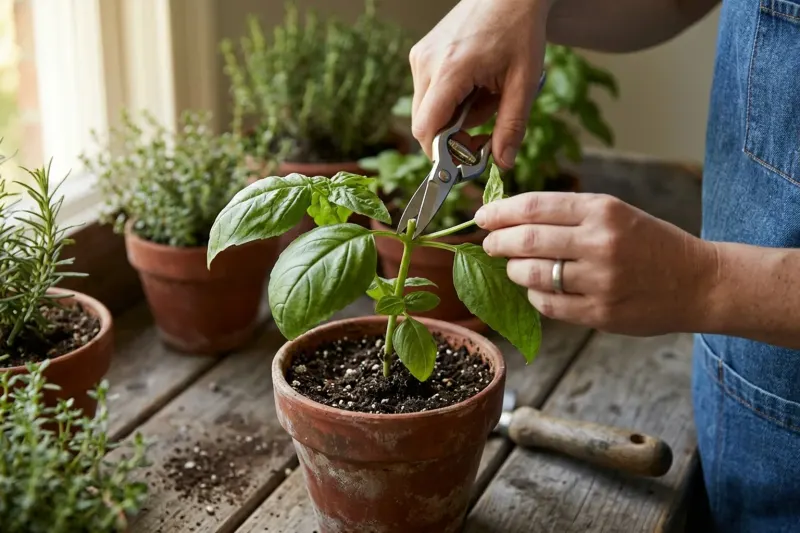
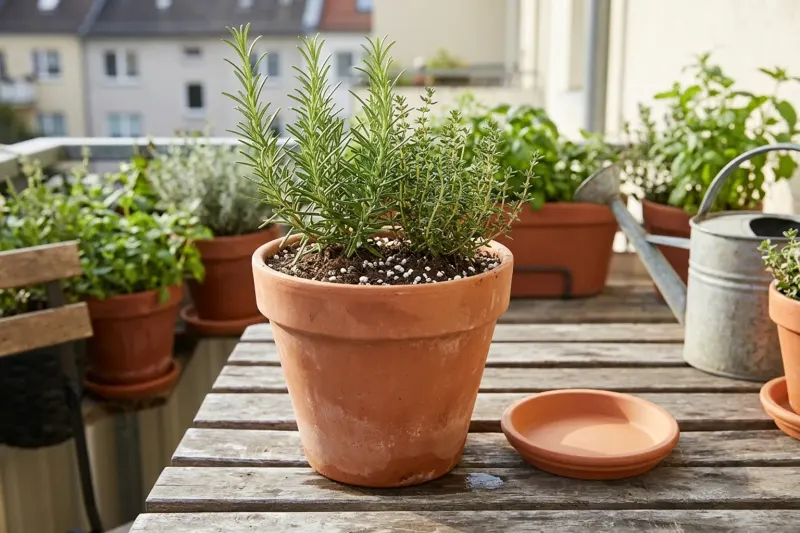
For localized aphid clusters on sturdy potted herbs, physical removal is the most direct first response. The University of Minnesota Extension notes that knocking aphids off foliage with a firm spray of water dislodges them effectively, and once grounded, these soft-bodied pests rarely manage to climb back onto the host plant. On a compact balcony or patio, however, rinsing a planter in its regular position can scatter dislodged aphids onto neighboring pots. Pick up the affected container and move it at least 6 to 10 feet (1.8 to 3.0 m) away from other planters, or carry it to an outdoor utility sink or washbasin. Support the main stems with one hand and cup the potting soil at the base to keep loose mix from washing out of the pot. Direct a firm, fanned stream of cool water upward against leaf undersides. Sturdy herbs like rosemary, thyme, mature sage, and established mint tolerate water rinsing well. If aphids have already caused the tender young leaves of annual herbs to cup or curl tightly around the colony, water droplets cannot penetrate those enclosed folds. When leaves curl shut, prune out the top 1 to 2 inches (2.5 to 5 cm) of infested terminal stems with clean shears. Snipping off curled tips removes the densest colony pocket immediately and encourages healthy branching from lower nodes, provided the pot has good drainage and adequate sunlight.
Related guide: Pinching and Pruning Potted Herbs for Bushy Growth
Applying Insecticidal Soaps Safely
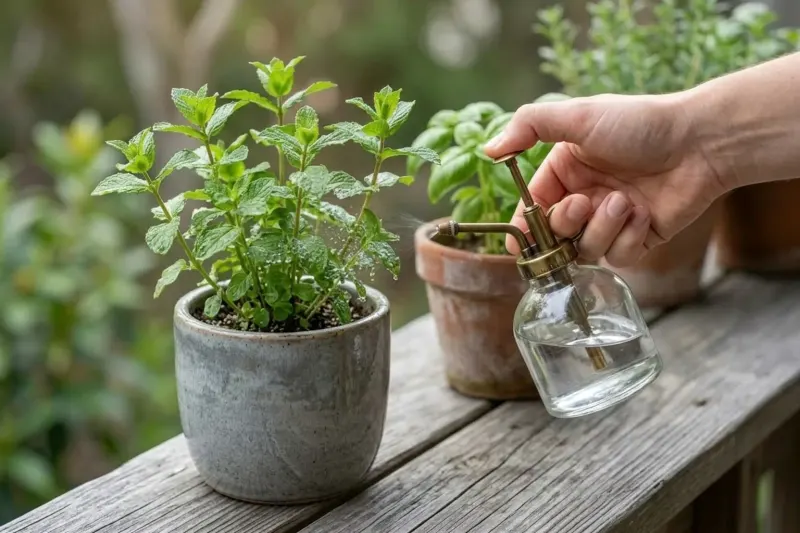
When water rinsing cannot reach into deep crevices or colonies spread across fine-textured herbs like dill, chervil, or cilantro, apply a commercial insecticidal soap. Formulated from potassium salts of fatty acids, insecticidal soaps act strictly on direct wet contact. As explained by Colorado State University Extension, these sprays penetrate the soft outer membranes of aphids and disrupt their respiratory spiracles, leaving zero toxic chemical residue once the spray dries. Do not substitute household dish detergents or homemade liquid soap solutions. As cautioned by Clemson University Cooperative Extension and the University of Georgia Extension, commercial dish soaps contain synthetic degreasers and industrial surfactants intended to strip grease from dinnerware. Sprayed onto living foliage, these household cleaners dissolve the waxy protective cuticle of herb leaves, resulting in extensive tissue scorch and foliage collapse. For the spray to work, every insect must be thoroughly wetted. Mist both leaf surfaces until droplets run off, paying special attention to hidden stem joints. Although commercial insecticidal soaps have a zero-day pre-harvest interval on herbs, the Mississippi State University Extension emphasizes that all harvested culinary leaves should be washed thoroughly under running tap water prior to kitchen use to remove dead insects and lingering soap residue.
Avoiding Heat Scorch and Foliage Damage
Container microclimates heat up rapidly under direct summer sun, raising the risk of foliage burn from topical sprays. The University of Idaho Extension highlights that insecticidal soaps and horticultural oils should never be applied when outdoor temperatures exceed 90°F (32°C) or when container plants suffer from moisture stress. High temperatures accelerate liquid evaporation, concentrating fatty acid salts on leaf tissues and causing leaf margin burn or total leaf drop. Always assess potting mix moisture before spraying. If the soil feels dry an inch (2.5 cm) below the surface, or if leaves show slight afternoon wilt, water the container thoroughly at the base and allow roots to rehydrate until leaves regain turgor. Once the plant is hydrated, relocate the pot to shade or schedule treatments for the early evening. Spraying in the cooler evening extends droplet drying time, giving the soap longer contact with pests while preventing intense midday sunlight from cooking treated foliage. Broad, tender leaves like sweet basil and delicate umbelliferous foliage like dill and young cilantro are particularly sensitive. When applying a commercial formulation for the first time, perform a small spot test on two lower leaves. Wait 24 to 48 hours to confirm the foliage stays green and supple without discoloration before spraying the entire canopy.
Related guide: Preventing Root Rot in Container Herbs
Balancing Balcony Nutrients and Plant Spacing
Managing aphids over the long term requires adjusting the container environment that encourages their reproduction. The University of California IPM Program explains that high nitrogen levels stimulate rapid flushes of soft vegetative growth, accelerating aphid feeding and reproduction rates. Container gardeners often overfeed potted herbs with concentrated liquid fertilizers under the false belief that cramped soil spaces require constant feeding. Apply balanced, slow-release fertilizers or half-strength liquid feeds rather than high-nitrogen formulations. Mediterranean culinary herbs like oregano, rosemary, and thyme develop richer essential oil profiles and sturdier, pest-resistant cell walls in moderately lean potting soils rather than over-fertilized mixes. Ensure every pot features unobstructed drainage holes so roots receive necessary aeration without sitting in soggy, oxygen-poor substrate. Finally, evaluate container spacing along balconies and windowsills. Crowding multiple planters tightly together forms humid, stagnant pockets where pests flourish out of reach of air movement. Maintain 4 to 6 inches (10 to 15 cm) of open space between container rims. This buffer improves air circulation, simplifies regular leaf inspection, and prevents wingless aphids from crawling across touching leaves between pots.
Aphid Control Action Selection for Container Herbs
| Situation | Consider | Why |
|---|---|---|
| Isolated aphid clusters on sturdy, mature herbs such as sage, rosemary, or upright mint | Mechanical water rinse and physical wiping after moving the pot | Woody stems withstand water pressure without snapping, and dislodged aphids rarely crawl back up pot walls. |
| Curled terminal leaves harboring dense colonies on tender annuals such as basil or parsley | Prune out curled shoot tips, then apply commercial insecticidal soap to remaining leaves | Curled foliage shields aphids from water streams and contact sprays; pruning eliminates the colony core so soap reaches exposed pests. |
| Balcony temperatures exceeding 90°F (32°C) or plants in direct midday sun | Postpone treatment until early evening or relocate container to full shade | Rapid evaporation concentrates soap salts on leaf cuticles, causing chemical scorch and leaf burn. |
| Winged adult aphids captured on sticky cards with no wingless colonies found on stems | Continue daily visual scouting without spraying | Sticky cards catch passing winged adults, but spraying without active leaf colonies wastes materials and stresses clean foliage. |
Hypothetical Treatment Plan for a Balcony Herb Planter
Consider a hypothetical 24-inch (61 cm) rectangular planter trough holding sweet basil, flat-leaf parsley, and chives on an east-facing apartment balcony. During a morning check, the grower spots about 50 wingless green aphids on the upper shoots of the basil, with the topmost leaves beginning to cup. Rather than spraying near adjacent containers, the grower carries the 15-pound (6.8 kg) planter to an outdoor wash area. Using clean pruners, the grower snips off two curled shoot tips (about 1.5 inches or 4 cm each) and seals the clippings in a disposal bag. Supporting the stems, the grower washes leaf undersides with a gentle fan spray from a hose nozzle, then allows the pot to drain in bright shade. At dusk, when the balcony temperature drops to 70°F (21°C), the grower applies commercial insecticidal soap mixed according to label instructions, misting stems and leaf undersides until evenly damp. The planter is set 6 feet (1.8 m) apart from other pots for observation. The grower conducts a follow-up inspection 48 hours later to verify whether pest numbers have declined and determine if a second spot-application is warranted. The estimated hands-on time is roughly 25 minutes across two days.
- 11. Isolate Pot
- 22. Prune Tips
- 33. Rinse Leaves
- 44. Mist Soaps
When this approach is not a good fit
This washing and contact spray approach is unsuitable for tender herb seedlings younger than 4 weeks with shallow root anchors, as water pressure can dislodge stems and erode root balls. It is also unsuitable for drought-stressed herbs showing severe afternoon wilt; parched leaves absorb soap salts readily, leading to foliage burn. In dry containers, water the soil deeply at the base and wait 24 hours until stems regain full turgor before applying any contact spray.
PUT THIS GUIDE TO USE
Work with your own measurements
Sources & further reading
- University of New Hampshire Extension: Aphids Fact Sheet
- University of Connecticut IPM: Managing Aphids in the Greenhouse
- University of Minnesota Extension: Aphids in Yard and Garden
- Clemson University Cooperative Extension: Insecticidal Soaps for Garden Pest Control
- Colorado State University Extension: Managing Houseplant Pests
- University of Idaho Extension: Aphids in the Garden
- University of Georgia Extension: Insecticidal Soap
- Mississippi State University Extension: Insecticides for Vegetable Gardens
- University of California IPM: Aphids Management Guidelines
AI-assisted writing and concept images. Sources and automated checks support the process; they do not replace checking your own measurements.
How we create our guides · Suggest a correction