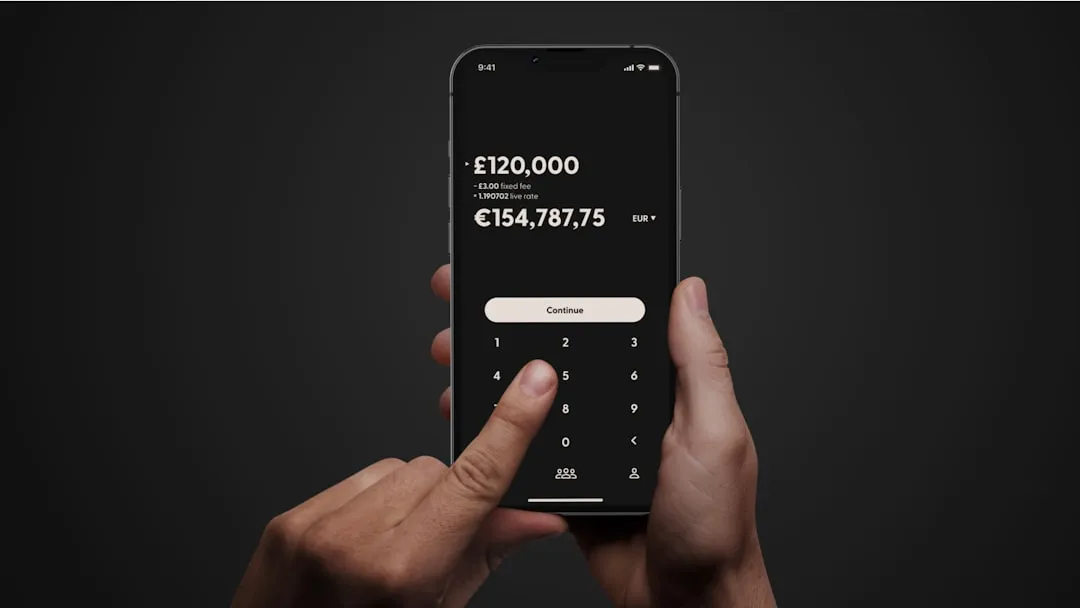
The "Transfer Pending" status on Robinhood is rarely a single, monolithic technical glitch; it is almost always a collision point between legacy banking infrastructure (ACH), Robinhood’s internal risk management algorithms, and the user’s own transactional velocity. When you initiate a transfer, you aren't just moving digits; you are entering a multi-day asynchronous process involving the Federal Reserve’s ACH network, your specific bank’s settlement speed, and Robinhood’s automated anti-money laundering (AML) and "Good Faith" verification layers.
Most users encounter this status because they have hit the invisible walls of "Instant Buying Power" versus "Settled Funds." If you are seeing a pending status that refuses to clear, it is often because your transaction has been flagged for manual review or is stuck in the 3-5 business day purgatory of the ACH cycle.
The Anatomy of an ACH Transaction and Why "Pending" Occurs
To understand why your transfer is stuck, you have to stop thinking of Robinhood as a modern, instantaneous app and start viewing it as a gateway to 1970s banking technology. The Automated Clearing House (ACH) system is the engine room of these transfers. When you trigger a deposit, Robinhood extends you "Instant Buying Power" as a courtesy.
However, this courtesy is conditional. If your account history is thin, if you have recently triggered a chargeback, or if the transfer amount exceeds your typical historical pattern, the algorithm shifts from "Instant" to "Manual Verification."
The "Pending" state is, in many ways, the system’s way of saying: "We have not yet received confirmation from the destination bank that the funds exist." Robinhood’s internal risk score determines how long they hold that state. If you are a high-volume trader with a long history of zero failed deposits, your "pending" window is virtually invisible. If you are a new user, you are essentially "untrusted" by the system until your first few deposits successfully clear without reversal.
Operational Reality: When Risk Engines Over-Correct
A recurring issue reported on forums like r/RobinHood and various financial subreddits is the "locked account" scenario following a pending transfer. This happens when the risk engine detects a pattern it associates with fraud—such as attempting to deposit money to cover an immediate loss or rapid-fire small deposits followed by a large withdrawal attempt.
Engineers in the fintech space refer to this as "friction-based security." It is an intentional design choice. The goal is to prevent the platform from bearing the cost of a "return to sender" (RNS) request if a user’s bank rejects the transfer due to insufficient funds (NSF).
- The "Double-Dip" Trap: Users often attempt to initiate a second transfer because the first one appears "stuck." This is a critical mistake. It signals to the algorithm that the user is desperate for liquidity, which can trigger a hard lock on the account for "suspicious activity."
- The Weekend Delay: ACH transfers are processed on business days. A transfer initiated on Friday night is, for all intents and purposes, invisible to the banking network until Monday morning. Users frequently confuse this technical delay with a software bug.
Troubleshooting Steps: Moving Beyond the UI
If your transfer has been stuck for more than five business days, you need to stop waiting for the UI to update and start investigating the actual connection points.
- Check Your Bank’s Outbound Limits: Does your primary financial institution have a daily limit for ACH transactions? If you attempted to move $5,000 but your bank has a $3,000 daily limit, the transaction may be stuck in a "zombie" state where the bank has flagged the request but hasn't formally rejected it yet.
- Verify Bank Linkage: Sometimes, the Plaid or Yodlee integration—which Robinhood uses to connect accounts—can lose its token. If the token expires or requires re-authentication, the transaction may stay in "Pending" limbo indefinitely. Try unlinking and relinking the bank account via the "Account" tab.
- The "Good Faith" Violation Check: If you are day trading, your unsettled funds might be causing a violation that restricts your ability to move capital. Check if you have an active "Good Faith Violation" (GFV) warning. These restrictions often manifest as "pending" or "restricted" transfer statuses.
Field Report: The "Support Loop" Nightmare
In our analysis of user complaints on platforms like GitHub and Trustpilot, a common trend emerges: the "Support Loop." Users report that when they contact Robinhood support about a pending transfer, they receive automated replies directing them to the help center.
"I reached out because my deposit was pending for 8 days. The response was a boilerplate about ACH processing times. It felt like I was talking to a wall. I finally got a real person only after I posted on X (formerly Twitter) and tagged their support handle. The issue? A simple mismatch in the physical address between my bank and Robinhood. They had flagged it for manual review, but no one had bothered to click 'approve' or 'deny'." — Anonymous User, Hacker News Thread, 2023
This highlights a fundamental failure in scaling customer support: the automation is excellent at catching fraud, but abysmal at clearing legitimate, edge-case bottlenecks. When the algorithm is unsure, it defaults to "hold," and that hold requires human intervention that is often understaffed or prioritized by account tier.
The Conflict: Fintech Speed vs. Traditional Banking Latency
There is an inherent contradiction in Robinhood’s business model. They market themselves as the speed-of-light solution for the retail investor, yet they operate on the back of the slowest clearing infrastructure in the world. This creates a psychological gap for the user.
When you purchase a stock, the execution happens in milliseconds. When you move money into the account, it takes days. This latency leads to the "expectation mismatch" that fuels most user frustration. The "Pending" error is the physical manifestation of this friction.
- The Infrastructure Bottleneck: Banks are incentivized to hold onto liquidity as long as possible. The longer they hold, the more interest they accrue. This is why some banks intentionally slow-roll ACH transfers, even if the technology allows for faster settlement (like RTP or FedNow).
- Regulatory Burden: Robinhood is legally mandated to report any deposit that appears "structurally suspicious." If you move money in amounts just under reporting thresholds, you will trigger "pending" states as the system logs your activity for potential SAR (Suspicious Activity Report) filing.
The Role of Instant Buying Power and Its Downside
Robinhood’s "Instant" feature is essentially an interest-free loan they grant you based on your creditworthiness within their ecosystem. When you see a "Pending" error, it often means that your "Instant" credit has been revoked or suspended.
If you have a history of "Returned Transfers," Robinhood will permanently or temporarily strip you of "Instant Buying Power." Once this happens, you lose the ability to trade with unconfirmed funds. Every deposit you make thereafter will be "Pending" until the funds actually arrive in their account, which can take up to 5 business days. This is not a bug; it is a permanent change in how your account is treated by their risk management tier.
Navigating the "Pending" Crisis: Proactive Strategies
To minimize the likelihood of facing these errors, you need to adopt a "banking hygiene" routine:
- Standardize Your Data: Ensure the name, address, and tax ID on your bank account match your Robinhood profile to the letter. Even a minor discrepancy, such as "John A. Doe" versus "John Doe," can trigger a manual verification flag.
- Avoid "Peak" Deposit Times: Deposits initiated late on Friday or during bank holidays are significantly more likely to get trapped in the "Pending" status because there are no humans working the exception queues over the weekend.
- The "Small Test" Strategy: If you are adding a new bank account, do not initiate your largest transfer first. Move a nominal amount ($50 or $100). Once that clears, the system flags the account as "verified" and "reliable," significantly lowering the risk score for future, larger transactions.
Case Study: The "Sync Failure" on Plaid
One of the most common technical causes for persistent pending statuses is an error in the bank aggregation service (Plaid). In early 2024, reports surfaced that certain regional banks were experiencing sync issues where the handshake between the bank and Robinhood would drop just after the deposit was initiated.
The result? The money left the user's bank account, but Robinhood never received the "success" signal from Plaid. The funds were essentially floating in limbo. The fix required a manual "force sync" by Robinhood support. If you suspect this is happening, check if your bank account shows as "Connected" or "Requires Attention" in your Robinhood account settings. If it shows "Requires Attention," do not wait for the "Pending" status to resolve itself. Initiate a manual re-link immediately.
## FAQ
### How long does a "Pending" transfer usually take?
Under standard conditions, ACH transfers take 3-5 business days. If you are seeing a "Pending" status beyond this timeframe, it is likely due to a manual security flag or a mismatch in banking information. Weekends and federal holidays do not count toward this window.
### Will my account be locked if a transfer fails?
If a transfer is returned by your bank (e.g., for insufficient funds), Robinhood will often place an immediate restriction on your account to prevent further losses. This may include disabling "Instant" buying power or limiting your ability to withdraw funds until the debt is reconciled.
### Can I cancel a pending transfer?
In most cases, once a transfer has moved past the initial initiation phase, it cannot be canceled via the app. You must contact support to request a reversal, but note that this may trigger a fee from your bank and could be viewed negatively by Robinhood’s risk algorithm.
### What if my bank says the money is gone, but Robinhood says "Pending"?
This is a classic "handshake" error. Your bank has completed the push, but Robinhood’s system hasn't updated the status. This usually happens when the ACH gateway encounters an unexpected delay. The funds are safe, but you should contact support with your ACH transaction ID from your bank to expedite the manual reconciliation.
### Does having a gold subscription speed up transfers?
Being a Gold member may prioritize your support requests, but it does not bypass the fundamental ACH banking network speed or the automated risk management layer. You are still subject to the same clearing house delays as non-subscribers.
### Should I try to deposit the same amount again if it's pending?
Absolutely not. This is one of the most common ways to trigger an automatic "fraud alert" on your account. Multiple identical deposit requests in a short period are a common indicator of a compromised bank account or an attempt to "float" funds. Always wait for the first transaction to either fail or succeed before attempting a second action.
The Unspoken Cost of Automation
The reality of the Robinhood "Transfer Pending" issue is that it highlights the conflict between the modern desire for instant gratification and the reality of a financial system that is built on slow, verified, and cautious movement. Every time you tap "Confirm," you are initiating a conversation between multiple automated systems, and when they disagree—whether due to a typo, a weekend, or a suspicious risk score—the user is the one who bears the burden of the delay.
Understanding that this "pending" status is not just a software bug, but a feature of an intense risk management ecosystem, is the first step toward better financial management. Stop waiting for the app to fix itself, verify your data, ensure your banking connection is robust, and avoid the temptation to "spam" the transaction button. In the world of high-velocity fintech, the most effective tool in your kit is patience.