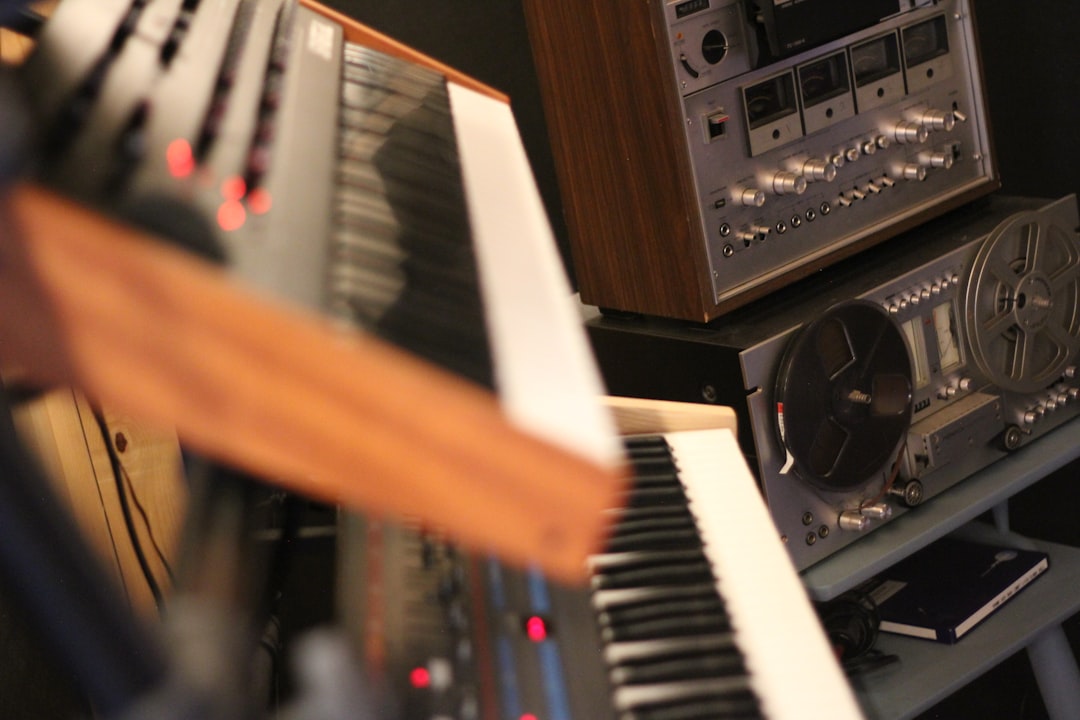
The core of a profitable pro-audio consulting business in 2026 lies in moving away from generic IT support toward "Total Round-Trip Latency (RTT) Engineering." Producers don’t pay for lower latency numbers on a screen; they pay to eliminate the psychological friction of "digital drag." Scaling requires moving from ad-hoc troubleshooting to a subscription-based ecosystem of hardware-software integration, deep-kernel optimization, and proactive infrastructure management, much like the strategies explored in How to Scale a High-Margin Home Efficiency Consulting Business in 2026.
The Myth of the "Plug-and-Play" Studio
The industry has spent the last decade selling the dream of "latency-free" recording, yet just as Why Traditional Cybersecurity Is Failing Enterprises in 2026 highlights, legacy approaches often fall short of modern enterprise needs. Yet, if you walk into any mid-to-high-tier boutique studio in 2026, you will inevitably find a producer swearing at a buffer underrun or a VST that induces a perceptible "smear" in the monitoring chain.
The disconnect is fundamental: Manufacturers optimize for isolated benchmarks; producers live in the mess of aggregate load. When a project hits 150 tracks with heavy look-ahead limiting and virtual instrument stacks, the "advertised" 2ms latency on the box becomes a 25ms reality in the session. This is where your consulting practice moves from "technician" to "revenue-saver," positioning you to pivot into specialized fields like How to Build a Sustainable B2B AI Prompt Engineering Agency.
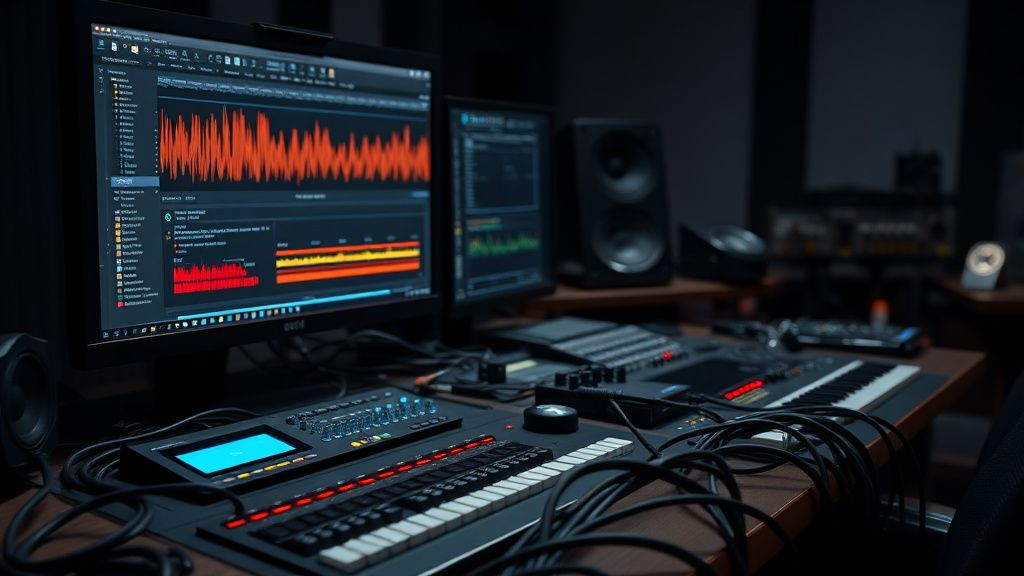
The Taxonomy of Latency: Where the Money Actually Is
To scale, you must stop treating latency as a singular metric. You are solving three distinct, often contradictory problems:
- Input Latency: The time from mic diaphragm to A/D conversion and monitoring.
- Processing Latency: The "look-ahead" tax imposed by modern plugins that require buffer windows to analyze audio.
- OS/Kernel Jitter: The silent killer. This is the microscopic variation in interrupt handling that creates those infuriating "crackle" artifacts, even when CPU usage appears low.
Your value proposition to a studio is the Total System Throughput. Most producers try to fix this by throwing money at a newer Mac Studio or an expensive interface. You scale your business by demonstrating that the bottleneck is often the intersection of OS-level scheduling and driver polling—an expertise that can also be applied when you build a profitable DCaaS business.
Real Field Report: The "Over-Engineered" Disaster
In early 2025, I was brought into a facility struggling with an M4-Max based architecture that felt "sluggish" despite the raw silicon power. The producer had attempted to "future-proof" the setup by daisy-chaining three different thunderbolt docks.
The issue wasn't the CPU; it was the PCIe lane saturation and bus contention. Every time the producer opened a GUI for a heavy-hitting reverb, the OS scheduler would trip over the USB-C dock’s bandwidth management. We didn't upgrade their gear; we flattened their signal chain and segregated the I/O traffic. They saved $10,000 on gear they didn't need and paid my firm a $3,000 "Optimization Audit" fee. That is the 2026 consulting model: Subtractive Engineering, a philosophy of efficiency that mirrors the principles discussed in How I Built a Private, AI-Powered Expense Tracker Using Local LLMs.
Scaling the Business: From "Break-Fix" to "System Guardianship"
The "Break-Fix" model is a trap. You spend your life chasing bugs and never building recurring revenue. To scale to a boutique agency level, you must transition to a Guardianship Model, ensuring your revenue streams are as robust as those found in Why DAO-Governed Affiliate Programs Are Changing Passive Commerce.
- Audit Retainers: Charge a flat monthly fee for remote telemetry monitoring. If a producer’s DAW logs a specific class of buffer underrun, your system flags it before they even notice.
- The "Golden Image" Deployment: Standardize the studio environment. If your clients are using wildly different OS versions and plugin states, you will fail at scale. Create and maintain custom deployment scripts that harden the OS, disable non-essential background processes, and verify audio drivers at boot.
- Workaround Documentation: Every studio has a "quirk." Instead of fixing it once, build a custom knowledge base for your client. If a specific plugin must run at a 1024-buffer, document the "Session Workflow Policy." You are selling institutional memory as much as technical expertise.

The Hard Truth: Dealing with the "Hype-Cycle" Gear
Your biggest competitors are not other consultants; they are the marketing teams of major audio hardware companies. Every year, a new "ultra-low latency" interface is released with claims of "sub-millisecond performance."
Your job is to be the honest broker. Often, the latest gear introduces new fragmentation. I’ve seen countless studios collapse after an "upgrade" because the new driver’s core audio integration didn't play nice with legacy DSP cards or proprietary routing software like Dante or MADI. When you advise a client to not buy the latest $3,000 piece of gear, you earn a level of trust that allows you to charge for consulting work indefinitely.
Counter-Criticism: Why You Might Fail
A common critique of this business model is "Platform Lock-in." If you rely on specific OS optimizations—for example, aggressive macOS core-audiod tweaks or custom kernel extensions—you become fragile. When the OS vendor pushes a massive update (like a move to a new internal architecture), your "optimized" setup might break catastrophically.
- The Strategy: Always maintain a "Vanilla" partition. Never tie your client's workflow to a brittle system hack that can’t be rolled back in 30 minutes. If you build it, you own the fallout.
Managing the Human Element: Psychological Latency
Latency isn't just a technical measurement; it’s a vibe-killer. When a singer hears a 15ms delay in their headphones, their vocal performance shifts—they might pitch slightly differently, or lose the "pocket" of the rhythm section.
When you sit with a producer, you are observing human behavior under pressure. The most profitable consultants are those who can translate technical constraints into "Creative Workflow Rules."
- The "Print-Everything" Discipline: If a system is unstable at low latency, don't try to force it. Teach the producer to print their tracks. It sounds archaic, but it’s the only truly "future-proof" way to maintain high-performance sessions in 2026.
Building the Stack: Tools of the Trade
Do not rely on consumer-grade benchmarks. You need:
- Kernel/Hardware Profilers: Tools that can see into the DPC/Interrupt latency of the machine.
- Network Analyzers: Essential if the studio uses AVB or Dante over Ethernet. Most audio engineers have zero understanding of packet collisions; if you do, you can solve "mystery" clicks in minutes.
- Session Migration Scripts: The ability to move a session from a 2023 Mac to a 2026 server-based rig without breaking every internal path.
The Economics of 2026: Why Boutique Wins
In 2026, the mid-market is being hollowed out. Large firms are too expensive for boutique studios, and DIY producers are burning out trying to manage their own tech. You sit in the middle.
The Scaling Formula:
- (Base Retainer) + (Hardware Margin) + (Emergency Troubleshooting) = Annual Revenue.
- The most successful firms I track are moving 70% of their revenue to the Base Retainer model.
How do I start a consulting business without a formal engineering degree?
You don't need a degree; you need a "Lab." Get two or three mismatched systems—a legacy Intel Mac, a modern ARM-based Windows laptop, and an old Linux machine running Jack Audio. Intentionally break them. Learn how audio drivers interact with the kernel. The industry values demonstrable competence over paper credentials. If you can fix a recurring session crash that a studio's regular IT guy couldn't solve in three weeks, you have a client for life.
Is "Hardware Latency" becoming obsolete with AI-based buffer management?
AI is being marketed as a solution to everything, including auto-adjusting buffers, but it often adds a new layer of "uncertainty." AI-based latency management in DAWs often fluctuates the buffer size dynamically, which can cause clock-jitter in high-sample-rate digital chains. It’s a "black box" that professional engineers generally distrust because it’s non-deterministic. Your job is to provide deterministic stability, which is the exact opposite of what most "AI-optimised" consumer software aims to do.
What is the most common point of failure in 2026 studios?
It is almost always a combination of Sample Rate Mismatches and Clock Drift occurring across digital chains. Producers connect a high-end interface to an external preamp or a digital outboard unit, and the clocks aren't synced perfectly. This results in "micro-pops" that are often mistaken for CPU issues. Most users look at the DAW's CPU meter when they should be looking at the Word Clock sync status of their peripherals.
Should I offer 24/7 emergency support?
Only if you price it at a premium that discourages abuse. If you are "on-call," your life becomes a nightmare. Instead, sell "Service Level Agreements" (SLAs). Define your response times clearly. If they pay the "Gold" tier, you respond in 2 hours. Otherwise, it’s 24 hours. The goal is to train your clients to value your time. If you’re reachable instantly for free, you aren’t a consultant; you’re an intern.
Conclusion: The Future of the "Invisible" Studio
By 2026, the most successful studios will be the ones that are entirely invisible to the user. The producer just hits "record" and the music happens. Your business isn't about selling audio tech; it's about selling silence—the silence of a system that just works, and the lack of noise, pops, and delay in the signal path. If you focus on removing the friction that prevents creativity, you won't just survive the market—you'll define it.