
Scaling a smart leak detection service isn't about plumbing; it’s about navigating the friction between high-tech hardware, risk-averse insurance underwriters, and the messy, often inaccessible reality of residential infrastructure. Success hinges on shifting from "a guy with a wrench" to an integrated IoT service provider that insurance carriers actually trust to lower their loss ratios.
The Operational Reality: Moving Beyond the "Hype"
The market for smart water monitoring has exploded, driven by companies like Flo by Moen, Phyn, and LeakSmart. Yet, for an installation business, the gap between a consumer buying a $500 device on Amazon and a scaled, profitable service model is filled with "operational debt." Most contractors fail because they treat these as single-visit jobs, rather than treating their business like a high-margin enterprise, similar to the strategies discussed in How to Build a High-Margin VPN Consultancy: From Infrastructure to Scaling. Scaling requires a recurring revenue mindset, much like the transition businesses must navigate to optimize operations as highlighted in Should Your Small Business Become an S-Corp in 2026? The Wealth Scaling Guide.
When you install a whole-home shutoff valve, you aren't just selling hardware. You are selling an "insurance-backed assurance." If you don't document the installation according to the specific carrier’s "Loss Mitigation Program" standards, that device is effectively a paperweight regarding the client's premium reduction.
The Friction Points of Scaling
Why do most startups in this space plateau? It’s rarely the hardware. It’s the "installation friction."
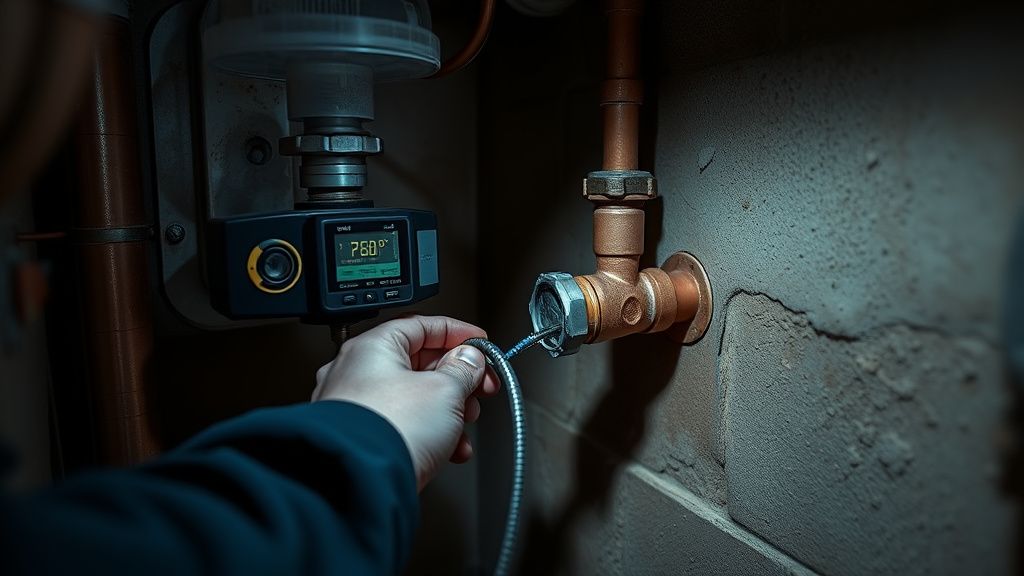
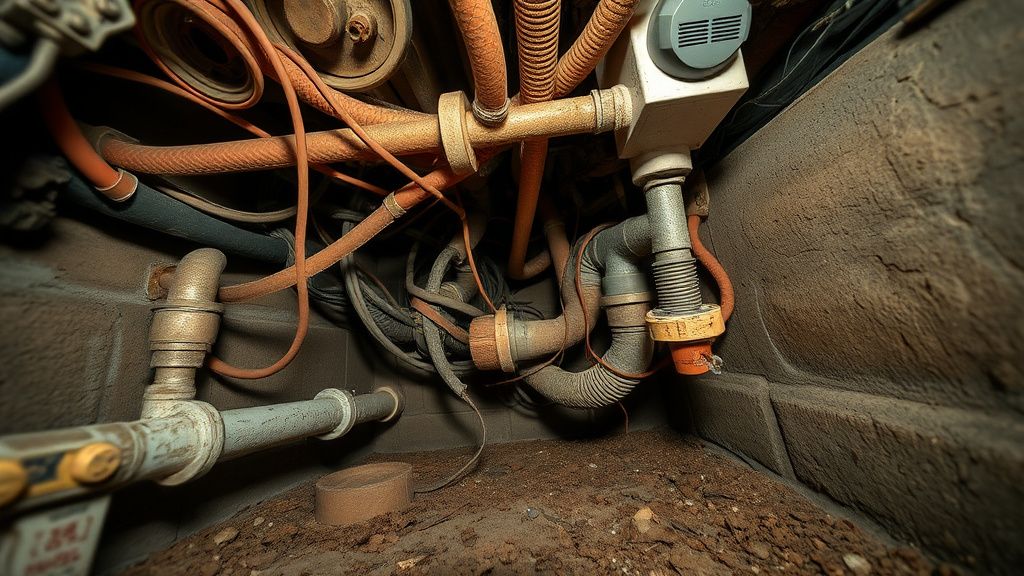
- The Infrastructure Gamble: You never know what you’re walking into. A home built in 1978 might have corroded shutoff valves, non-standard pipe diameters, or grounding issues where the copper pipe was used as a literal electrical ground for the house. If you cut into that, you own the liability.
- The Connectivity Barrier: Smart devices are useless if they don't stay online. Most homeowners have atrocious Wi-Fi coverage in their basements or utility closets, which is a critical connectivity bottleneck that mirrors the data reliability issues explored in Is Your Enterprise Data Rotting? Why NVMe NAND Refresh Cycles Are Now a Critical Service. If you install a device and it disconnects three days later, your support overhead will eat your profit margins alive. Scaling requires a "Network Readiness Assessment" as a mandatory part of your pre-install process.
- The Insurance Documentation Loop: This is the most underrated aspect. You need to provide a "Certification of Installation" that meets the specific compliance requirements of major carriers like Chubb, AIG, or USAA. If your paperwork is informal, the homeowner will never get the premium credit, and you’ll be left fielding calls as tedious as those from customers dealing with common appliance errors, such as a Cosori Air Fryer E3 Error: Easy Fixes for Sensor Malfunctions.
Engineering the Installation Workflow
To scale, you must move away from "bespoke" installations. Standardize your hardware stack. Choose one or two platforms (e.g., Phyn or Flo) and become a master of their specific API and integration quirks.
The Pre-Install Audit: Charge for a site visit. Use a high-quality ultrasonic flow meter to check existing pressure before touching a pipe. If the home’s PRV (Pressure Reducing Valve) is faulty, you don't install the smart device until the PRV is replaced. If you skip this, the smart device will trigger false alarms, creating a support headache comparable to troubleshooting a Philips Air Fryer E3 Error: How to Troubleshoot and Fix Temperature Faults.
The Power/Network Strategy: Never rely on the homeowner's Wi-Fi extender. Carry a dedicated, battery-backed cellular gateway or an industrial-grade PoE access point. If the house loses power, your leak detector must stay online. This is what differentiates a "gadget" from a "risk-mitigation system."
The Economic Paradox: Why Insurance Companies Haven't Fully Embraced This
We are currently in a "trust deficit" phase. Insurance carriers want to lower loss ratios, but they are terrified of "false negatives." If a device fails to detect a pipe burst that causes a $200,000 claim, the legal fallout is significant.
From an analyst’s perspective, the "premium discount" is often a marketing carrot that is difficult to actually claim. As seen on subreddits like r/Insurance and r/HomeImprovement, homeowners frequently complain about "the discount being so small it's not worth the hassle." Your job as a service provider is to bridge this gap. You must position yourself as a "Certified Risk Mitigation Partner" for local insurance brokers.
Case Study: The "Bulk-Discount" Pivot A mid-sized firm in the Pacific Northwest stopped targeting individual homeowners and instead partnered with a boutique insurance brokerage. They offered a "Risk Mitigation Package" where the cost of the hardware and install was partially subsidized by the broker's marketing fund in exchange for the broker getting a guaranteed 5% reduction in their clients' claims frequency. This shifted the acquisition cost from the installer to the broker, effectively removing the biggest barrier to entry: the upfront price tag.
The "Silent" Failures: Real Field Reports
Let’s talk about what happens when the tech doesn't work. The most common "failure mode" isn't a dead device; it's the "Policy vs. Reality" conflict.
- The "Grounding" Bug: In older homes, if the pipe is the ground, cutting it to install a brass shutoff valve creates an open circuit. You can fry the electronics of the smart valve or, worse, electrocute yourself or the client.
- Lesson: Always check for electrical continuity across the proposed cut site. Keep a grounding strap on the truck at all times.
- The "False Trigger" Drama: Large ice makers or old-fashioned softeners can trigger "continuous flow" alerts. When a customer gets an alert at 3:00 AM, they will call you.
- Solution: Build a "Burn-in Period" into your contract. The first 14 days are for "learning" the house’s rhythm. Do not allow the client to set the "Auto-Shutoff" feature to active until the device has gathered enough data to establish a baseline.
Counter-Criticism and Industry Debate
There is an active debate in the smart home space regarding "Closed vs. Open" ecosystems.
The Critics: Many IoT enthusiasts on platforms like Hacker News argue that proprietary, cloud-dependent leak detectors are a privacy and longevity disaster. "What happens when the company goes bankrupt or kills the cloud service?" they ask. It’s a valid concern. If your service relies on a cloud API that is prone to downtime, your credibility is tied to someone else's uptime.
The Counter-Argument: Professional insurance underwriters don't care about "open-source, local-control" systems. They want a "listed" product. They want a UL-certified, commercially backed solution that they can point to during an audit.
As a service provider, you must balance these. Don't fight the proprietary nature of the products—embrace the fact that insurance companies pay for managed risk, not DIY-friendly open APIs.
Infrastructure Stress and Scalability
If you are trying to scale to 50+ installs a month, you are no longer a "plumbing business"; you are a "logistics and monitoring business."
- Support Nightmare Management: You need a Tier-1 support line that can distinguish between "my app is glitchy" and "my pipe is leaking." Use a triage system. If the sensor reports a critical flow, the response protocol must be automated (e.g., text the owner and call the emergency plumbing partner simultaneously).
- Inventory Turbulence: The supply chain for smart valves is still fragile. A single firmware update can brick a batch of devices. We’ve seen this happen with major brands—the "update-induced boot loop." Always maintain a "golden master" supply of units that you have personally tested and updated in your own shop before bringing them to a client’s house.
The Future: From Detection to Actuation
The ultimate scale for this industry is not just detecting leaks, but automatic mitigation. We are moving toward a future where the home's water system is treated like an electrical grid—managed, metered, and protected by automated breakers (shutoff valves).
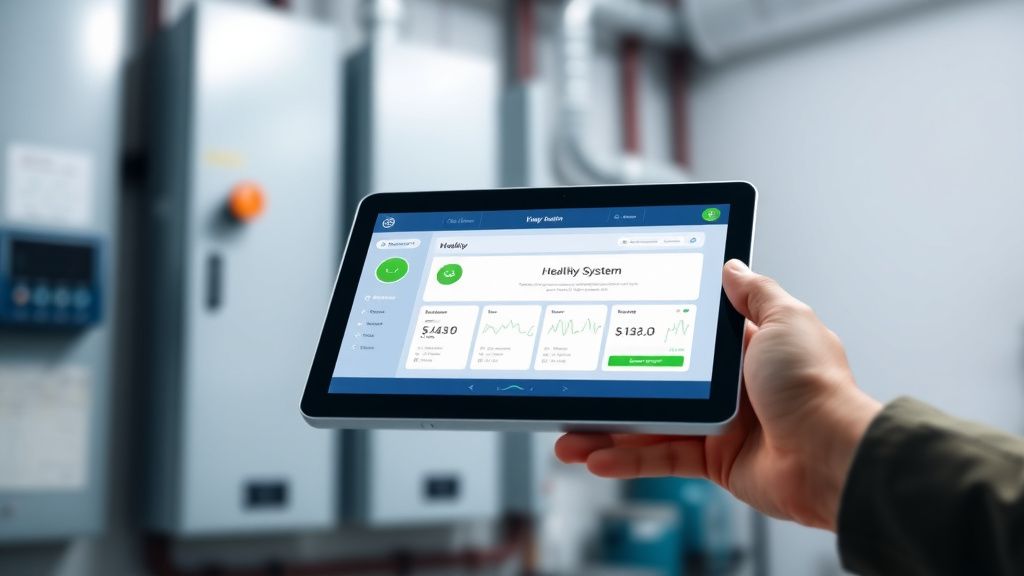
If you want to be profitable in the long term, you must pivot from being a "hardware installer" to an "infrastructure consultant." The margin is not in the hardware—it's in the subscription to monitor the system and the annual "System Health Check" visit.

How do I convince insurance agents to refer my service?
You don't pitch the hardware; you pitch the "Loss Mitigation Protocol." Present them with case studies showing that homes with your installed systems have had zero water damage claims in the last 24 months. Provide them with a simple one-sheet they can hand to clients that outlines exactly what they need to do to get the premium discount.
What do I do when a customer's Wi-Fi signal is too weak in the basement?
Never rely on the home’s existing Wi-Fi. Always upsell a professional-grade signal bridge or a dedicated cellular bridge (LTE/5G) as part of the installation package. It adds to the initial cost, but it eliminates the single largest source of support tickets: "My device is offline."
Are there legal liabilities if the device fails to stop a leak?
Always draft a robust "Limitation of Liability" clause in your contract. Clearly state that the device is a "monitoring and assistive tool" and not a substitute for standard home maintenance or insurance. Document everything—pre-install photos, post-install pressure tests, and the client's sign-off that they understand how to manually override the system.
Why do some insurance companies refuse to give the discount?
Often, the policy requirements are rigid. They might require a "certified professional installation" with specific documentation. If you aren't providing a signed certificate that includes the device’s unique ID and the installation date, the carrier’s system will reject the request. Build your own branded "Certificate of Compliance" to make it easy for the agent to process.
Is the recurring revenue model really worth the overhead?
Absolutely. A one-time install of a $500 device gives you, at best, a 20% margin. A $10/month monitoring and annual inspection contract creates a recurring revenue stream that increases the "exit valuation" of your business significantly. It transforms you from a tradesperson into a recurring revenue-generating service firm.