
The shift from "time management" to "energy management" is the most significant pivot in executive coaching in the last decade. Executives are no longer looking for calendar hacks; they are looking for biological competitive advantages. Circadian calibration—the alignment of behavioral rhythms with internal hormonal cascades—has moved from a niche biohacking obsession to a bottom-line operational necessity. Scaling a coaching practice in this space requires moving beyond "get eight hours of sleep" advice into the nuanced, messy, and highly technical world of chronobiology, data-driven feedback loops, and individual metabolic constraints, much like how Why Most Ergonomics Consultants Fail to Scale (And How to Fix It) requires a deep understanding of business architecture.
The Myth of the "One-Size-Fits-All" Sleep Protocol
The coaching industry is currently bloated with "sleep optimization" gurus who treat C-suite executives like generic lab rats. The reality is that the operational reality of an executive—constant travel, cross-timezone decision-making, and high-cortisol environments—destroys standard "good sleep" advice.
When you attempt to scale a practice, you will encounter the "Compliance Gap." You can design the perfect, lights-out, temperature-controlled, supplement-optimized protocol, but if your client is on a 2 AM board call from Singapore, the protocol fails. The failure isn't the client; it’s the lack of adaptive rhythm strategy.
The Biology of the "Second Shift"
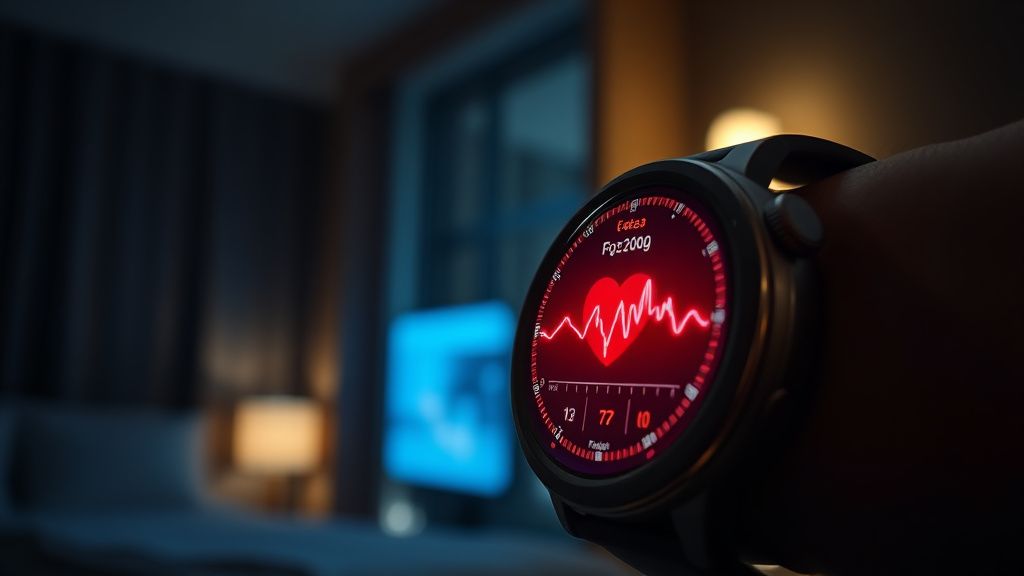
Most executives struggle with "social jetlag"—the misalignment between their social clock (the 9-to-5 corporate grind) and their internal biological clock. Coaching this requires an understanding of chronotypes—the genetic predisposition to be a morning lark or a night owl. Attempting to force an owl to perform peak cognitive tasks at 8 AM is a recipe for long-term burnout, much like trying to force complex systems to function in poorly optimized environments, a concept explored in Why Your Router’s Location Could Be Draining Your Mental Energy. This is a fundamental misunderstanding of biological architecture that inevitably leads to client churn.
Monetization: Scaling Beyond the Hourly Rate
If you are billing by the hour, you are failing to scale. High-ticket sleep coaching requires a shift toward "Outcome-Based Retainers" that integrate hardware, data interpretation, and behavioral design.
- The Hardware-as-a-Service Layer: Instead of just giving advice, integrate continuous glucose monitoring (CGM) and wearable sleep trackers (Oura, Whoop, Garmin) into your fee. You aren't just selling "coaching"; you are selling an "optimized biological environment."
- The "Data-Audit" Premium: Offer a quarterly "Chronobiological Audit." This involves deep-diving into 90 days of Oura ring or Whoop data to correlate specific meeting types, travel schedules, and nutritional intake with recovery scores.
- B2B Integration: Market this to firms as a "Performance Resilience Program." When you sell to the corporation, you are selling productivity, not wellness. The language must shift from "feeling rested" to "cognitive throughput capacity."
The Reality of Scaling: Operational Friction
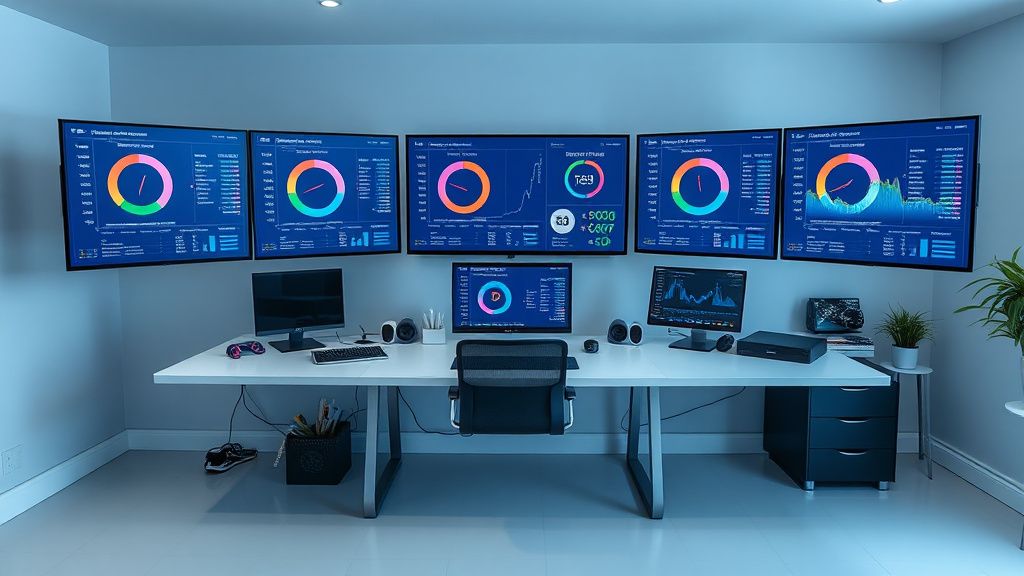
Scaling this service is where most coaches hit a wall. You move from being a consultant to being a data analyst. When you have 50+ clients uploading nightly data, the manual review process becomes a nightmare.
- The Scaling Trap: You cannot manually analyze 50 sleep reports every morning. You need systems to flag anomalies—specifically when "Readiness" scores drop below 60% for three consecutive days.
- The Support Nightmare: Clients will send you screenshots of their sleep stats at 6 AM, asking why their HRV (Heart Rate Variability) dipped. If you don't have a standardized triage system, you will be chained to your phone 24/7.
Gerçek Saha Raporları (Real Field Reports)
- Case Study A: The "Frequent Flyer" Failure: I worked with a global CEO traveling across three continents monthly. Initially, we focused on rigid "sleep hygiene." He failed within two weeks because he couldn't control hotel room light or airport lounge food. We pivoted to a "Mitigation Framework"—instead of perfect sleep, we focused on "Circadian Resynchronization Protocols," using specific light exposure and melatonin timing post-flight. The result? He didn't sleep better, but he recovered faster. Takeaway: Stop aiming for perfection; aim for faster recovery velocity.
- Case Study B: The "Data-Obsessed" Backlash: A client became so obsessed with his sleep score that he developed "orthosomnia"—the anxiety caused by sleep tracking data. He would stay awake worrying about his "readiness" score. We had to delete his app for 30 days to re-center his intuitive relationship with his body. Takeaway: Data is a map, not the territory. When the data becomes a source of stress, the coaching has failed.
Counter-Criticism and Industry Debate: The "Quantified Self" Backlash
There is a growing movement—visible on forums like Hacker News and specific Reddit subreddits—that calls out the "wellness industrial complex." Critics argue that by obsessing over HRV and sleep stages, we are actually increasing cortisol levels, creating a paradox where we try so hard to "optimize" that we lose our ability to naturally regulate.
The Critique: "We’ve replaced our natural intuition with a subscription-based algorithm," argues one prominent critic in a long-form Substack piece on the gamification of sleep. The industry's push for "optimization" can lead to a form of techno-determinism where an executive feels they cannot perform unless their tracker says they are ready.
As a coach, you must address this. You are not just teaching them how to use a tracker; you are teaching them how to disregard the tracker when the human context demands it.
Engineering the "Feedback Loop" for Executives
To successfully monetize this, your coaching must be iterative. It cannot be a linear curriculum.
- Phase 1: Baselines (The First 30 Days): Collect raw data. Do not change behavior. Just watch how the client responds to their current chaos.
- Phase 2: Targeted Interventions: Change one variable. Move dinner earlier. Or, cut off caffeine at 1 PM. Use the data to prove causality to the client. This "proof of performance" is what justifies your high fee.
- Phase 3: Resilience Training: Introduce strategies for when the system breaks (the "break-glass-in-case-of-emergency" protocols).
The Dark Side: Platform Instability and Technical Debt
One of the biggest issues in this space is the fragility of the data sources. APIs update, sensors fail, and platforms like Oura or Whoop change their algorithms overnight.
- The "Algorithm Update" Crisis: You will have clients who call you in a panic because their sleep score plummeted after a firmware update. You need to be prepared for the "tech support" aspect of your coaching. If you don't maintain a "technical disclaimer" in your contracts, you will find yourself debugging Bluetooth connection issues instead of coaching performance.
- The Privacy Conflict: You are dealing with highly sensitive physiological data. If you are storing this in unencrypted spreadsheets, you are one hack away from a massive liability. Scaling requires professional-grade data security that most solo-coaches ignore until a breach occurs.
Why Clients Stay (and Why They Leave)
Clients leave when the "novelty of the data" wears off. They stay when you transition from "Sleep Coach" to "Performance Partner."
- The "Why" vs. the "What": If you keep telling them what to do (e.g., "take magnesium"), they will eventually replace you with a search engine. If you help them understand why their specific physiology reacts the way it does to stress, you become an essential partner.
- Workaround Culture: Encourage clients to hack their own environments. If they find a specific earplug brand works better than the $300 custom ones you recommended, praise it. Document these workarounds. This "collective wisdom" becomes the value-add that differentiates your coaching practice from a generic app.

The Future of the Industry: Fragility vs. Robustness
The next generation of this market is not about "perfection," but "robustness." It is the ability for an executive to handle a 72-hour period of zero sleep without losing their mental clarity. This is the "Special Forces" approach to wellness. We are moving away from the pristine, white-walled aesthetic of "wellness" into the rugged, tactical, and highly practical territory of "performance resilience."
If you intend to scale in this niche, stop selling "rest." Start selling the capability to perform under conditions that would break a normal person. That is the high-value pivot that separates a $200/hour life coach from a $20,000/month executive performance strategist.