
To build a high-margin business in the Wi-Fi 7 space, you must stop selling "internet" and start selling "deterministic latency." Wi-Fi 7 is not just a faster radio; it is a complex, multi-link orchestration nightmare that defies standard "plug-and-play" setups. Success lies in auditing RF environments, managing backhaul congestion, and solving the "noise floor" problems that ISP-provided equipment—and even high-end consumer gear—simply cannot handle.
The era of the "IT guy" who just resets routers is effectively dead, replaced by a demand for network engineers who treat residential and small-office environments like mission-critical data centers, much like how professionals are mining the data center to profit from retired server hardware. The margin is found in the complexity; similar to how experts build a high-margin tech repair business by mastering CMOS battery replacement, if a system were truly "simple," no one would pay you for it.
The Myth of "Easy" Wi-Fi 7 Deployments
The marketing hype surrounding Wi-Fi 7 (802.11be) promises massive throughput, Multi-Link Operation (MLO), and 320 MHz channels. Manufacturers sell these kits in boxes featuring sleek, aggressive styling, implying that once you screw on the antennas, your latency issues vanish.
Reality, however, is significantly messier.
When you scale to Wi-Fi 7, you are essentially deploying enterprise-grade technology in uncontrolled, interference-heavy residential environments. Unlike Wi-Fi 6, which was iterative, Wi-Fi 7 introduces a level of radio-frequency (RF) sensitivity that requires a paradigm shift in how we approach network design.

Many businesses fail here because they treat Wi-Fi 7 like Wi-Fi 5 or 6, a common oversight for those who fail to consider that why institutional capital is moving to Layer-2 liquidity pools in 2026 requires a similarly specialized technical approach. They assume a mesh node will magically connect via wireless backhaul at full speed. In the real world, the "mesh" backhaul—especially when competing with high-bandwidth IoT devices, microwave ovens, and neighbors' aggressive APs—collapses under its own overhead.
Operative Reality: The "Noise Floor" Tax
Your business model should be built on the "Optimization Gap." Most residential networks are operating at 40% efficiency because of airtime contention. Wi-Fi 7’s 6GHz band is the "promised land," but it is also the most fragile.
- The Wall Problem: 6GHz signal penetration is abysmal. If you rely on wireless backhaul through two drywalls and a floor, your "Wi-Fi 7" link will perform worse than a basic Wi-Fi 6 connection on the 5GHz band.
- The Client Mismatch: Most of your clients’ devices (smartphones, older laptops) do not support Wi-Fi 7. When you deploy a cutting-edge router, you are effectively building a Ferrari to drive in a school zone. Your value add is in segmentation and airtime fairness tuning—ensuring the legacy "trash" devices aren't drowning out the high-speed traffic.
Case Study: The "Prosumer" Failure Loop
I once consulted on a case involving a 5,000-square-foot luxury home where the owner had installed a flagship Wi-Fi 7 mesh system. They were suffering from persistent video conferencing drops. The manufacturer’s app showed "all green," yet packet loss was at 12%.
The culprit? The system was defaulting to automatic channel selection, bouncing between DFS (Dynamic Frequency Selection) channels every time a local weather radar signal was detected. The "auto-optimization" algorithms were essentially gaslighting the user.
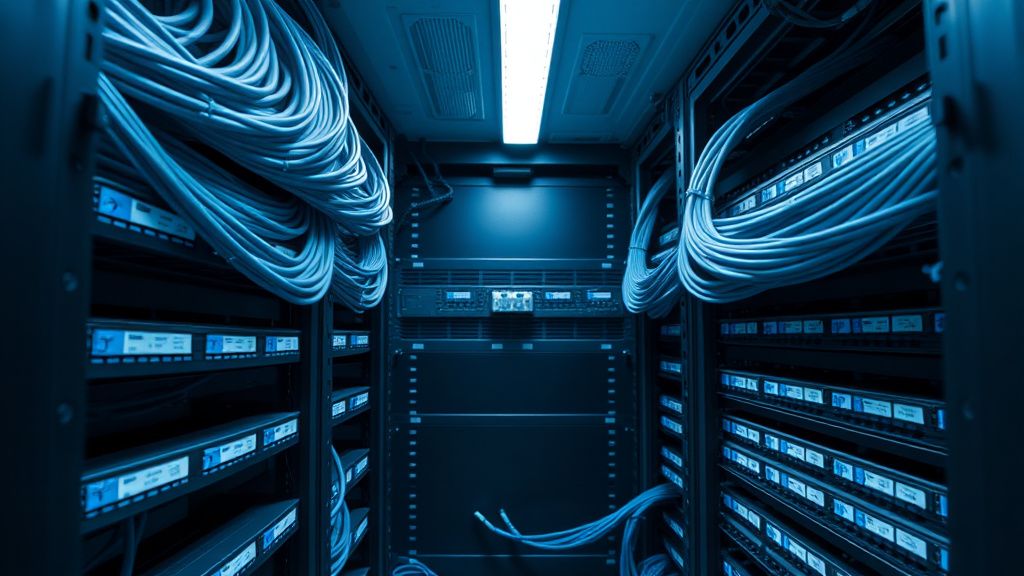
By disabling the "auto" features, locking down channel widths to 160MHz (rather than 320MHz, which was too unstable for the specific RF environment), and hardwiring the backhaul via Cat6A cabling, we achieved 99.9% stability. The client paid a premium not for the hardware, but for the removal of the "auto-magic" bloatware.
The Economics of High-Margin Support
You cannot charge a "service call" fee in this market, especially when you should be negotiating remote sales commissions in 2026 to reflect the true value of your technical expertise. If you are a commodity player, you are competing with the Geek Squad or a teenager down the street. High margins come from Service Level Agreements (SLAs) and Remote Proactive Monitoring.
- The Infrastructure Audit (The High-Margin Entry): Do not sell a router. Sell a "Network Health Analysis." Use spectrum analysis tools (like Ekahau or NetAlly) to provide the client with a heat map of their home. Show them exactly why their current setup is failing. People pay for clarity.
- Infrastructure Hardening: This is your bread and butter. If the house isn't wired for Ethernet backhaul, install it. If you can’t install it, propose a MoCA (Multimedia over Coax) bridge solution. Never, ever rely solely on wireless mesh backhaul for a high-end client. It is a support nightmare waiting to happen.
- Managed Maintenance: Charge a monthly recurring revenue (MRR) fee for:
- Firmware Vetting: Never update immediately. Wait 48 hours for the Reddit/Hacker News backlash to subside.
- Security Patching: Monitoring for unauthorized devices and unusual traffic patterns.
- Remote Rebooting: Using smart PDUs (Power Distribution Units) to cycle power remotely before the client even realizes the internet is down.
The "Counter-Criticism": The Argument Against Complexity
There is a growing school of thought that suggests Wi-Fi 7 is unnecessary for 95% of users. Critics argue that forcing high-end enterprise-grade complexity onto residential users is a form of "technological vanity."
When you read through threads on platforms like r/HomeNetworking or various GitHub issue trackers for OpenWRT or custom firmware, you will see a recurring theme: "The hardware is fine, the software is the poison."
The criticism is that by selling complex mesh systems to non-technical users, we are creating a permanent dependency on "network babysitters." Is it ethical to design a network that requires a monthly fee just to stay functional? The industry is split. Some argue for simplicity (e.g., standardizing on mesh systems that "just work," like Eero or Amplifi), while others (the high-margin crowd) argue that those systems are limited, black-box environments that offer zero control when things go wrong.

Dealing with Scaling and The "Support Nightmare"
When you scale your business beyond five or six recurring clients, the "Help Desk" aspect will break you. If you have 50 clients and everyone calls you when their Netflix buffers, your margins vanish.
To survive, you must embrace asynchronous support:
- Documentation: Build a client portal. Do not answer questions like "How do I change my Wi-Fi password?" over the phone. Create a 30-second video tutorial for their specific system.
- Edge Case Management: Wi-Fi 7 devices are notorious for "hand-off" issues where a device stays locked onto a weak node instead of roaming to a stronger one. This is a common bug in current firmware versions. Instead of manual troubleshooting, use managed APs (like Ubiquiti or Ruckus) where you can force "Minimum RSSI" thresholds.
- The "Wait and See" Protocol: When a manufacturer drops a major update, resist the urge to push it to all clients. Test on your own "lab" network (you must have a lab network) for 72 hours. The number of times a "stability update" has broken VLAN tagging or DHCP reservation tables is astronomical.
The Human Element: Managing Expectations
Your biggest enemy is not technical interference; it is the human expectation that "more expensive router = no dead zones."
You must be the educator. During your sales pitch, explain the physics of signal attenuation. Show them that even the most expensive Wi-Fi 7 access point cannot punch through three feet of concrete or lead-lined mirrors. If you manage expectations before the installation, you avoid the "angry client" call at 10:00 PM on a Sunday.
If you don't educate, you'll be treated like a utility worker. If you educate, you're treated like a consultant. The price difference between those two roles is exactly where your margin lives.
The Future of Wi-Fi 7 and Beyond
We are moving toward a world where Wi-Fi 7 will eventually be common, but the next standard (Wi-Fi 8, or IEEE 802.11bn) is already in discussion. The trend is clear: more spectrum, more complexity, more device density.
The industry is moving toward AI-driven network management. Some vendors are already pushing "self-healing" AI meshes. As a professional, your role is to ensure these systems don't "heal" themselves into a crash.
Q: Is Wi-Fi 7 really worth the investment for a standard household?
The technical answer is "no" for the average user, but "yes" for a high-margin service provider. The value lies in the 6GHz band's capacity to handle modern IoT congestion. Most households aren't bandwidth-constrained; they are airtime-constrained. Wi-Fi 7 manages this congestion better than its predecessors, justifying the premium installation cost for stable, "invisible" internet.
Q: Why do you insist on hardwired backhaul instead of wireless mesh?
Wireless mesh is an efficiency killer. Every hop in a wireless mesh system halves your potential throughput and increases latency. In a Wi-Fi 7 environment, you’re trying to move gigabit-level traffic. If you use a wireless backhaul, you’re introducing a bottleneck before the traffic even reaches the radio interface. Hardwired backhaul is the only way to guarantee a "high-margin" service level.
Q: How do you handle clients who buy their own gear?
You either charge a premium to manage it, or you decline the project. High-margin businesses thrive on standardization. If you are supporting five different brands, your support costs will skyrocket, and your knowledge base will be fragmented. Force standardization on a platform you know inside and out—this is how you scale.
Q: Are there specific Wi-Fi 7 devices you avoid?
Avoid anything that lacks granular control over channel selection and power levels. If a system is designed as a "black box" where you have no access to the CLI or advanced settings, it is a liability. When the system fails—and it will—you want the tools to troubleshoot and fix it, not just a "reboot" button.
Q: What is the most common reason for Wi-Fi 7 network failure?
In my experience, it’s not the hardware; it’s the environment. Most users think they can place a router in a closet or behind a TV. 6GHz signals reflect and scatter. If you don't perform a proper site survey, you are just guessing. The most successful deployments are the ones where we spend more time planning the AP placement than actually plugging them in.