Launching a home efficiency auditing business isn't about buying a thermal camera and calling yourself an expert. It is an exercise in managing the friction between legacy infrastructure and modern, often buggy, smart home automation. The current market is saturated with "smart thermostat" installers, but there is a profound, unserviced gap in calibration-as-a-service. While the consumer expectation is "set it and forget it," the reality of HVAC performance—especially when retrofitted with smart components—is a graveyard of misconfigured PID controllers and mismatched duct pressure.
The Myth of the "Plug-and-Play" Smart Home
The fundamental problem in the current smart HVAC ecosystem is the assumption of compatibility. Most HVAC systems were engineered in the 1990s or early 2000s, designed to react to simple bimetallic strips or basic digital logic. When a homeowner installs a modern smart thermostat—marketed as the panacea for high utility bills—they often introduce an algorithmic mismatch.
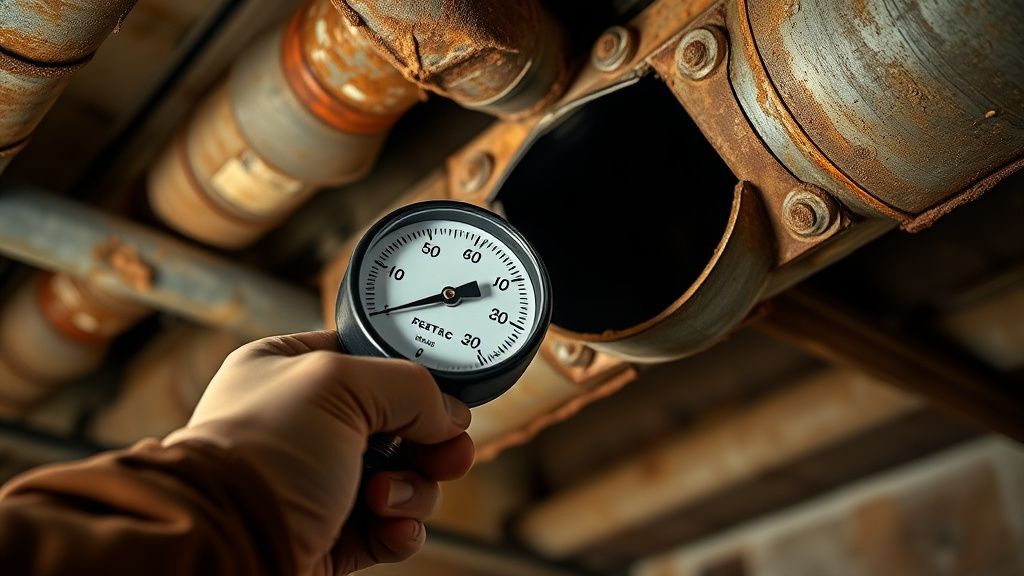
If your furnace's blower speed is fixed (PSC motor) but your thermostat is attempting to "learn" cycle timing based on ambient occupancy, you aren't saving energy; you are causing short-cycling. Short-cycling is the death of a compressor. It increases mechanical wear and creates uneven temperature zones that force the system to work harder to correct its own errors. An efficiency auditor doesn't just look at the app; they look at the static pressure of the return vents and the temperature differential across the evaporator coil.
The Operational Reality: Beyond the Dashboard
To turn this into a profitable business, you must move away from being a "device installer" and become an "energy diagnostic consultant." The profit isn't in the hardware margin—which is razor-thin and increasingly commoditized by platforms like Amazon or Best Buy—it’s in the data reconciliation.
Most homeowners don't know that their "Smart" home is fighting itself. For instance, a smart vent system that closes off registers in unused rooms can inadvertently skyrocket the static pressure, leading to an ECM blower motor overheating and eventually failing. This is a common failure point often documented in threads on r/HVACadvice or GitHub repositories for open-source home automation projects like Home Assistant.
- The Workflow:
- Baseline Assessment: Documenting existing energy consumption vs. outdoor ambient temperature (Degree Days).
- Calibration: Aligning the smart thermostat’s cycle rate settings with the actual thermal lag of the building envelope.
- Pressure Balancing: Ensuring the ductwork isn't choked by the very "smart" vent technology designed to save energy.
- Reporting: Providing a data-backed document that proves a specific ROI.
Real Field Report: The "Smart Vent" Debacle
In 2023, I shadowed an auditor in a suburban development where 40% of the homes had been retrofitted with aftermarket smart vents. The homeowners were complaining that the second floor was "never the right temperature."
Upon arrival, the audit found that the smart vents were closing off 60% of the airflow to save energy in unoccupied bedrooms. However, the system's bypass damper was missing, and the fixed-speed blower was trying to push the same volume of air through the remaining 40% of the house. The result? The static pressure was so high that the blower motor was pulling excessive amps, and the evaporator coil was freezing up because the airflow was insufficient to prevent condensation ice-over. The "energy-saving" technology was costing the homeowners $800+ in potential blower motor repairs. This is where your business model thrives: solving the mess created by the marketing of "smart" tech.
The Politics of Professionalism: Why DIY Isn't Enough
There is a massive cultural pushback in the trade unions and licensed contractor communities against "auditors." They view them as non-technical observers who provide reports but don't hold a mechanical license. To succeed, you must bridge this gap. You aren't replacing the licensed contractor; you are providing the technical proof for them to do the job correctly.
If you don't possess a mechanical license, don't pretend to be an HVAC technician. Position yourself as an Efficiency Data Analyst. Your product is the insight, not the repair. If you try to swap out refrigerant lines or touch the high-voltage circuits, you aren't just taking on legal liability; you are crossing an ethical line that will get you blacklisted by every reputable service company in your area.
Common Failure Points in System Calibration
- Hysteresis Mismanagement: Most users set their smart thermostats to the narrowest possible deadband (e.g., 0.5 degrees). This leads to excessive starting/stopping. A professional auditor knows how to expand this deadband to allow the house's thermal mass to do the work.
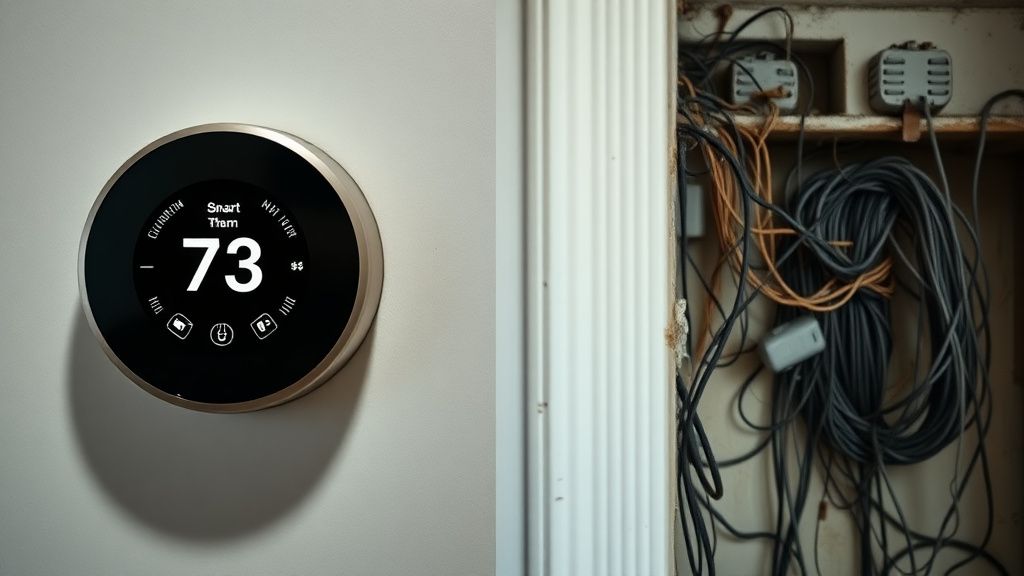
- Sensor Placement: Many smart thermostats are installed in hallways near the kitchen. The heat from the oven cycles the furnace early. A simple fix? Using remote, room-specific sensors—but only if you understand where the "dead spots" in the home actually are through thermal imaging.
- The "Cloud" Latency: Sometimes, the energy-saving logic is handled on the company’s server. If the internet goes down, the thermostat defaults to a "safe" mode that may be incredibly inefficient.
Counter-Criticism and Industry Debate
There is a vociferous debate on platforms like Hacker News and Reddit’s r/HomeAutomation regarding whether smart HVAC optimization actually saves money or if it’s just "shiny object syndrome."
The skeptics argue that the cost of the devices (and the labor to calibrate them) often exceeds the lifetime energy savings, especially in climates with mild winters or summers. They have a point. The "Energy Star" branding on many consumer devices is often based on idealized test-bench scenarios that ignore the reality of a leaky, non-weatherized home.
- The Counter-Argument: The value isn't just in the electricity bill. It’s in the mechanical longevity. If you can prove that your calibration prevents a $4,000 blower motor replacement or a $1,200 evaporator coil replacement, the business case shifts from "energy saving" to "asset protection." This is the pivot you need to make in your sales pitch to move from a commodity service to a high-end consultant.
Scaling the Business
Scaling an audit business is notoriously difficult because it is inherently non-scalable labor. You cannot be in two attics at once. To grow, you must transition to a tiered service model:
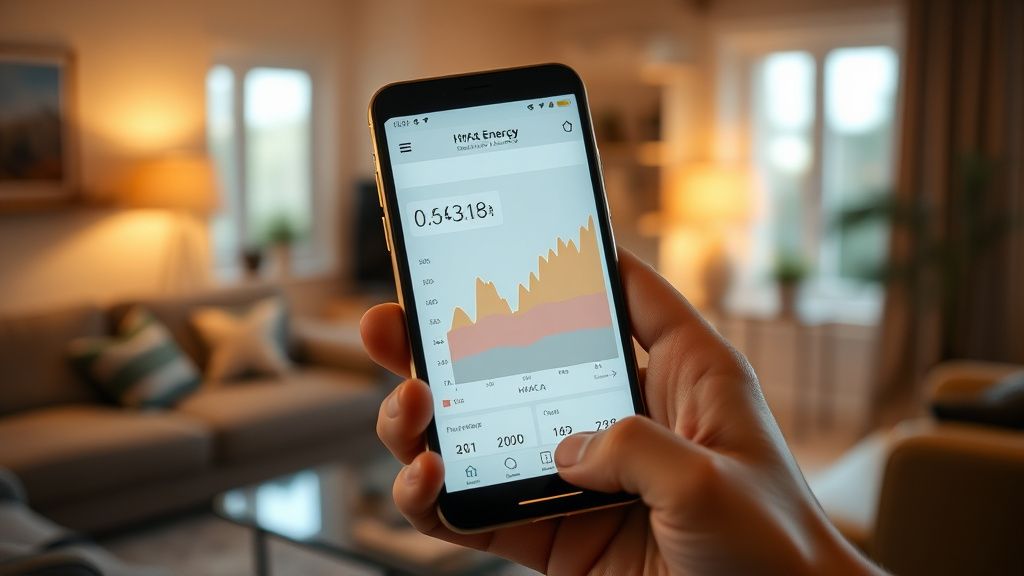
- Tier 1 (Automated): Homeowners send you their thermostat logs (CSV export), and you provide a remote analysis for a flat fee.
- Tier 2 (On-site Diagnostic): The full physical audit with blower door testing and thermal imaging.
- Tier 3 (Ongoing Management): A subscription service where you monitor their HVAC logs via API-connected devices and adjust setpoints seasonally.
The friction here is data privacy. People are increasingly paranoid about "smart" devices. You must be prepared to handle their data securely and explain in plain English why they should grant you "view-only" access to their thermostat's cloud account.
The Reality of "Broken Promises"
We have to talk about the "Platform Instability." As a consultant, you are building your business on the back of APIs provided by Google (Nest), Amazon (Ecobee), and others. When these companies change their API—and they do, frequently, often breaking existing integrations—your service can go offline overnight.
I’ve read countless support threads on GitHub where maintainers of home-integration plugins express total exhaustion after a company like Google unilaterally restricts API access. If you base your business on a specific platform, you are at the mercy of their corporate roadmap. The workaround? Platform-agnostic sensors. Use localized, non-cloud sensors (like Z-Wave or Zigbee) wherever possible so your diagnostic data is yours, not someone else's property in the cloud.
How do I legally protect myself if a system fails after I "calibrate" it?
Always operate with a clear contract that defines your role as an audit and diagnostic consultant, not a mechanical repair service. Explicitly state in your terms that you are recommending settings and identifying inefficiencies, not performing mechanical work. Carry General Liability Insurance that covers "Professional Errors and Omissions," specifically tailored for home consulting.
Is thermal imaging really necessary or is it just for show?
It is essential for finding "hidden" efficiency losses, but it is not a magic wand. An infrared camera will show you where heat is leaking, but it cannot tell you if the blower motor is failing. Use it as a visual tool to sell the client on the problem, but rely on static pressure readings and amperage draws for the actual diagnostic work.
What happens when the manufacturer updates the firmware and my calibration is wiped?
This is an operational risk. You should include a "re-check" clause in your service contract. Charge a retainer or a smaller, recurring fee for "remote monitoring and system health checks." This transforms your business from a one-off audit to an ongoing, profitable relationship.
Can I actually compete with HVAC contractors who offer "free" estimates?
You aren't competing with them; you're selling a different product. An HVAC contractor wants to sell a new unit; they have an incentive to find "catastrophic" failures. You are a third-party advocate for the homeowner. If you position yourself as the "unbiased truth" in a market of salespeople, you win the trust of the client, which is the most valuable currency in this industry.
How do I handle clients who expect instant savings?
Manage expectations from the first meeting. Explain the "Thermal Lag" reality. You aren't just managing the air temperature; you are managing the building's thermal envelope. Savings are rarely instantaneous. Provide them with a 12-month projected report based on historical consumption, and explain that comfort and equipment longevity are the primary outcomes of proper calibration.