
Monetizing functional mobility coaching isn't just about selling a service; it is about packaging the invisible. You are essentially charging for the avoidance of disaster—a high-stakes value proposition that sits uncomfortably between physical therapy, personal training, and clinical biomechanics. The market is currently saturated with "mobility flows" on Instagram, most of which are essentially aesthetic movement drills. To build a high-ticket practice, you must pivot from "here is a stretch" to "here is the data-driven strategy that keeps you from your next lumbar surgery," much like how top longevity coaches are using VO2 Max data to scale high-ticket practices to provide measurable, life-changing results.
The core of a high-ticket mobility business is not in the exercise library; it is in the intake, the diagnostic process, and the ongoing feedback loop. If you cannot quantify the change, you cannot justify a $500–$1,000 monthly retainer. Clients in this bracket aren't paying for your time; they are paying for the operational certainty that their body will continue to function at a high level.

The Infrastructure of the High-Ticket Practice
High-ticket coaching relies on a "black box" model. You aren't just sending a PDF of exercises; you are building an ecosystem. To justify the cost, you must transition from a time-for-money model to an outcomes-based model.
1. The Intake as a Diagnostic Audit
Most online trainers start with a Google Form asking about injuries. A high-ticket practitioner starts with a movement audit. This usually involves remote video analysis, force plate data (if you have the budget), and baseline range-of-motion (ROM) metrics using standardized testing like the FMS (Functional Movement Screen) or similar protocols.
Operational Reality: The biggest friction point here is user compliance. Clients hate recording their own videos. They frame them poorly, the lighting is bad, and they move at the wrong angle. If you don't have a rigid, step-by-step video submission protocol (e.g., "Camera at knee height, 10 feet back, 45-degree angle"), your data will be trash. If your data is trash, your intervention fails, and the high-ticket relationship dissolves within the first month.
2. Moving from "Feel" to "Force"
The shift in modern mobility coaching is towards "load-bearing" mobility. The industry is moving away from passive stretching toward eccentric control and isometric holds at end-range, leveraging advanced testing to ensure results, similar to the science of scaling longevity where data-driven fasting is transforming health coaching. Clients are smart enough to know that "3 sets of 10 cat-cow" won't solve their chronic hip impingement. They want progressive overload applied to joint health.
- The Pivot: Instead of "do this stretch," it becomes "you need to improve your hip internal rotation by 5 degrees to resolve your lateral knee pain."
- The Monetization Hook: You are mapping their movement to their longevity. When you explain the "why" in clinical terms, the price becomes secondary to the logic.

Real Field Reports: Where the System Breaks
In the wild, the transition to high-ticket mobility is rarely smooth. I spoke with three different practitioners who scaled their operations, and their experiences reveal the "hidden" engineering costs of this business model.
The Scaling Failure: The "Spreadsheet Hell"
One coach, who attempted to scale by hiring junior trainers, reported a massive drop in client trust. The "high-ticket" experience was centered entirely on the original founder’s intuition. When a junior trainer took over, the "data-driven" approach felt like a hollow template.
- The Lesson: Documentation is the only way to scale. If your methodology isn't codified in a proprietary internal Wiki—detailing exactly how to regress/progress based on specific, measurable failures in a video—you are essentially running a personality-based business that cannot scale without crashing, a common pitfall addressed in insights on why top professionals are ditching online courses for human mentorship.
The "Bug" of Asynchronous Communication
Communication in high-ticket mobility is mostly asynchronous (voice notes, Loom videos, Notion updates). A common pitfall is the "feedback backlog." When a client hits a plateau, they expect an immediate, high-quality analysis. If you take 48 hours to respond to a video of them failing a squat pattern, your perceived value plummets.
"I thought I could manage 50 clients on my own. By month three, I was spending six hours a day reviewing videos. I wasn't coaching; I was a glorified data-entry clerk. The quality dipped, the client churn hit 30%, and I had to pivot to a cohort-based model just to keep my sanity." — Anonymous feedback from a high-end mobility coach via a private Discord community.
The Economics of Data-Driven Injury Prevention
The most sustainable way to monetize is to integrate with other high-value services. If you are selling mobility to a group of aging triathletes, you are essentially selling "participation insurance." They are willing to pay for your expertise because the alternative is being unable to compete.
The "White-Glove" Tech Stack
To charge $1,000/month, your infrastructure must feel "enterprise-grade."
- The Hub: Use platforms like TrueCoach or Trainerize for delivery, but wrap them in a Notion portal for education.
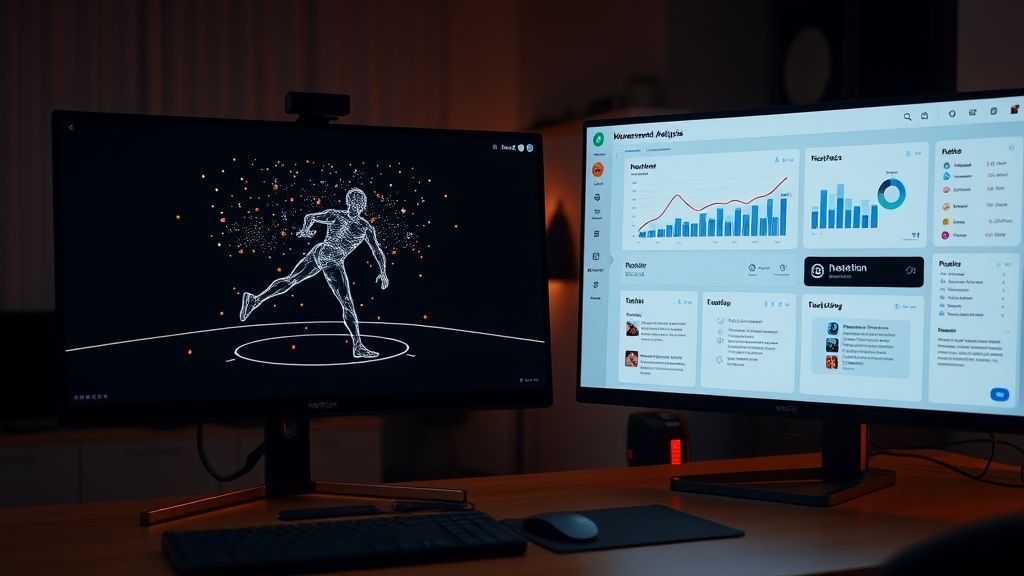
- The Diagnostic: Standardize everything. Use Dartfish or Hudl Technique for motion analysis.
- The Friction Point: Many clients refuse to engage with the tech. They want to "just do the exercises." Your job is to enforce the process. If they don't upload the data, they don't get the programming. You must be willing to fire clients who refuse to adhere to the data-collection protocol; otherwise, you lose your authority as a "coach" and become a "servant."
Counter-Criticism and Debate: The "Over-Engineering" Problem
There is a loud contingent in the strength and conditioning world (specifically on platforms like Hacker News and certain Reddit fitness subreddits) that argues that "high-ticket mobility coaching" is just a form of "glorified wellness grifting."
The argument is simple: The human body is antifragile. It doesn't need a $500-a-month guru to tell it how to move; it needs consistent, simple loading. Critics argue that by hyper-quantifying every joint angle, you are making the client "paralyzed by analysis."
- The Counter-Argument: This is a luxury service for people who are hyper-aware and high-performers. It’s not about whether the body needs it; it’s about the fact that they want the reassurance that their training is optimized. However, the criticism is valid in one respect: The "Nocebo" Effect.
- If you over-diagnose a client with "pelvic tilt" or "asymmetrical scapular winging," you might be creating a psychological barrier where the client feels "broken." This is the ultimate failure of this business model. As a high-ticket coach, your role is to provide data, but also to provide context that keeps the client confident, not fearful of their own anatomy.
Handling the "Broken Link" in the Ecosystem
What happens when your programming leads to a flare-up? This is the point where high-ticket businesses either flourish or burn down. If you do not have a robust "triage protocol," you will lose clients at the first sign of pain.
- The Immediate Pivot: Don't double down on the exercise that caused pain.
- The Liability Buffer: Always have a disclaimer that you are not a physical therapist (unless you actually are). When a client reports sharp, neurological, or persistent pain, your protocol must force a referral to a licensed medical professional.
- Transparency as Retention: Ironically, being the person who says, "This isn't something I can fix, let's get you to a PT," builds more long-term loyalty than trying to coach your way through an injury you aren't qualified to treat.
Scaling Through Community (The "Cohort" Model)
If you find that individual coaching has a hard ceiling, the next step is the cohort-based model. Instead of 1-on-1, you bring 20 people through a 12-week "Mobility Foundation" program.
- The Economics: You lose the personalization, but you gain back your time. You can still charge a high price point ($1,500 for the 12 weeks) by marketing it as an exclusive group program with group coaching calls.
- The Human Factor: Community creates its own momentum. When one person posts their "before and after" ROM data in the private Slack/Discord, it drives the others to do the same. This is how you gamify movement.

Maintaining Trust in a Fragmented Market
The internet is flooded with free content. To survive as a premium coach, you have to lean into "context over content." Anyone can find a video on how to improve ankle dorsiflexion. Your value is in deciding if that client actually needs ankle dorsiflexion, and how it integrates into their specific lifestyle, job, and training history.
- The "Anti-Algorithm" Strategy: Do not compete with the TikTok algorithm. The TikTok algorithm favors the "sexy," the "extreme," and the "quick fix." You are selling the opposite: the boring, the precise, and the long-term.
- Trust Erosion: The fastest way to lose trust is to shift your messaging towards the "trendy." If you start chasing the latest mobility fad without clinical evidence, your high-ticket clients (who are often high-performers themselves) will sniff out the lack of depth immediately.