The promise of running a "private LLM hosting service" for Small and Medium Businesses (SMBs) using consumer-grade hardware sounds like a modern-day gold rush. It is a seductive narrative: buy four RTX 3090s, shove them into a rack-mount chassis, install vLLM or Ollama, and charge a monthly subscription to local law firms or accounting offices worried about data privacy.
The reality? It is a minefield of thermal throttling, driver instability, and the brutal economic truth that your power bill, if not managed with surgical precision, will eat your margins before you secure your third client.
The Hardware Mirage: Consumer vs. Enterprise
If you scroll through r/LocalLLaMA, you see a community obsessed with maximizing tokens per second (TPS) on a budget. But there is a massive chasm between "hosting a model for your own terminal" and "hosting a reliable inference API for three concurrent corporate clients."
Consumer GPUs—like the NVIDIA RTX 3090 or 4090—lack the error-correcting code (ECC) memory found in A100s or L40s. When you run a model for 72 hours straight, bit-flips aren't just theoretical; they are a statistical certainty, much like the motor issues often addressed in Shark IQ Robot Error Code 14 repair guides.
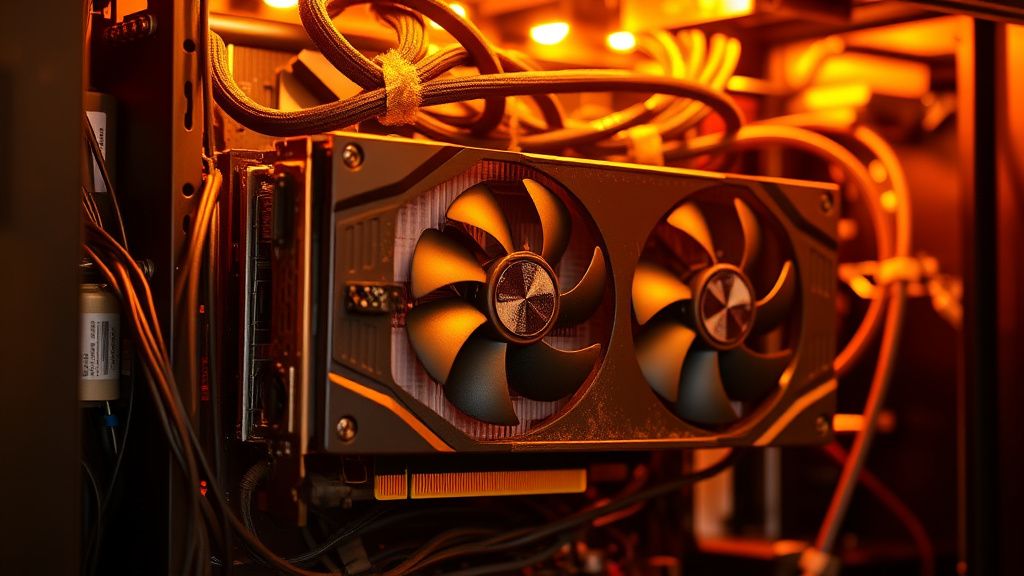
In an enterprise environment, a 0.01% error rate in model weights might lead to a hallucinated clause in a contract. If you are building this service, your "profitability" isn't just about compute power; it's about insurance. You need to implement parity checks and health monitoring that go far beyond what a standard nvidia-smi readout tells you. The "workaround" culture here is rampant: people are using consumer cards with custom BIOS flashes to prevent power limits from throttling inference tasks during peak loads.
The Operational Nightmare: Cooling and Power Density
You cannot put a 4-GPU rig in a closet and expect it to survive. Most residential or light-commercial HVAC systems are not designed to handle the 1.5kW to 2kW of constant heat dump generated by a multi-GPU inference machine.
I’ve spoken with small operators who tried to scale this, much like those learning how to scale your home energy consulting business in 2026: their primary failure wasn't the code. It was the power supply units (PSUs) dying under the strain of constant transient spikes. When a user sends a complex multi-turn prompt, the GPU jumps from idle to 100% load instantly. If your power delivery isn't over-provisioned, you’ll trigger OCP (Over Current Protection) shutdowns, a common technical headache that is just as frustrating as dealing with a Cosori 5.8qt Air Fryer E1 Error when you need your appliances to function perfectly.
The Hidden Cost:
- Thermal Management: Consumer cards have air-coolers designed to exhaust into a PC case. In a dense server setup, they just recirculate hot air. You need to mod these with blower-style shrouds or switch to liquid cooling—which introduces pump failure points.
- Infrastructure Stress: You are fighting physics. The cost of renting rack space in a data center with high-amperage PDU support is the real "service fee" that kills your ROI.
Software Fragmentation: The "It Works on My Machine" Syndrome
The current state of open-source model serving is chaotic, much like a network failure, and if you are struggling with connectivity issues elsewhere, check out how to fix a Ring Doorbell Pro that goes offline after a Wi-Fi change. You have vLLM, TGI (Text Generation Inference), Ollama, LocalAI, and a dozen others. Each has a different approach to memory management.
When you sign a client, you aren't just selling them an API key; you are signing up for ongoing maintenance, not unlike the main brush maintenance required for an Ecovacs Deebot T9 to keep it operational. If Mistral releases a new weight format or bitsandbytes updates their quantization logic, your entire stack might break overnight.
I recently saw a thread on a developer mailing list where a provider had to manually patch their Docker containers because an upstream change in transformers caused a memory leak that only surfaced when dealing with long-context windows (e.g., 32k+ tokens). These "edge cases" are where the profitability disappears. You spend 20 hours fixing a bug for a client paying you $200/month, which is exactly the kind of time-sink you want to avoid by pivoting to high-ticket corporate ergonomic consulting instead. That is not a business; that is a tech-support trap.
The "Security" Argument: A Marketing Shield
SMBs are terrified of sending proprietary data to OpenAI or Anthropic. This is your wedge. You are not selling "LLM power"; you are selling "Data Sovereignty."
However, you must be honest about what "private" means. If your hardware is in a rented colocation facility, you are still relying on a third-party physical security stack. If you don't have SOC2 compliance or a clear data-retention policy (e.g., "we wipe logs every 24 hours"), you are effectively lying to your clients.
The biggest risk here is Model Poisoning and Prompt Injection. If you host multiple clients on the same shared hardware using logical separation, a sophisticated user might find a way to break out of the container or side-channel attack the memory to peek at other clients' contexts. If you are serious about this, you need hardware-level isolation or single-tenant instances, which significantly cuts into your hardware utilization efficiency.
Real Field Reports: Why Most Pivot or Collapse
- Case Study A (The Failed Enthusiast): A dev attempted to build a local inference cluster for a local marketing agency. They used 6x RTX 3090s. They neglected the cooling. The system suffered a catastrophic thermal event during a demo, melting the motherboard's PCIe riser cable. The agency lost faith and went back to ChatGPT Enterprise. The lesson: Reliability is more important than token speed.
- Case Study B (The Pivot to Fine-Tuning): A small shop in Germany stopped trying to compete on "generic hosting." Instead, they offered "private fine-tuning." They host the base model and provide a pipeline for the client to upload their own CSVs to perform LoRA (Low-Rank Adaptation) tuning. This shifted the business from a commodity (inference) to a value-added service (training). They are now profitable.
Counter-Criticism: The "GPU-Poor" Trap
There is a growing sentiment in the industry that hosting LLMs on consumer hardware is a "race to the bottom." As NVIDIA continues to hike prices and as cloud providers (AWS/GCP/Lambda Labs) lower their spot-instance prices, the margin for a "mom-and-pop" GPU hosting service is shrinking.
Critics argue that you are essentially an arbitrageur betting that your electricity costs are lower than a data center’s overhead. But you lose on scale. A data center buys thousands of H100s at wholesale; you buy a used card on eBay. They have teams of engineers to optimize the stack; you have a GitHub issue thread that hasn't been updated in six months.
Is it possible? Yes. Is it scalable? Only if you stop treating it as a "hosting service" and start treating it as a "managed software-as-a-service."
The Roadmap for Sustainability
If you still want to pursue this, focus on these three pillars:
- Niche Specialization: Do not host "Llama 3 for everyone." Host a specialized pipeline (e.g., medical transcription anonymization, legal document summarization). The more specific the pipeline, the more you can charge for the "privacy" wrapper.
- Automated Health Checks: Use
PrometheusandGrafanato monitor not just uptime, but model drift and latency spikes. If your TPS drops below a certain threshold, the system should auto-restart the container. - Tiered Hardware Plans: Build the service so that you can isolate high-paying clients on single GPUs (or even multi-GPU setups for low latency) while multi-tenanting smaller clients on less powerful hardware.
Sıkça Sorulan Sorular
Is it actually profitable to use consumer GPUs for hosting?
Why not just use AWS or Lambda Labs?
How do I handle hardware failure when a client is paying for uptime?
Kubernetes or Docker Swarm if your primary node experiences a kernel panic or thermal shutdown.