Quick Answer: You can retrofit most legacy Z-Wave, Zigbee, and Bluetooth smart locks to work with Apple Home, Google Home, and Amazon Alexa via Matter — without replacing the hardware — by deploying a Matter bridge (like a hub, dedicated dongle, or updated gateway). The process involves selecting a compatible bridge, configuring protocol translation, and validating interoperability. It rarely goes perfectly on the first attempt.
There's a particular kind of frustration that belongs exclusively to people who spent real money on smart home hardware, similar to the headache of dealing with Ring Doorbell Pro Offline After Wi-Fi Change? Here’s How to Fix It or Is Your Roku Buffering? 7 Quick Fixes for Smooth 4K Streaming before the standards wars settled. You bought a Z-Wave deadbolt in 2019, maybe a Schlage Encode, or an August Smart Lock Pro. You did the research, you ran the wiring, you set up the automations. Then Matter arrived in 2022 — promising to be the protocol that finally unified everything — and suddenly your perfectly functional lock was stranded on a deprecated integration stack.
The manufacturers mostly stayed quiet about backward compatibility. The marketing pages showed shiny new Matter-native devices. The old ones got firmware updates that added nothing, or got quietly discontinued. And you were left with a piece of hardware that still locks and unlocks fine, but feels as obsolete as a kitchen appliance that won't stop blinking or an Ecovacs Deebot Error 4: Quick Repair Guide, unable to communicate with your modern ecosystem.
This is the operational reality that "Matter bridges" exist to solve. Not the idealized version from press releases, but the messy, sometimes maddening, occasionally elegant process of connecting legacy lock hardware to modern control infrastructure. This guide exists to walk through that process honestly, much like our troubleshooting guides for Ninja Foodi Not Preheating? How to Fix Your Sensor Like a Pro or Cosori 5.8qt Air Fryer E1 Error: Simple Fixes to Save Your Appliance, to help you clear the obstacles.
What a Matter Bridge Actually Does — And What It Doesn't
The term "bridge" is doing a lot of work here, and the industry uses it loosely enough to create real confusion.
In the Matter specification — maintained by the Connectivity Standards Alliance (CSA) — a bridge is a specific device class. It's a Matter-native endpoint that translates between the Matter data model and one or more non-Matter protocols. When you pair a bridge to your Matter controller (your Google Nest Hub, your Apple HomePod mini, your Amazon Echo 4th gen), the bridge appears as a single device. The locks, sensors, and switches behind that bridge appear as composed devices — they show up in your app, they respond to commands, they report state.
The important technical distinction: the bridge doesn't make your old lock "Matter-native." Your Schlage Connect or Yale Assure Z-Wave lock is still speaking Z-Wave internally. The bridge is translating in real time, mapping Matter lock cluster commands (LockDoor, UnlockDoor, GetLockRecord) to Z-Wave lock command classes. When you ask your HomePod "lock the front door," the voice command hits the HomePod, routes through HomeKit's matter fabric, hits the bridge, gets translated to a Z-Wave command, and finally reaches the lock.
Every one of those hops adds latency, making your smart home feel sluggish, much like dealing with a PS5 Error CE-108255-1: How to Tell if Your Console Needs Repair. Every one can fail independently.
What a Matter bridge cannot do is equally important to understand. It cannot retroactively add Matter security model features to devices that weren't designed for them. It cannot fix unreliable RF environments, which is a common issue for many smart devices, just as users often search for solutions when Is Your Ring Doorbell Blinking White? Why Your Power Transformer May Be the Culprit. It cannot make a Bluetooth-only lock with a 10-meter range suddenly work from across a large house. And it emphatically cannot paper over a device whose firmware has unpatched vulnerabilities — you're still exposing that device's attack surface; you're just adding Matter's commissioning model on top.
The Legacy Lock Landscape: Which Protocols Are Actually in the Field
Before selecting a bridge, you need an honest assessment of what your device is running, just as you would check your Breville Barista Pro Flashing Drop Icon? How to Fix Water Flow Errors or Roborock S7 Error 1: How to Fix LiDAR Turret Obstructions Quickly before performing repairs.
Z-Wave Locks: The Workhorse Population
Z-Wave dominated the North American smart lock market through most of the 2010s. Schlage (Encode Plus excluded), Yale, Kwikset (older SmartCode line), and Baldwin all shipped Z-Wave variants. These locks use Z-Wave's 908.42 MHz band in North America, operate as Z-Wave slaves (requiring a Z-Wave controller to function), and support the Z-Wave Door Lock Command Class.
The complication with Z-Wave is versioning. Z-Wave Plus (Gen 5), Z-Wave 700 series, and Z-Wave 800 series chips have different security implementations. S0 security, which many older locks use, is cryptographically weak — it was cracked publicly around 2013, and the fact that millions of S0-secured locks are still in residential operation is not something the industry loudly advertises. S2 security, introduced with Z-Wave Plus, is substantially better. Your bridge selection matters here because some bridges only support S0, which means you'd be adding a Matter layer on top of a fundamentally insecure Z-Wave pairing.
Zigbee Locks: Smaller Footprint, Real Fragmentation
Zigbee locks are less common in the residential US market but appear frequently in commercial deployments and in international markets. The Zigbee Door Lock Cluster is standardized, but "standardized" in the Zigbee world has historically meant "standardized enough that vendors can still break interoperability." Schlage and Yale have both shipped Zigbee lock variants. The fragmentation here is real: Zigbee 3.0 improved things significantly, but legacy Zigbee HA 1.2 locks sometimes exhibit profile mismatches with modern coordinators.
Bluetooth and BLE Locks: The Hardest Case
August, Kwikset Halo, and several European brands (Nuki, Danalock) shipped Bluetooth or BLE locks that were never really designed for infrastructure-style home automation. They were designed for phone-proximity unlocking, with cloud bridges as an afterthought. Retrofitting these into a Matter ecosystem is genuinely harder, and the bridges that support BLE lock translation are far fewer than those supporting Z-Wave or Zigbee.
The Nuki Bridge is a notable exception — Nuki built their own Matter bridge that adds their proprietary BLE locks to Matter fabrics, and it's one of the cleaner implementations in this space. But it only works with Nuki locks.
Wi-Fi Locks: The Different Problem
Wi-Fi locks (Schlage Encode, Kwikset Halo Wi-Fi) don't need a radio bridge — they're already on your network. Their Matter retrofit path is different: it's a firmware update, not a hardware bridge. Schlage shipped Matter firmware updates for the Encode Plus. The original Encode did not get Matter support. This is the "your device is close enough to feel the abandonment" problem that many owners ran into.
Choosing the Right Matter Bridge: The Real Options in 2024
The bridge market has stratified into four meaningful categories.
Hub-Based Bridges: The Established Path
SmartThings Hub (Aeotec SmartThings Hub v3 / Station): Samsung's SmartThings platform added Matter bridge functionality in 2023. If you already have a SmartThings hub with Z-Wave and Zigbee radios, it can now expose your existing Z-Wave and Zigbee devices to Matter controllers as bridged devices. This is theoretically the lowest-friction path for people already in the SmartThings ecosystem.
The operational reality is messier. SmartThings' Matter bridge implementation had documented issues with lock status reporting latency in 2023 — several threads on the SmartThings Community forum (notably the "Matter Bridge - Lock State Not Updating" thread in the Devices section, still active as of late 2024) report that unlocked/locked state can lag by 30-90 seconds in some configurations. The root cause appears to be how SmartThings polls Z-Wave devices rather than relying on unsolicited state reports. Not a dealbreaker for most use cases, but relevant if you're building automations that trigger on lock state.
Hubitat Elevation: Hubitat has been one of the most aggressive platforms in implementing the Matter bridge role. Their C-8 Pro hub with both Z-Wave 800 and Zigbee 3.0 radios can expose locks as Matter bridged devices. Hubitat's community (at community.hubitat.com) is dense with real operational experience — including explicit thread discussions about which locks expose the full Matter lock cluster versus a reduced attribute set.
One GitHub-adjacent development worth noting: Hubitat's Matter bridge exposes locks with the DoorLock cluster, but some users in the community forums noted that PIN code management (adding/deleting user codes via Matter) is only partially implemented — you can manage codes through Hubitat's native interface, but doing it through a Matter controller like Home doesn't always propagate correctly. That's a real limitation for anyone who uses Matter as their primary management interface.
Home Assistant with a Z-Wave or Zigbee radio: This is probably the most powerful option, and also the most demanding. Home Assistant added Matter server support and can act as a Matter bridge (technically using the "Home Assistant Matter Server" component). Combined with ZHA (Zigbee Home Automation) or Z-Wave JS, it can bridge locks into Matter fabrics. The trade-off is that Home Assistant requires either a dedicated machine (Raspberry Pi 4, an Intel NUC, or the official Green/Yellow hardware) and genuine technical engagement. It is emphatically not plug-and-play.
The Z-Wave JS project (github.com/zwave-js/node-zwave-js) deserves specific mention because it's the actual open-source driver stack under several bridges including Home Assistant and Homey Pro. Its issue tracker is one of the more honest sources of ground-truth about what's working and what isn't — if a specific lock model has a door lock command class implementation bug, it's usually documented there.
Dedicated Protocol Dongles: The Emerging Category
HUSBZB-1 (USB dual Z-Wave/Zigbee dongle) connected to a Matter bridge host is a common DIY configuration. More recently, companies like Silicon Labs have been pushing Matter bridge reference designs that use their WSTK development kits, and there are third-party products based on their MGM240 module that act as dedicated Matter-to-Z-Wave bridges.
The Zooz 800 Series Z-Wave stick, when paired with a Z-Wave JS-to-MQTT setup, can act as the radio layer for a bridge. This is the "held together with tape but works" solution that a significant portion of the serious smart home community actually runs.
The Commissioning Process: Where It Actually Falls Apart
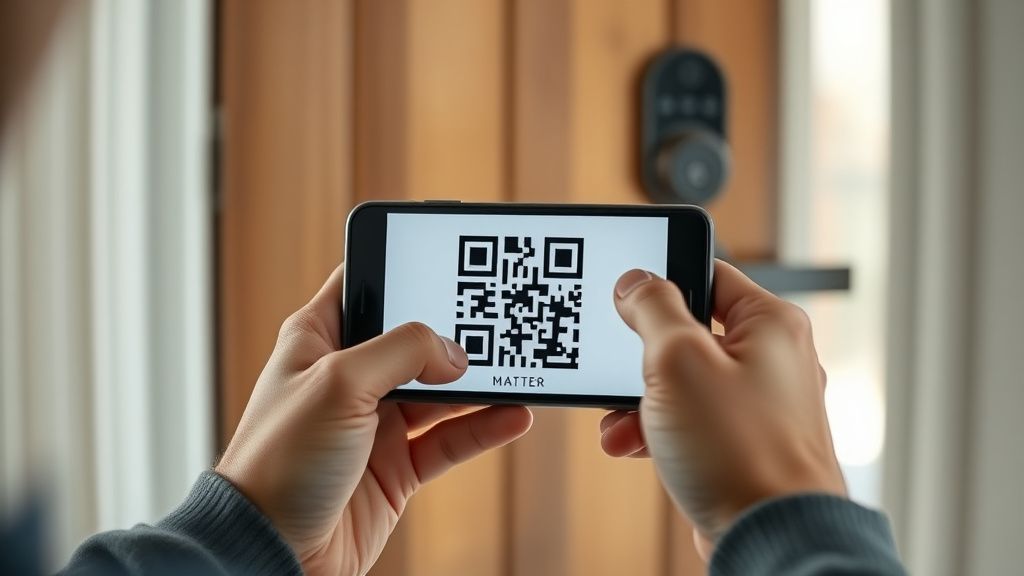
Matter commissioning uses a QR code or numeric pairing code to onboard devices. Bridged devices are added differently — you add the bridge itself, and the bridge's child devices (your locks) appear automatically in your Matter controller.
This is where a lot of people hit their first real wall.
Network topology problems: Matter runs over Thread (for low-power devices) or Wi-Fi. Bridges are typically Wi-Fi devices. Your bridge needs reliable Wi-Fi connectivity where it physically needs to be (near your Z-Wave or Zigbee locks, ideally, for RF coverage reasons). If your mesh Wi-Fi has client isolation between nodes, Matter mDNS discovery can break silently.
Multi-admin confusion: Matter theoretically supports multi-fabric operation — your bridge can be joined to Apple Home and Google Home simultaneously. In practice, this works inconsistently for bridged devices specifically. Some implementations only allow a bridged lock to be visible in one fabric at a time. Others expose it correctly to multiple controllers but with divergent state — one controller shows the lock as locked, another shows unknown. This isn't a theoretical edge case; it's a commonly reported issue in the Apple HomeKit community on Reddit (r/HomeKit) and the Matter topic in the Google Home Community forums.
S0 vs S2 security negotiation failures: When Hubitat or Home Assistant tries to include a Z-Wave lock with S2 security, the PIN entry process for security negotiation has to happen within a narrow time window. Miss it, fail to enter the DSK correctly, and the lock falls back to S0 or fails inclusion entirely. The lock doesn't tell you which happened clearly. You find out later when you notice that your Z-Wave mesh shows the lock with a padlock-with-exclamation icon in Z-Wave JS.
Real Field Reports: What Actually Happens
The gap between what bridges promise and what they deliver in real residential deployments is instructive.
Case: Schlage BE469 on SmartThings → Matter → Apple Home
A user on the SmartThings community forum (username redacted for privacy) documented a full migration from a direct SmartThings integration to using SmartThings as a Matter bridge for Apple Home in early 2024. The lock included fine. Lock/unlock commands from Siri worked. The problem appeared in automations: an "unlock when I arrive home" automation would trigger, Siri would report "Front Door unlocked," but the lock sometimes wouldn't physically actuate. Investigating showed that the lock's Z-Wave radio was receiving the command but returning an error code (operation timed out), which SmartThings was not surfacing back up through the Matter fabric to HomeKit. HomeKit reported success; the door was locked. This is a state reporting fidelity problem — the bridge is dropping error propagation somewhere in the translation stack.
Case: Yale YRD256 Zigbee on Home Assistant Bridge → Google Home
Documented in a 2024 GitHub Issue on the home-assistant/core repository (Issue #113442-adjacent, Zigbee lock battery reporting). User had a Yale Zigbee lock bridged through Home Assistant into Google Home via the Matter bridge. Battery level was not updating in Google Home — it perpetually showed "100%." The underlying ZHA integration was reporting battery correctly; the issue was in how the Matter bridge was mapping the Zigbee power cluster's battery percentage attribute to the Matter Power Source cluster. A maintainer responded noting this was a known gap in the Matter bridge implementation for non-primary clusters. The lock cluster (lock/unlock) worked fine; supplementary attributes like battery were partially broken.
Case: August Smart Lock Pro (Z-Wave) on Hubitat → HomeKit Thread
August's Pro model shipped with both Bluetooth and Z-Wave radios. On Z-Wave, it works as a standard door lock device. A Hubitat user bridged it to HomeKit via Matter and found that the auto-lock timeout configuration, which was accessible natively in the August app, wasn't configurable through Matter at all. The Matter DoorLock cluster has attributes for auto-relock time, but Hubitat's Matter bridge wasn't exposing them. This is a common pattern: basic lock/unlock works; the extended configuration surface disappears when you go through a bridge.
Counter-Criticism: Is the Bridge Approach Actually Worth It?
Not everyone in the smart home community agrees that bridging legacy locks is a sensible long-term strategy, and the critics have real points.
The "just replace the hardware" argument: A Schlage Encode Plus with native Matter support retails for roughly the same price as a decent hub or bridge, and it eliminates an entire layer of complexity. If you're running one or two locks, the economics of buying bridge hardware, running a dedicated hub machine, and maintaining it over time may not beat a hardware replacement, particularly as Matter-native lock prices have come down since 2022.
The latency argument: Every protocol translation adds time. A native Matter-over-Thread lock command latency might be under 200 milliseconds in a well-configured Thread network. A Z-Wave command through a bridge, through a hub's software stack, through Wi-Fi to the Matter controller, can be 500ms to multiple seconds depending on the Z-Wave polling interval. For a lock, this mostly doesn't matter functionally — nobody needs sub-second lock actuation for home use — but it affects the feel of automation and voice control, and it affects whether state-triggered automations (like "turn on the entry light when the door locks") feel snappy or laggy.
The maintenance burden argument: Bridges add a point of failure. Your Matter fabric's lock control now depends on the bridge's Wi-Fi connection, the bridge's software stability, the underlying Z-Wave or Zigbee mesh health, and the lock's battery. More components, more failure modes. When something breaks — and eventually something always breaks — the diagnostic surface is larger and the community support is more fragmented. "My lock stopped working" becomes "is it the lock battery, the Z-Wave mesh, the bridge firmware, the Matter fabric, or the controller?"
The counter to this: for people with five, ten, or fifteen legacy devices, replacing everything is genuinely not economical, and the operational overhead of maintaining a hub-based bridge is amortized across the whole device fleet. If you're also bridging Z-Wave sensors, switches, and thermostats, the marginal cost of bridging one more lock is near zero.
Security Considerations: The Layer Nobody Wants to Talk About
The Matter spec has a strong security model at the commissioning and