Quick Answer: Ryobi pressure washer pulsing is almost always caused by air in the pump, a clogged or partially blocked inlet filter, a faulty unloader valve, worn or debris-clogged check valves, or an inconsistent water supply. Fix it by purging air, cleaning filters, checking the water source, and inspecting the unloader and check valves. Most repairs take under an hour.
There's a specific kind of frustration that comes with a pressure washer that pulses. It's not broken—not completely. It fires up, builds pressure, and then loses it, builds it again, drops it, over and over in this maddening rhythm that makes it nearly useless for anything that needs sustained force. You're trying to strip paint off a deck or clean a concrete driveway and instead you're standing there watching the machine breathe like it's having some kind of anxiety attack.
Ryobi pressure washers—both the electric and gas-powered variants—have a well-documented tendency toward this behavior, much like other consumer appliances such as the Breville Barista Express, which often requires specific maintenance to resolve common operation light errors. The discourse is messy and occasionally contradictory, because the pulsing problem doesn't have a single cause. It's a symptom, not a diagnosis.
What follows is a structured breakdown of every realistic cause, how to actually identify which one is your problem, what the fix looks like in practice, where those fixes tend to fail, and what the broader landscape of Ryobi pressure washer ownership actually looks like from a user-experience standpoint.
Understanding the Pulsing Mechanism: What's Actually Happening Inside the Pump
Before you start taking things apart, it helps to understand the basic operational logic of a pressure washer pump. Ryobi's consumer-grade pressure washers—whether the RY141900 electric model or the RY803001 gas unit—use axial cam or triplex plunger pumps depending on the tier. The pump is a volumetric device. It doesn't compress air; it displaces water. When the pump cycles, it draws water in through inlet check valves and forces it out through outlet check valves in a rapid, sequential pattern.
At full function, this produces a smooth, continuous high-pressure stream because the multiple pump chambers are firing in offset sequence, smoothing out the pressure curve. When something disrupts the intake side—air, partial blockage, inadequate flow—the pump loses its ability to maintain that smooth displacement cycle. One or more chambers fills with air instead of water, and the pressure output becomes erratic. That's the pulse.
On the output side, a malfunctioning unloader valve can cause similar symptoms because the unloader is responsible for bypassing flow back to the inlet when the trigger isn't pulled. If it's partially stuck, worn, or set incorrectly, it can create intermittent pressure bleed-off even while you're actively using the wand.
Understanding this split—inlet-side problems vs. outlet/unloader problems—is a useful diagnostic framework, similar to the logic required to fix Roku streaming stick buffering issues. Most DIY guides online treat all pulsing as the same problem and recommend the same three steps. The reality is more granular, much like the technical troubleshooting required when addressing DAO treasury errors or complex smart home integration issues.
Cause #1: Air Lock in the Pump — The Most Common Culprit
Air in the pump is the leading cause of pulsing in residential Ryobi pressure washers, and it's the first thing to rule out before doing anything else. It happens in several ways: the machine was stored with water in the pump that partially evaporated or froze, you connected the water supply after starting the engine or motor, or the inlet water supply ran dry briefly during operation.
How to Purge Air from the Pump
The fix is disarmingly simple, which is why it's also frequently overlooked:
- Turn the machine completely off. Motor or engine, everything down.
- Connect your garden hose to the water inlet and turn the water source fully on.
- Squeeze and hold the spray gun trigger while the machine is still off.
- Wait until you see a solid, uninterrupted stream of water flowing through the wand and out the nozzle. This means the pump is fully primed with water and the air has been displaced.
- Release the trigger, then start the machine.
If you start the machine before water flow is established, you're running the pump dry and you're pumping air—which generates the exact pulsing behavior and also accelerates seal and plunger wear. This is actually one of the more significant long-term reliability issues with how Ryobi designs its user onboarding experience: the instruction manual mentions priming, but it buries it in step 8 of a 12-step startup process, and users skip it.
A recurring complaint on the Ryobi support forums goes roughly like this: "I've owned this for two seasons, never had a problem, stored it in the garage over winter, pulled it out in April, and now it pulses constantly." That's almost always air lock combined with mineral deposit buildup inside the pump from water that sat stagnant for months.
Cause #2: Restricted or Dirty Inlet Filter Screen
Every Ryobi pressure washer has a small mesh filter screen at the water inlet connection point—where the garden hose attaches. It's there to prevent debris from entering and damaging the pump. And it works, which means it accumulates debris over time.
A partially clogged inlet screen doesn't stop water flow entirely. It restricts it. The pump demands more water volume than the screen allows through, so it starts drawing air along with water on the intake stroke. Pulsing follows.
Inspection and Cleaning
- Disconnect the garden hose from the machine.
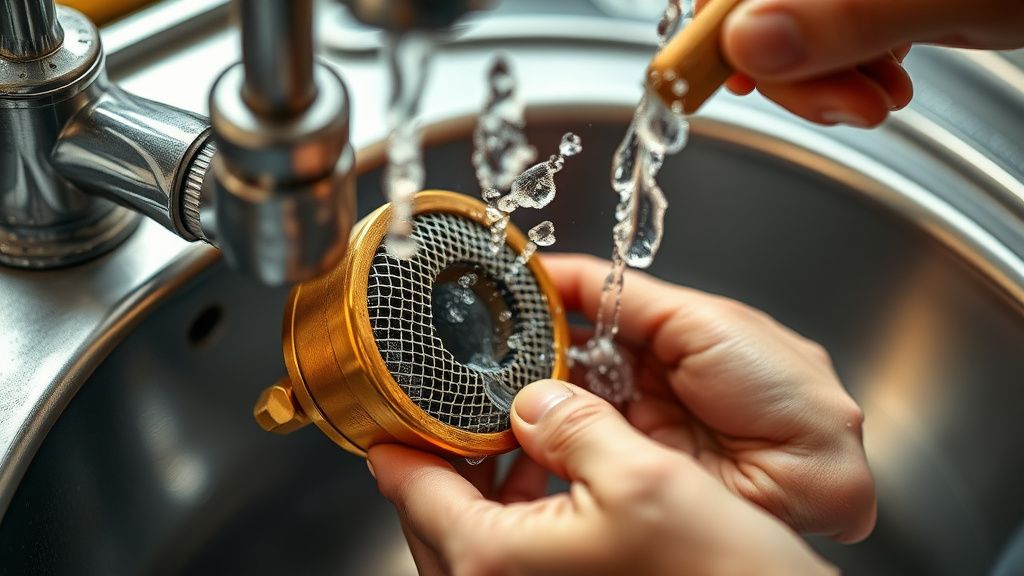
- Locate the inlet filter—it's typically a small brass or plastic housing with a mesh screen inside, recessed about 5–10mm into the water inlet port.
- Use needle-nose pliers or a small pick to carefully extract the screen.
- Inspect it under good light. Even a 20–30% obstruction of the mesh surface can cause significant flow restriction.
- Clean with a soft brush under running water. Do not use compressed air directly on the mesh as this can distort the screen geometry.
- If the screen is corroded, collapsed, or torn, replace it. Ryobi replacement inlet screens are available as OEM parts (part numbers vary by model—confirm against your model plate).
What's worth noting here: the inlet filter issue is frequently underdiagnosed because the screen looks clean at a quick glance. You need to hold it at an angle under light to see the fine sediment that accumulates in the mesh. Hard water areas are especially prone to calcium and mineral buildup that's nearly invisible until you look closely.
Cause #3: Inadequate Water Supply — The Problem That's Not the Machine
This one catches people off guard because the instinct when a machine malfunctions is to investigate the machine. But a significant percentage of Ryobi pressure washer pulsing complaints trace back to the water supply, not the pump.
Ryobi's consumer electric pressure washers typically require a minimum flow rate of around 1.2 to 1.5 GPM (gallons per minute) at the inlet, with adequate pressure behind it. Gas models may require more. If your garden hose is:
- Kinked somewhere along its length
- Undersized (a 3/8" diameter hose feeding a high-demand pump)
- Running from a tap that's also supplying other fixtures simultaneously
- Connected through a long run that creates significant friction loss
...then the pump is starving for water and pulsing is the predictable result.
The test is straightforward: Disconnect the hose from the pressure washer inlet and hold it freely over a bucket. Time how long it takes to fill a known volume. If you can't fill a 5-gallon bucket in under 2.5 to 3 minutes, your supply flow is marginal.
Also check the hose itself—specifically the female coupling that attaches to the inlet. A restricted rubber washer inside that coupling, or a coupler that's partially corroded and narrowed internally, can cut flow dramatically even if the hose is otherwise fine.
Cause #4: Unloader Valve Failure or Misadjustment
The unloader valve is the pressure management heart of the pump system. When you release the spray gun trigger, the unloader diverts pump output back to the inlet rather than allowing pressure to build to dangerous levels. When you pull the trigger again, it redirects that flow to the high-pressure outlet.
A faulty unloader doesn't just cause overpressure risk—a partially seized or spring-weakened unloader can cause intermittent pressure bypass even while the trigger is pulled. The pump builds pressure, the unloader cracks open at a lower-than-intended threshold, pressure bleeds off, the unloader closes, pressure builds again. The rhythm of that cycle is exactly the pulsing behavior users describe.
Diagnosing an Unloader Issue
The distinctive signature of an unloader problem versus an air-lock problem is when the pulsing occurs:
- Air lock pulses typically occur at startup and may resolve as the pump warms up or may be intermittent throughout.
- Unloader pulses tend to be rhythmic and persistent, and they often correlate with a specific pressure threshold—the machine will build to a point, drop suddenly, rebuild, drop again with a consistent beat.
Ryobi's consumer models use a relatively simple spring-loaded unloader. These are not highly adjustable on most residential units—there's typically a limited adjustment range, and the springs wear out after extended use.
Inspection approach:
- Locate the unloader valve—it's typically the component with an adjustment knob or screw on top of the pump manifold.
- Check for any visible cracking, deformation, or corrosion on the housing.
- If accessible without full disassembly, check that the adjustment screw isn't bottomed out or completely backed off (both indicate previous user tampering or failure).
- For a full unloader inspection, you'll need to remove it from the pump body. This requires draining pressure, removing the pump cover on applicable models, and unscrewing the unloader assembly. The spring, plunger, and seating ball should be inspected for wear.
Replacement unloaders for Ryobi are available through third-party pump parts suppliers. Because Ryobi's consumer pumps often use components that are OEM-sourced from Italian pump manufacturers (Annovi Reverberi components appear in some models), aftermarket parts sourcing is possible if you can confirm compatibility—but this requires model-specific research and is not always straightforward.
Cause #5: Worn or Debris-Blocked Check Valves
The check valves—small spring-loaded ball valves on the inlet and outlet sides of each pump chamber—are the mechanical heart of the pump's volumetric action. They allow flow in one direction only. When they wear, get debris caught in the seating surface, or the springs lose tension, they start leaking. A leaking check valve allows pressure to equalize where it shouldn't, disrupting the pump's displacement cycle and creating pulsing output.
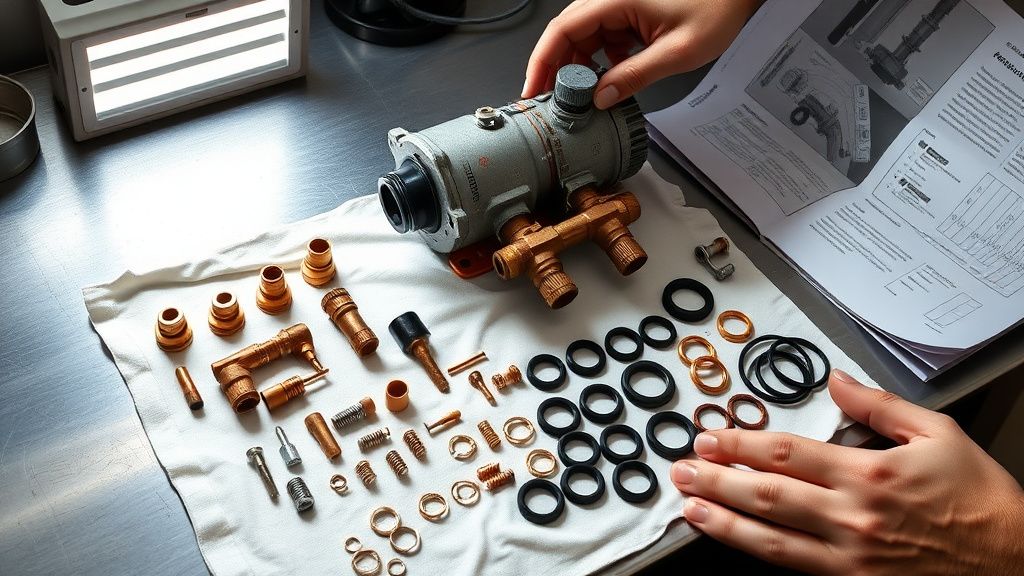
This is one of the more technically involved repairs in the Ryobi pressure washer context, and it's where a lot of DIY attempts stall. The check valves are deep inside the pump manifold, require complete disassembly to access properly, and involve small components—brass seats, tiny stainless balls, minuscule springs—that are genuinely difficult to work with on a kitchen table without the right tools and organization.
The Check Valve Repair Reality Check
Multiple threads on r/DIY and r/pressurewashers tell a consistent story: users follow a YouTube teardown, get the pump open, find the check valves, clean or replace them, reassemble the pump, and then discover a new problem—typically a leak from a valve seat they didn't fully reseat, or pulsing that's actually different now (sometimes worse) because reassembly introduced a misalignment.
This is not to say the repair is impossible for a skilled DIYer. It isn't. But it requires:
- A complete pump-specific service kit (not a generic O-ring assortment)
- Clean workspace and careful component organization
- Understanding of the torque specifications for pump manifold bolts (over-tightening cracks the manifold on some models)
- Patience with the reassembly sequence
For most homeowners running a mid-range Ryobi electric unit, the cost-benefit calculation here is genuinely ambiguous. A complete pump replacement may cost $80–$150 depending on the model and source, while a service kit runs $20–$40. The service kit requires 2–4 hours of careful work with moderate mechanical skill. The pump replacement is faster but more expensive and generates more waste. Neither is obviously wrong.
Cause #6: Nozzle Blockage and the Pulsing It Creates
This one is easy to overlook because we tend to think of nozzle blockages as causing no flow, not pulsing. But a partially blocked nozzle creates a specific downstream pressure dynamic that can manifest as pulsing, especially in pump systems that use flow-sensing unloaders.
The pump generates flow; the nozzle creates back-pressure. If the nozzle orifice is partially obstructed, back-pressure spikes, the unloader reacts, flow drops, back-pressure drops, the unloader readjusts—and you get a cycle.
Test: Swap to a different nozzle from your set. If the pulsing stops or changes character significantly, the original nozzle was the problem. Clean the orifice with a nozzle cleaning needle (included with most Ryobi kits) or replace the nozzle.
The Gas vs. Electric Pulsing Difference: A Field Observation
It's worth noting that the pulsing experience differs meaningfully between Ryobi's electric and gas-powered models, and this distinction gets lost in generalized repair guides.
Electric Ryobi washers (like the RY141900 or RY142300) use a bypass circuit that runs the motor continuously. When the trigger is released, the pump recirculates water internally. These units are more sensitive to water supply issues and air lock, and their relatively smaller pump designs have less tolerance for marginal inlet conditions.
Gas Ryobi washers (the RY803001 and similar) use actual engine-driven pumps with higher flow rates and more robust unloader systems, but they're more susceptible to unloader wear over time because the higher operating pressures put more stress on the unloader spring and ball seat. Gas unit pulsing is more commonly unloader-related and check-valve-related than supply-related.
This is not a universal rule. But if you're diagnosing a gas unit, start with the unloader. If you're diagnosing an electric unit, start with air purge and supply flow.
Real Field Reports: What Actual Owners Encountered
Pulling from documented user reports across forums, support threads, and video comment sections:
Case 1 — Reddit, r/pressurewashers, 2023: User describes RY142300 pulsing constantly after winter storage. Tried nozzle swap, no change. Tried air purge, no change. Eventually traced to inlet filter so clogged with rust and debris it was effectively 50% occluded. Cleaned filter, problem resolved immediately. "Felt stupid but also couldn't see it was blocked without really looking."
Case 2 — YouTube comment under Ryobi pump teardown video, 2022: Owner of gas-powered RY803001 reports pulsing that developed gradually over two seasons of heavy use. Replaced unloader valve with a compatible third-party unit after original showed a worn spring and scored ball seat. Pulsing resolved. Notes that finding a compatible unloader required cross-referencing the pump model (identified as AR-sourced) rather than using Ryobi's part number, which was backordered for 11 weeks.
Case 3 — Home Depot Community Forum, undated: Electric washer user reports pulsing that only occurs when using the 0-degree nozzle, not the 25-degree or 40-degree nozzles. Problem identified as a damaged zero-degree nozzle with a cracked orifice creating irregular flow restriction. Classic nozzle-specific issue.
Case 4 — Hacker News thread adjacent to a pressure washer teardown, 2021: Mechanical engineer details a check valve failure on an axial pump, describes finding a fragment of grit from an upstream pipe cleanout lodged under the inlet check valve ball. The