
Transitioning from a solo freelance contractor to an LLC is rarely the glamorous "business owner" transformation that LinkedIn gurus promise. In reality, it is a tedious, often bureaucratic exercise in risk mitigation and tax optimization that begins the moment you realize your personal assets are no longer firewalled from your professional liabilities. If you are reading this in 2026, the tax landscape has shifted significantly, favoring those who treat their side-hustle like a corporate entity rather than a glorified hobby, much like those scaling a high-margin landscape lighting business. Making the leap requires more than filing a form with the Secretary of State; it requires a fundamental shift in how you account for every dollar, expense, and liability.

The "Liability Firewall" Myth vs. Reality
The primary selling point of an LLC (Limited Liability Company) is the separation of personal and business assets. The marketing material suggests a "corporate veil" that makes you untouchable. However, the operational reality for the average freelancer—especially in creative or tech sectors—is much messier.
In the eyes of a judge, the "piercing of the corporate veil" is a very real threat. If you operate your LLC out of your personal checking account, pay for groceries with your business card, or fail to document board resolutions (even if you are the only board member), you are essentially leaving the front door open. Courts have repeatedly ruled against sole-proprietor LLCs that lacked "corporate formalities." The transition isn't just about the paperwork; it's about the discipline of treating your professional life as a distinct, isolated entity—much like fractional consultants who negotiate equity and vesting schedules to protect their personal interests. If your bookkeeping is a mess, the LLC provides only a false sense of security.
Tax Efficiency: Beyond the S-Corp Election
Most freelancers transition to an LLC expecting an immediate tax windfall. The common trajectory is an LLC taxed as a sole proprietorship, which offers zero tax advantage over a standard 1099 filing—it only adds complexity. The real "optimization" occurs when you choose to be taxed as an S-Corporation.
By 2026, the tax math remains consistent but increasingly scrutinized by the IRS. The strategy is to pay yourself a "reasonable salary" (subject to FICA taxes) and take the remaining profit as a distribution (not subject to self-employment taxes).
The Catch: "Reasonable salary" is a subjective term that has been the downfall of many. If you pay yourself $20,000 as a senior software architect to save on payroll taxes, the IRS will flag your return for audit faster than you can say "reclassification." The operational friction here is real: you must now manage payroll, withhold taxes, file quarterly reports, and pay into state-specific unemployment funds, all while staying current on enterprise AI trends like localized Llama-3 deployments. You are moving from a simple 1099-NEC world into the high-friction world of a W-2 employer.

The Hidden Operational Costs
Before you file your Articles of Organization, consider the "hidden" overhead. LLCs are not free.
- Franchise Taxes: In states like California, you face an $800 annual tax just for existing, regardless of whether you made a single cent in profit.
- Registered Agent Fees: You must have a physical presence in the state of filing.
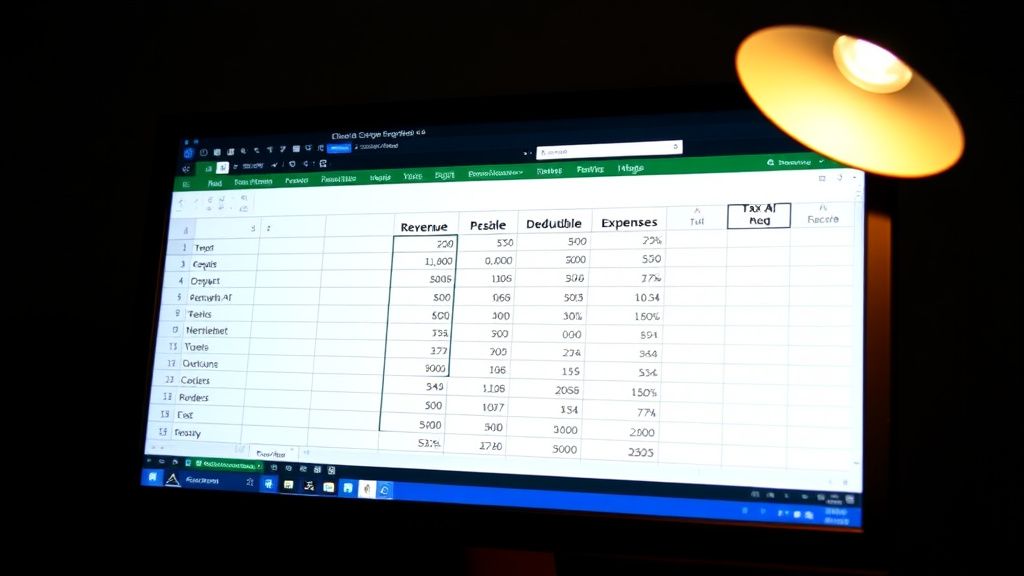
- Professional Accounting: You can no longer maintain your books on a napkin or a messy Excel spreadsheet. An S-Corp transition requires clean balance sheets and a P&L statement that would satisfy a small-town bank auditor.
If your net profit is consistently below $60,000–$80,000 annually, the administrative and professional costs of an S-Corp election often eat the tax savings. This is the "optimization paradox": you spend more on accountants and compliance software than you actually save in self-employment tax.
Real Field Reports: When It Goes Wrong
In community forums like Hacker News and specialized subreddits for freelancers, the "migration horror stories" are a recurring theme. One notable thread on a popular developer forum involved a freelancer who moved to an LLC for "prestige" but failed to account for the impact on their ability to secure personal loans. Because they were now paying themselves a modest W-2 salary to optimize taxes, their "reported income" on mortgage applications looked abysmal. They were rejected for a home loan because their LLC structure made them look like a low-earning employee rather than a high-earning freelancer.
Another common failure point is the "API/Platform Clause." Some platforms (like Upwork or Toptal) have specific rules about contractors operating as entities versus individuals. A freelancer in 2025 famously reported being suspended for 72 hours because the name on their tax documents didn't match the entity name they registered, triggering a "know-your-customer" (KYC) compliance block that paralyzed their income stream for a week.

The Counter-Criticism: Why LLCs Might Be Overrated
There is a growing school of thought among independent professionals that the "LLC-for-everyone" narrative is a relic of 20th-century business thinking. With the rise of advanced insurance products—such as Errors and Omissions (E&O) and professional liability policies—many argue that a sole proprietorship with a solid umbrella insurance policy is more cost-effective and provides better actual protection than an LLC with poor compliance history.
Critics point out that if your primary risk is being sued for a bug in your code or a missed deadline, an LLC won't protect your personal home if you signed a personal guarantee on your office lease. The obsession with the LLC structure often distracts freelancers from the more pressing need for better contracts and robust professional indemnity insurance.
Implementing the Transition: A 2026 Workflow
If you have crunched the numbers and decided the LLC is the right move, follow this operational checklist:
- Step 1: The EIN/TIN Split. Do not use your Social Security Number for your business. Apply for a separate EIN immediately after filing.
- Step 2: The Bank Account Wall. Your business bank account should have no personal transactions. If you need to "lend" the business money, document it as a loan. If you take money out, document it as a distribution.
- Step 3: The "Reasonable Salary" Analysis. Use an online calculator to determine the "reasonable salary" for your job title in your specific zip code. Keep this research in a PDF folder labeled "Audit Defense."
- Step 4: Update Your Clients. Do not just change the name on your invoices. You need to sign a new contract (or an addendum) that transfers the obligations from "You, The Person" to "You, The LLC."
The Psychological Shift: You Are Now a Vendor
The hardest part of this transition isn't the IRS; it's the internal shift. As a sole proprietor, you often act as an extension of the client's internal team. Once you are an LLC, you are a B2B vendor. This changes the power dynamic.
Clients may request W-9s, insurance certificates, and Net-30 payment terms. They may treat your invoices with the same bureaucracy they apply to Google or Adobe. Some freelancers struggle with this "dehumanization." You aren't just an expert they can call on a Saturday night; you are a service provider with legal guardrails. If you aren't prepared to enforce your contracts or issue late-fee penalties, the LLC structure will feel like an expensive costume you’re wearing to work.
Maintaining the Structure: The "Annual Cleanup"
Every year, around the Q4 mark, the operational reality of the LLC hits. You must hold your "annual meeting." Even if you are the only one present, write a one-page document confirming the board (you) met, reviewed the financial performance, and decided on the salary/dividend structure. This paper trail is your best defense against an auditor trying to "pierce the veil." If you cannot prove your business operates as a business, the state will eventually treat you as a hobbyist, regardless of your filing status.
The 2026 economic environment is unforgiving toward "paper entities." If you want the benefits of an LLC, you must commit to the labor of maintaining it. If you are looking for a shortcut to wealth, this isn't it. If you are looking for a professional foundation that can scale as your income grows, this is the necessary, albeit messy, path forward.
FAQ
Is an LLC automatically better for taxes?
Can I run my LLC through my personal bank account?
Do I need a lawyer to file an LLC?
How much should I set aside for taxes after I form an LLC?
Is the "S-Corp" election worth it for a side hustle?