Quick Answer: The Bosch dishwasher E15 error code means water has collected in the base tray of the machine, triggering the AquaStop flood protection system. The float switch locks the unit until the water is manually removed. In most cases, this is fixable at home in under an hour by tilting the machine, removing excess water, and identifying the leak source.
There's a particular kind of frustration that comes with pulling open a dishwasher door to find clean dishes still sitting in dirty water, the control panel flashing E15 like a small red accusation—a feeling of technical helplessness that reminds me of troubleshooting when your Wi-Fi 7 network still drops packets. You didn't flood anything. The kitchen floor is dry. The machine just... stopped, leaving you wondering if you're experiencing a hardware glitch similar to when a Ninja Foodi lid error occurs. And it won't tell you why in any language that makes immediate sense, much like trying to debug why your Wealth Portal deposits get stuck.
The E15 code on Bosch dishwashers—which affects models as widely as PS5 error CE-108255-1 impacts gamers—is the output of a system called AquaStop. It is, in principle, a genuinely clever piece of engineering. In practice, it is one of the most misunderstood, misdiagnosed, and frustrating error states that Bosch owners encounter. Repair forums light up with threads titled things like "E15 came back three days after fixing it," often involving users who feel as baffled as those trying to stop Wi-Fi dead zones in their home.
Understanding what's actually happening inside the machine when this error fires—not just the surface-level explanation—is what separates a successful DIY repair from one that keeps recurring, similar to mastering how to stop Wi-Fi 7 latency spikes through expert tuning.
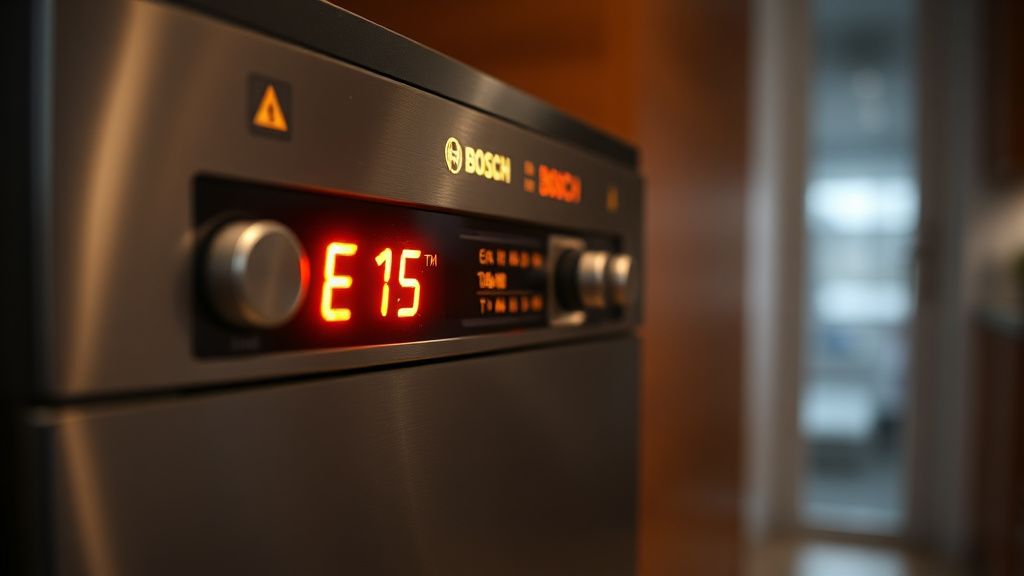
What AquaStop Actually Is — And Why It Triggers Wrong
Bosch introduced AquaStop as a core safety feature across its dishwasher lineup. The system operates on a straightforward physical principle: a polystyrene float sits in a shallow collection tray built into the base of the machine. When water accumulates in that tray — whether from an active leak, condensation overflow, or a one-time spill event during installation — the float rises. When it rises past a threshold, it activates a microswitch. That microswitch signals the control board to cut the water inlet valve and lock the machine, then displays E15.
Here's the part that trips people up: the float switch doesn't care how the water got there. A pinhole leak in a hose fitting, a door seal that's slightly off-center, a detergent dispenser that failed mid-cycle and allowed foam overflow — all of these end up with water in the base tray, all of them trigger the same E15, and all of them feel identical from the outside. The error code gives you the symptom, not the diagnosis.
This matters because a lot of DIY guides stop at "tilt the machine forward and let the water drain." That step is necessary, but it's not diagnostic. If you tilt it, clear the float, and put the machine back without understanding where the water came from, you're setting a countdown to the next E15.
The Float Switch Sensitivity Problem
There's a known edge case that Bosch forums discuss with some regularity: the float can trigger E15 even when the amount of water in the tray is minimal — sometimes just from condensation that accumulated over months of normal use. On some units, particularly older ones where the tray seal between the base and cabinet has slightly degraded, a small puddle forms during every cycle and never fully evaporates. The machine runs fine for weeks or months, then one day the puddle reaches the float.
From a thread on the UK-based DIYnot.com forum: "Had the E15 come up on my Bosch Silence Plus. Tilted it, barely half a cup of water came out. No obvious leak anywhere. Dried everything out, ran a short cycle watching it — still no visible leak. Machine's been fine for months now."
This is the condensation accumulation scenario. It's not a catastrophic failure. It's a slow, invisible process that eventually crosses a threshold. The fix is temporary unless you identify whether the underlying moisture source is chronic.
Tools You Actually Need Before Starting
Don't underestimate the physical demands of this job. The machine weighs between 40 and 55 kilograms depending on the model. Working under it, tilting it, and re-leveling it afterward is not a one-person operation on most kitchen setups.
What you'll need:
- A second person, or at minimum furniture moving sliders
- Towels — more than you think. Several large bath towels minimum
- A shallow tray or baking sheet to catch water when tilting
- A flashlight or headlamp (LED preferred)
- A 10mm socket or adjustable wrench for leveling feet
- Multimeter (optional but useful for testing the float switch)
- Replacement door seal, hose clamps, or inlet valve — depending on what you find
One thing nobody mentions in the YouTube guides: wear old clothes. The inside of a dishwasher base is wet, has soap residue, and frequently has small food debris that has worked its way under the door over months of use. It's not glamorous work.
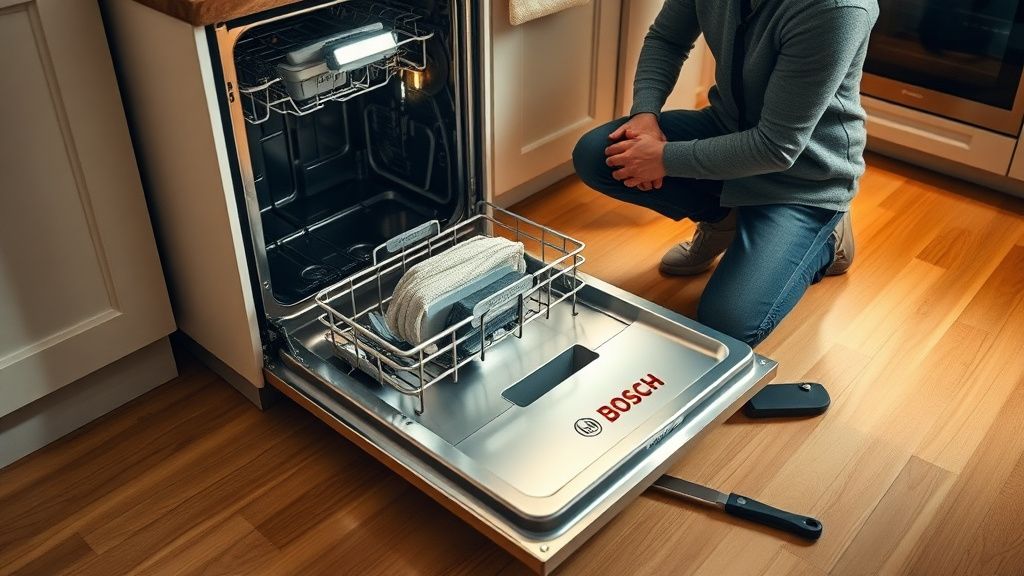
Step-by-Step: Clearing the E15 Error and Diagnosing the Source
Step 1 — Disconnect Power and Water
This is non-negotiable. Unplug the machine from the wall socket. Turn off the water supply valve under the sink. If your machine is hardwired, trip the relevant circuit breaker and confirm with a non-contact voltage tester.
Do not skip this because "you're just tilting it." Water and electricity are in close proximity here by design, and the base of the machine is wet.
Step 2 — Pull the Machine Out
Most Bosch dishwashers are secured to the underside of the countertop with two mounting brackets — one on each side — with a single screw each. Remove these. Then gently pull the machine forward, being careful not to kink or stress the water supply line, drain hose, or power cable. You typically have 50–60cm of slack on these lines; enough to work with.
If the machine has been installed for more than three or four years, check the drain hose connections at this stage. Hose clamps loosen over time, especially on machines with vibration-heavy cycles.
Step 3 — Tilt the Machine Forward
This is the most physically demanding part. With a second person holding the top of the machine, carefully tilt it forward so it rests at roughly 45 degrees, nose-down. Place towels or a shallow tray under the front edge. Water in the base tray will run forward and out through the base opening.
How much water is too much water? If more than a liter comes out, you likely have an active or recent leak, not just condensation. If less than a cup comes out, the float was triggered by minor moisture accumulation.
Let the machine drain for at least three minutes. Then return it upright, and use a flashlight to look into the base tray through the front opening.
Step 4 — Dry the Base Tray Completely
The float switch will not reset just because you tilted the machine. The polystyrene float resets by gravity when the water level drops — but if residual moisture keeps the float slightly elevated, the error persists. Use dry towels or a wet-dry vacuum to remove all visible moisture from the tray. Then let it air out for 20–30 minutes before reconnecting power.
This is a step that a surprising number of people skip. They tilt, they see some water drain, they reconnect immediately — and the E15 comes back within the first minute of the next cycle because the float is still sitting in a damp tray.
Step 5 — Inspect Before Reconnecting
With the machine still pulled out and the base tray dry, this is your window to find the leak source. Run a visual inspection of:
The door seal (gasket): Look for cracks, warping, or areas where the seal has pulled away from the frame. The lower corners of the door are the highest wear points. A degraded door seal is one of the most common causes of recurring E15 errors on machines over five years old.
The water inlet hose and connections: Check both the connection at the solenoid valve on the machine and the connection at the household supply. Look for mineral deposits or white residue around connections — this is the visible signature of a slow drip.
The sump area and pump housing: Look for cracks in the plastic housing around the circulation pump. On some Bosch models (particularly certain Serie 4 units), there's a known failure point where the sump seal degrades and allows small amounts of water to escape during high-temperature cycles.
The spray arm bearings: Less common, but a worn-out center bearing can cause spray arm wobble that creates abnormal water distribution — water that hits the door frame instead of the wash chamber and eventually migrates into the base.
The detergent dispenser: If the dispenser mechanism is faulty and releases detergent at the wrong cycle stage, it can create excessive foam. Foam behaves differently than water — it can travel into spaces water wouldn't reach, eventually condensing in the base tray.
Real Field Reports: When the Standard Fix Doesn't Work
The clean tilting-and-drying procedure handles a significant portion of E15 cases. But repair forums document a consistent set of scenarios where it doesn't.
Case 1 — The Returning E15 (Active Leak)
A user on the Bosch UK community forum described a machine that triggered E15 repeatedly, every three to five cycles, despite being tilted and dried each time. The eventual diagnosis: a hairline crack in the plastic housing of the circulation pump that was only visible when water was actively running through it. The crack was invisible when the machine was dry and cold.
The diagnostic method that worked: after the base was dry and the machine was reassembled, they ran a short cycle (30-minute Eco) with the machine pulled out and a piece of white card stock placed under the base. Within 20 minutes, a small water stain appeared on the card, directly below the pump housing. Replacement of the pump — a roughly £80–£120 part in the UK market — resolved the issue.
Case 2 — The False E15 (Float Stuck Elevated)
A Hacker News commenter describing their appliance repair experience mentioned a machine where the E15 fired but no water came out when tilted. The float switch was physically stuck in the elevated position due to a small piece of debris — a broken fragment from the plastic base tray itself, possibly from installation damage — wedged under the float.
This is underreported. A float switch that is mechanically stuck provides the same error signal as a float switch that is legitimately elevated by water. The fix is accessing the float assembly (which requires removing the base panel on most Bosch models) and manually checking that it moves freely.
Case 3 — Post-Installation E15 (Day One)
Several Reddit threads in r/appliancerepair document E15 errors appearing within the first few cycles on newly installed machines. The cause in most documented cases: the machine was tilted during delivery or installation — moved on a dolly, rolled over a door threshold, or set down with a bump — and this tilted the float briefly, allowing it to deposit a small amount of manufacturing moisture into the tray.
The fix is identical to the standard procedure, but the important learning is that E15 on a brand-new machine does not necessarily indicate a defective unit. It's worth clearing the error before calling for warranty service.
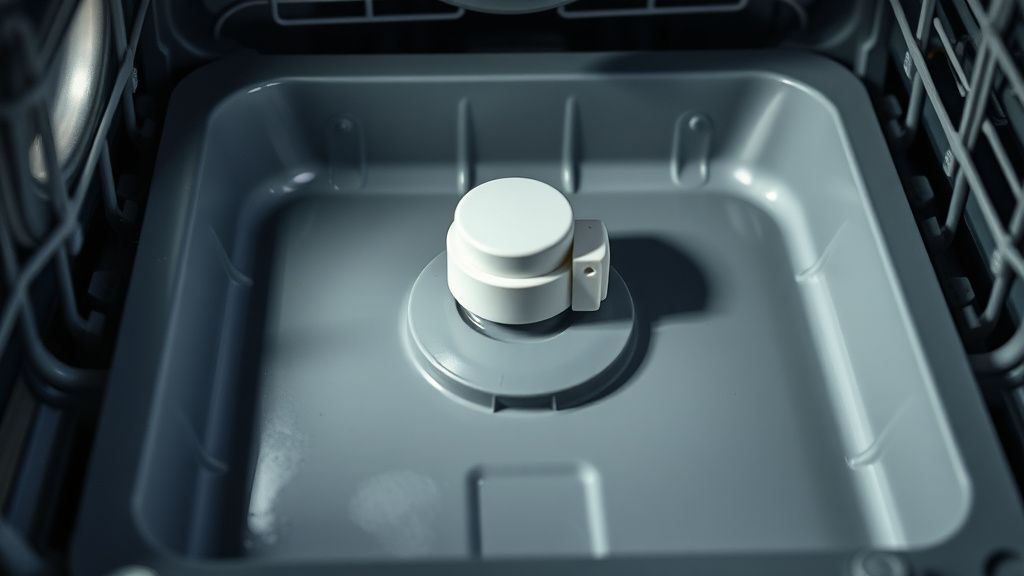
The Float Switch: Testing and Replacement
If you have a multimeter, testing the float switch takes about five minutes and removes all ambiguity about whether the switch itself has failed.
Access: The float switch assembly is typically located at the front-left or front-center of the base tray, depending on the model. On most Bosch dishwashers, accessing it requires removing the lower front kick panel (usually two or four Torx screws) and the base cover panel.
Testing: Disconnect the two-wire connector from the float switch. Set your multimeter to continuity mode. With the float in its lowered (normal) position, the switch should show continuity (closed circuit). With the float physically pushed up, continuity should break (open circuit). If the switch shows continuity in both positions, or no continuity in either position, the switch has failed.
Replacement cost: A genuine Bosch AquaStop float switch assembly (part numbers vary by model — check the label inside your door or on the manual) typically runs between £15–£40 in the UK, $20–$50 in the US market. It's a standard two-screw or snap-fit installation.
The challenge is that for many users, actually getting to the switch is the hardest part — not the electrical work itself. Some model variants require partial removal of the bottom panel assembly, which means dealing with the circulation pump vicinity. If you're not comfortable working in that space, this is a reasonable point to call in a technician.
Counter-Criticism and the Repairability Debate
There's a legitimate ongoing argument in the appliance repair community — and particularly among Right to Repair advocates — about whether the AquaStop system, as implemented in Bosch machines, is appropriately serviceable by a non-specialist owner.
The case for Bosch's design: AquaStop works. It prevents floor flooding. It saves kitchens. In terms of damage prevention, it performs its core function reliably. From an engineering standpoint, a passive float-and-microswitch system is robust precisely because of its simplicity.
The case against: accessing the base tray on many Bosch models requires partially disassembling the machine, and the service documentation for doing so — while technically available — is not structured in a way that a normal homeowner can easily follow. Several independent repair technicians on the iFixit community forums have noted that Bosch's exploded diagrams assume a level of familiarity with appliance internals that most owners don't have.
There's also the parts ecosystem question. Third-party float switches are available on Amazon and eBay, and many work fine — but part number matching is inconsistent, especially across the German and UK/US market variants of what are nominally the same machine. The Serie 4 SMV46KX01A sold in the UK uses a slightly different base tray configuration than what would be marketed as the equivalent model in Germany, and the float switch sub-assemblies are not always interchangeable. This creates confusion in forum threads where someone posts a solution that worked for their machine, and three other people follow it with different model variants and break something.
From r/appliancerepair: "The 'same' Bosch model number in North America versus Europe can have genuinely different internal configurations. Always pull the actual part number from the base or door frame label, not from the model name."
This is real. It's not a hypothetical edge case. It catches people regularly.
Preventing Recurrence: The Maintenance Logic
If you've cleared an E15 error and found no obvious leak source, the standard preventive approach focuses on two things: keeping the door seal in good condition and managing foam production.
Door seal maintenance: Wipe the full perimeter of the door gasket with a damp cloth every month. Debris accumulates in the lower sections of the seal channel, and over time this debris prevents the seal from making full contact with the door frame. Use a wooden toothpick — not a knife or screwdriver — to clear debris from the seal groove corners.
If the seal is visibly cracked, split, or has lost its elasticity, replace it. Bosch door seals are not expensive (typically £15–£30), are readily available, and on most models require no tools to replace — they press into a channel around the door cavity. The time investment is about 20 minutes.
Foam management: Excessive foaming is underappreciated as a cause of base tray moisture. Bosch machines are designed for specific low-foam dishwasher detergents. Using standard hand-washing dish soap — which a surprising number of people do, particularly in a pinch — creates foam volumes the machine cannot contain. Even using too much of the correct detergent can cause foam to migrate into the base.
If your machine has been producing unusual amounts of foam (visible when you open the door mid-cycle), run one or two cycles with no detergent whatsoever. This helps flush residual soap from the sump area.
Leveling: A machine that isn't level — either front-to-back or side-to-side — can cause water distribution issues that eventually contribute to base tray moisture. After any repositioning of the machine, check level and adjust the feet accordingly. Bosch foot adjustment is straightforward: the front feet screw in or out manually (a 10mm wrench on most models), and the rear