
Building a high-ticket coaching practice centered on "bio-data"—specifically Continuous Glucose Monitors (CGM) and Heart Rate Variability (HRV) sensors—is less about the hardware and more about the architectural management of human frustration. When you charge four figures a month, you aren't selling data; you are selling the translation of noise into actionable relief. Clients come to you because they are overwhelmed by the "quantified self" rabbit hole, drowning in data points that contradict their subjective experience of fatigue, hunger, or cognitive fog.
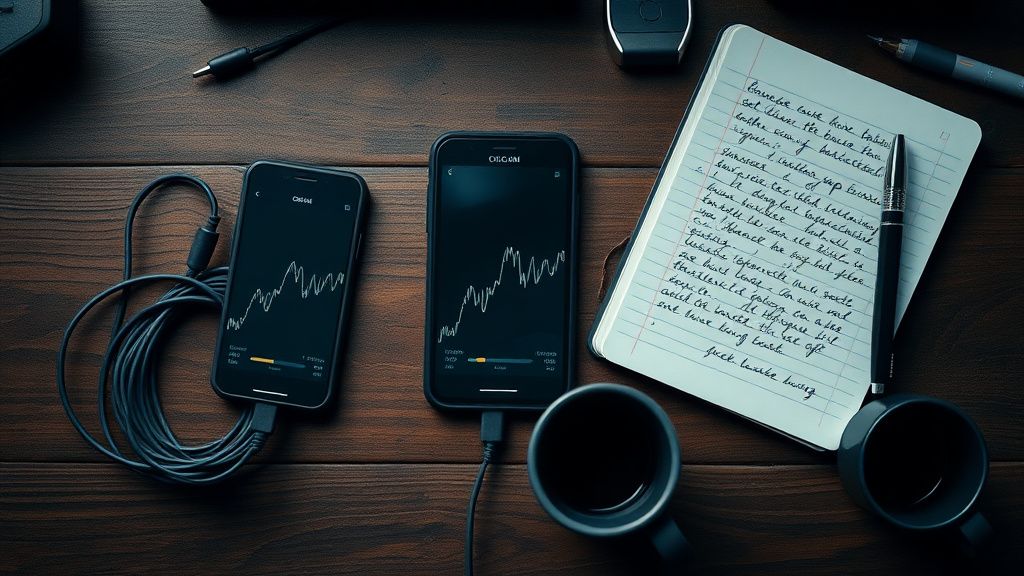
The Taxonomy of the High-Ticket Client
Your client isn't a bio-hacker looking for a free subreddit tutorial. They are usually time-poor executives, high-performance athletes, or entrepreneurs whose survival depends on maintaining a "flow state." They have already tried the $99/month apps. They have already experienced the "alert fatigue" of getting a push notification at 2:00 PM telling them their glucose is spiking when they’re in the middle of a merger negotiation.
The failure point for most coaches is attempting to automate this. If you rely on software to do the heavy lifting, you will be fired the moment the client’s data stops being "pretty." The high-ticket model relies on human-in-the-loop synthesis. You must be the one who tells them that their morning spike wasn't a "failure of discipline" but likely a result of the cortisol-heavy stress of their commute, compounded by a lack of morning movement.
The Operational Reality of CGM Coaching
To scale this, you need to understand the "invisible" friction in the current tech stack. CGM sensors (like Dexcom or Libre) were never designed for fitness; they are medical devices for diabetic management. When you force them into the hands of a healthy CEO, you are dealing with edge-case noise.
- The Calibration Gap: These sensors are notoriously inaccurate in the "low-to-normal" range. Clients often panic when they see a reading of 65 mg/dL during a fasted workout. Your job is not to fix the glucose; it is to explain the physiology of metabolic flexibility.
- The "False Spike" Phenomenon: Clients will panic over food-induced spikes that are statistically irrelevant. You need to manage the psychological burden of this data. If you don't have a protocol for "data detoxification," your clients will develop orthorexia or, conversely, stop wearing the sensor altogether out of shame.
- Infrastructure Stress: You will inevitably deal with "sensor failure" tickets. Clients will email you photos of adhesive rashes or sensors ripping off during a CrossFit session. If you don't have a clear "Operational Troubleshooting Guide"—similar to how you might provide resources on how to pivot your wellness consulting into a high-ticket corporate ergonomics practice—you risk becoming their IT support desk instead of a strategic partner.
The HRV Conundrum: Variability vs. Reality
If CGM is the "what" (fuel), HRV is the "how" (recovery). The industry obsession with HRV is often dangerously misplaced. Clients treat HRV like a stock ticker. They want it to go "up and to the right."
The professional coach knows that HRV is a lagging indicator of systemic autonomic nervous system (ANS) strain, much like how a smart investor recognizes that direct indexing vs. ETFs: is the tax-efficiency worth the operational complexity? requires a clear understanding of the underlying metrics. When a client reports an "abysmal" HRV score, do not advise them to meditate for an hour. Advise them to look at their evening routine, specifically the blue light exposure and late-night alcohol intake.
- The Conflict: High-ticket clients love to "optimize" their way out of problems. They want an app to tell them when to work. The coach’s role is to teach them when to ignore the device. This is the "Authority Paradox": the more you know, the more you advise them to trust their intuition over the screen.
Real Field Report: The "Sunday Night Blues" Incident
Last year, I worked with an executive who was obsessed with his Oura ring and Libre sensor data. He noticed that every Sunday night, his HRV plummeted and his glucose showed "phantom spikes" while sleeping.
He was convinced he had a systemic illness. After weeks of back-and-forth, we realized the issue was purely environmental: his bedroom was near a Wi-Fi router that was causing a minor sleep disturbance due to a flickering light, which he subconsciously noticed, leading to sympathetic nervous system activation.
The takeaway: High-ticket coaching is essentially "biological detective work." You are looking for the variable that the software cannot see.
Counter-Criticism: The "Optimization Trap"
There is a growing backlash against bio-data coaching. Critics argue that we are creating a generation of anxious "health-hypochondriacs." In forums like Hacker News or specialized subreddits, developers and skeptics frequently highlight that these metrics lack the long-term clinical trials to support the kind of granular "tweaking" that coaches sell.
- The Argument: By focusing on the numbers, we lose sight of the "First Principles" of health: sleep quantity, whole foods, and social connection.
- The Professional Defense: As a coach, you must acknowledge this. If you don't, you lose your credibility with the more analytical clients. The most successful coaches I’ve seen are the ones who tell their clients: "Use this device for 90 days to learn your metabolic baseline, then throw it in a drawer for six months."

Scaling the Practice: The "Tiered Friction" Model
Do not attempt to offer 1:1 unlimited messaging. You will burn out within three months.
- Onboarding: A rigorous, 2-week "Baseline Phase." The client wears the CGM, tracks nutrition, and records sleep, but you provide no feedback. You are gathering the data that defines their unique signature.
- The Mid-Point Pivot: The "Interpretation Phase." This is where you conduct the high-ticket strategy session. You show them the data correlation between their stress, their food, and their performance.
- The "Maintenance" Off-ramp: Transition them to monthly or quarterly reviews. If they stay on the 1:1 hook forever, your practice has become a digital leash, not a coaching business.
Monetization Without the "Grind"
High-ticket does not mean "high effort." It means "high leverage."
- White-label Reports: Do not manually create CSVs. Use automation tools to pull data from APIs (like Apple Health or Oura) and populate them into clean, branded Notion templates or PDF reports.
- The "Community" Factor: Build a private Discord for your clients. They are your best marketing engine. When one client shares a "discovery" about how a specific post-workout meal impacted their glucose stability, the rest of the group learns. You become the facilitator, not the fountain of all knowledge.

Why Most Fail: The "Tech Over Human" Pitfall
The biggest mistake? Treating the CGM data as a substitute for nutrition education. If a client sees a glucose spike, the "lazy" coach says, "Stop eating that." The "pro" coach says, "What were you doing when you ate that? Were you stressed? Did you walk afterward? Let’s test the same food under different conditions."
If you don't provide the why behind the what, the client will eventually leave for a cheaper, AI-based app that gives them the same "stop eating this" advice. You survive by providing the context that Silicon Valley’s algorithms cannot.