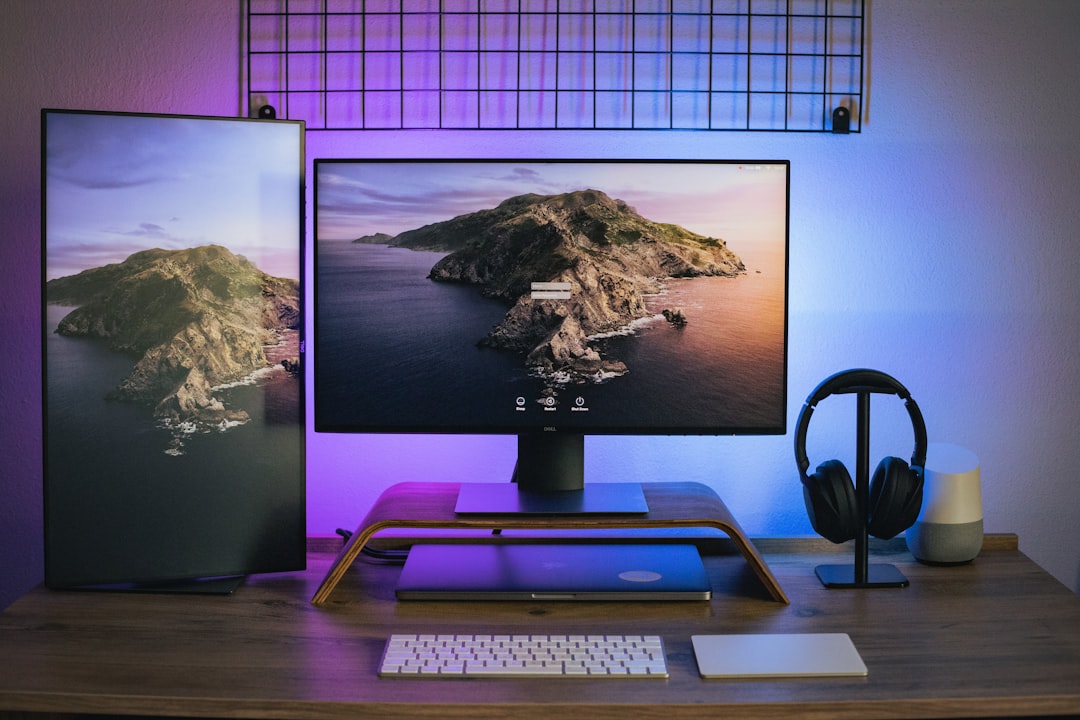
Calibrating home office lighting isn't about buying the most expensive "smart" bulbs or achieving a perfect aesthetic for social media; it’s about managing the biological and cognitive load of your workspace. High-margin productivity—a concept further explored in our guide on how to scale a high-margin landscape lighting business—is derived from minimizing ocular fatigue and maintaining circadian rhythm stability. When your lighting matches your task-load—and when the infrastructure is robust enough to avoid flicker or color temperature drift—you effectively reclaim hours of high-cognitive output that would otherwise be lost to late-afternoon burnout.
The Physiology of Photons: Why Your Brain Hates Your Setup
The industry often markets "smart lighting" as a simple convenience feature, but for professionals dealing with technical issues like a Google Home Mini 4 orange lights boot loop error, the critical metric for their workspace should instead be Spectral Power Distribution (SPD). Your eyes are biological sensors designed for high-CRI (Color Rendering Index) sunlight. When you sit under cheap, high-flicker, low-CRI LED panels (the kind often found in mass-market "office" lighting kits), your brain is subconsciously compensating for the lack of color depth and the physiological stress of invisible strobing.
The "flicker" problem is rarely discussed in consumer manuals. Many cheap AC-powered LEDs cycle at 60Hz or 120Hz. While your conscious mind doesn't "see" it, your visual cortex is processing thousands of micro-adjustments per minute. This contributes directly to the "3 PM headache" that many remote workers attribute to dehydration or fatigue, when it is, in fact, a result of poor lighting infrastructure.
The Myth of "One Light Fits All"
You cannot maintain high-margin focus with a static lighting environment. The human body is entrained to the Sun. In the morning, we require blue-enriched light (approx. 5000K–6500K) to suppress melatonin and increase cortisol/serotonin production. As the day progresses, this should shift toward warmer, lower-intensity light to signal the transition to administrative tasks and eventual rest.
Most home office setups fail because they are "monochromatic," a lack of variety that can feel as frustrating as a messy desk; much like how digital clutter drains your mental energy, static lighting creates a state of "circadian drift." This creates a state of "circadian drift." If you are working on a high-stakes project at 10 PM, your lighting should support your goals; for those also looking to improve their professional reach, understanding how to beat LinkedIn ATS algorithms can be just as impactful to your career as optimizing your physical work environment. The result isn't just "alertness"; it’s a jagged, nervous energy that eventually leads to a crash the next morning.
Operational Reality: The "Workaround" Culture
If you browse through communities like r/battlestations or the Hacker News hardware threads, you’ll find a recurring pattern: users don't use the native apps provided by lighting manufacturers. They spend hours configuring Home Assistant or custom scripts, often because they prefer hands-on technical solutions, similar to those needed to fix a Eufy RoboVac 11S 4-beep fan motor error, rather than relying on the restrictive software of major brands.
Why? Because consumer-grade lighting software is designed for "mood," not "workflow." The default "Focus" modes in most apps are often just arbitrarily high-Kelvin spikes that wash out contrast on your monitor. True calibration requires:
- Dimmability via PWM (Pulse Width Modulation): High-frequency dimming that doesn't drop to human-perceptible flicker rates.
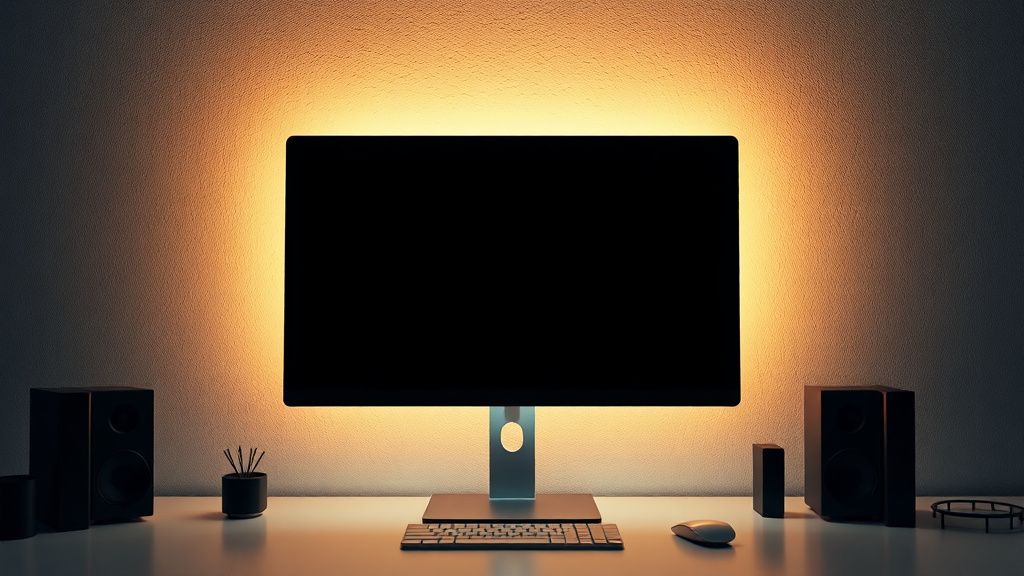
- Bias Lighting: Placing a stable, 6500K light source behind the monitor to reduce the luminance ratio between the screen and the wall. This is perhaps the single most effective "hack" for preventing digital eye strain.
- Task vs. Ambient separation: Never rely on a single overhead light. The ceiling fan-light is the enemy of productivity, and for those who struggle with overheating equipment, it is important to remember that urban heat can impact modern displays just as much as poor lighting impacts your focus. You need a dedicated, focused source for the desk surface and an indirect source for the room.
Real Field Report: The "Overhead Nightmare"
In a recent audit of a mid-sized remote-first engineering team, we found that 60% of developers reporting chronic afternoon fatigue were working in rooms with only central ceiling fixtures. The light was hitting their monitors at a 90-degree angle, creating "veiling reflections"—a thin layer of glare on the screen that makes the text slightly less crisp. The brain, subconsciously, has to work harder to resolve characters through the glare.
One developer attempted to fix this by switching to a "smart" overhead bulb. The result was worse: the bulb’s low-quality PWM dimming caused noticeable jitter on their mechanical keyboard’s RGB backlighting, creating a strobe-like effect that triggered mild migraines. The solution wasn't a new light; it was removing the bulb, installing a high-CRI task lamp positioned at 45 degrees to the desk, and using a bias-light strip behind the monitor to lift the background luminance.
The Economic Cost of Bad Lighting
"High-margin revenue" requires sustained cognitive endurance. If your lighting forces you to take an extra 20-minute break because you’re "mentally drained," or if you make a 5% error rate in your code or documentation due to fatigue, you are paying a hidden tax on your environment.
There is a growing movement in the "Quantified Self" community—often discussed on platforms like GitHub Issues for home automation software—where users track their "Flow State" duration against their environmental variables. The consensus? Lighting is the third pillar, right after ergonomics (chair/desk) and ambient sound control. The most effective systems are those that are "set and forget"—automated based on the local solar cycle using GPS-synced sunset/sunrise data.
Counter-Criticism: The "Hype" of Human-Centric Lighting
It is vital to acknowledge that a segment of the design community views "Human-Centric Lighting" (HCL) as a pseudo-scientific marketing play. Critics argue that modern office workers spend so much time looking at screens that the color temperature of the room is secondary to the screen’s own blue light emission.
They have a point. If you work on an OLED display cranked to 100% brightness at 11 PM, changing your room lights to 2700K will do little to mitigate your sleep disruption. The true calibration involves:
- Flux/Night Shift optimization: Ensuring the screen’s color temperature tracks with the room lighting.
- The "Luminance Ratio": Keeping your screen brightness within 3x of your wall brightness. If your wall is dark and your screen is bright, your eye muscles will fatigue rapidly trying to recalibrate every time you look away from the monitor.
Maintaining Your Setup: The Silent Failures
Lighting systems are not static. LEDs degrade over time. The "blue peak" of a cheap LED shifts as the phosphor coating ages, usually within 12–18 months of heavy use. If you are serious about productivity, you must treat your lighting as a peripheral that needs a "re-check."
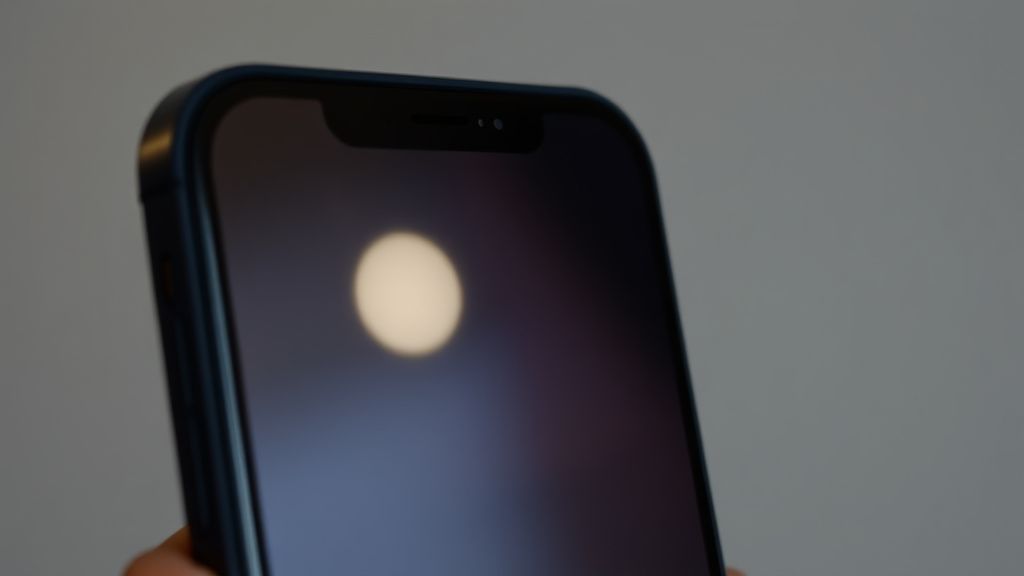
- The Flicker Test: Use your smartphone’s "slow-motion" camera mode (240fps) to film your lights. If you see rolling black bars, that light is not suitable for a high-intensity, long-duration workspace.
- Maintenance Schedule: If you are using professional-grade lighting (like CRI-98+ high-end task lights), plan for a refresh cycle. If you are using consumer strips, expect "color mismatch" as individual LEDs on the strip fail or drift.
Scalability and Integration: The Software Gap
The biggest friction point in 2024 is the fragmented ecosystem of lighting controls. If you use a Hue bulb, a generic Zigbee bias-light, and a smart-plug for your ambient lamp, you are looking at three different apps or, worse, a convoluted Home Assistant integration that might break after a firmware update.
The "pro" approach is to prioritize hardware-level stability over "smart" features. A high-CRI, flicker-free bulb on a physical high-quality dimmer switch will always beat a "smarter" bulb that requires a cloud-based server to operate. In the event of an ISP outage or a server-side maintenance window, your office shouldn't turn into a dark room or, worse, strobe randomly because the API call failed.
How do I measure if my home office lighting is "flicker-free"?
Use the "slow-motion camera" trick. Set your smartphone to record in 240fps (or higher) and point it at your light source. If you see dark bands rolling across the screen, the light has significant flicker, which can cause subconscious fatigue. A flicker-free light will look stable even in slow motion.
Is "Blue Light" actually the enemy, or is that just marketing?
Blue light is necessary during the day to regulate alertness. The problem is "excessive blue light" at night. Using blue-rich light (6500K) late in the evening disrupts melatonin production. The goal is a shift: high blue during the start of the workday, low blue (warm) toward the end.
What is the ideal "Bias Lighting" color and intensity?
Aim for a neutral white (6500K) that is dimmed down. The goal is not to illuminate the room, but to provide a soft back-glow that reduces the contrast between your bright screen and the dark wall. It should be subtle; if you can clearly see the wall color, it’s likely too bright.
Why do my smart bulbs sometimes drift in color temperature?
Consumer smart bulbs use different types of LEDs for warm and cool channels. As the hardware ages, the efficiency of these channels shifts independently. This leads to "color drift," where the bulb looks "greenish" or "pinkish" compared to when it was new. High-quality professional luminaires account for this with internal calibration cycles, but consumer hardware rarely does.
Should I prioritize a desk lamp or overhead lighting?
Always prioritize a high-quality task lamp. Overhead lights are designed for general room navigation, not for focused work. A task lamp (like a screen-bar or a directional swing-arm lamp) gives you control over the "angle of incidence," preventing glare on your screen and reducing the amount of light scattered across the room, which helps with focus.
The Human Element: Building the "Flow" Environment
Ultimately, your lighting setup is a signaling system for your brain. If you find yourself struggling to "get into the zone," try creating a "Work Mode" scene that triggers a specific, consistent lighting environment every time you start.
The goal is to eliminate "decision fatigue." If you have to fiddle with the light intensity, the color temperature, and the positioning every single morning, you are burning cognitive energy before you've even written a single line of code or sent a single email. Build the infrastructure, automate the transition, and let the lighting become a transparent, invisible part of your workflow. When the lighting is truly calibrated, you shouldn't "notice" the lights at all—you should simply notice that you've been working for three hours straight without feeling the urge to squint or look away.
That is the high-margin result. It is not about the cool colors or the voice commands; it is about the silence of the environment, the stability of the photons hitting your retina, and the removal of the environmental "friction" that separates the amateur from the professional. Treat your light as an engineering problem, not a home decor choice. Your eyes, and your output, will thank you.