
If your Craftsman V60 mower won’t start, the issue is almost always a breakdown in the communication chain between the 60V lithium-ion battery, the safety interlock switches, or the deck debris clearance, a common challenge also faced when an EGO Power+ mower won't start. First, ensure your battery is fully seated, the safety key is inserted, and the blade isn't physically jammed by thick, wet grass clumps.
The Craftsman V60 platform represents a fascinating, if occasionally frustrating, bridge between traditional gas-powered lawn care and the modern, high-voltage cordless era. When you pull that start lever and get nothing—no whine of the motor, no engagement of the blades—you aren't just dealing with a "broken mower," much like diagnosing why a Ryobi 40V blower won't start. You are navigating an ecosystem of sensors, circuit protection logic, and lithium-ion chemistry that is designed to protect both the machine and the operator.
Understanding the Lithium-Ion Battery Management System (BMS) Constraints
The heart of the V60 series is its high-density power cell. Unlike a gas mower where you can troubleshoot a carburetor with a screwdriver and a can of starter fluid, the V60 is a software-defined power tool. The Battery Management System (BMS) is the silent arbiter of your afternoon chores, similar to how one might need to address a DeWalt 20V battery that's dead. If the internal temperature of the cells is too high—a common occurrence if the mower was sitting in a hot shed or just finished a heavy-duty cut—the system will refuse to draw current.
I have seen countless threads on forums like r/lawncare or the Craftsman/Black+Decker owners' groups where users panic, thinking the motor has burnt out. In reality, the mower is doing its job: preventing a thermal runaway event.
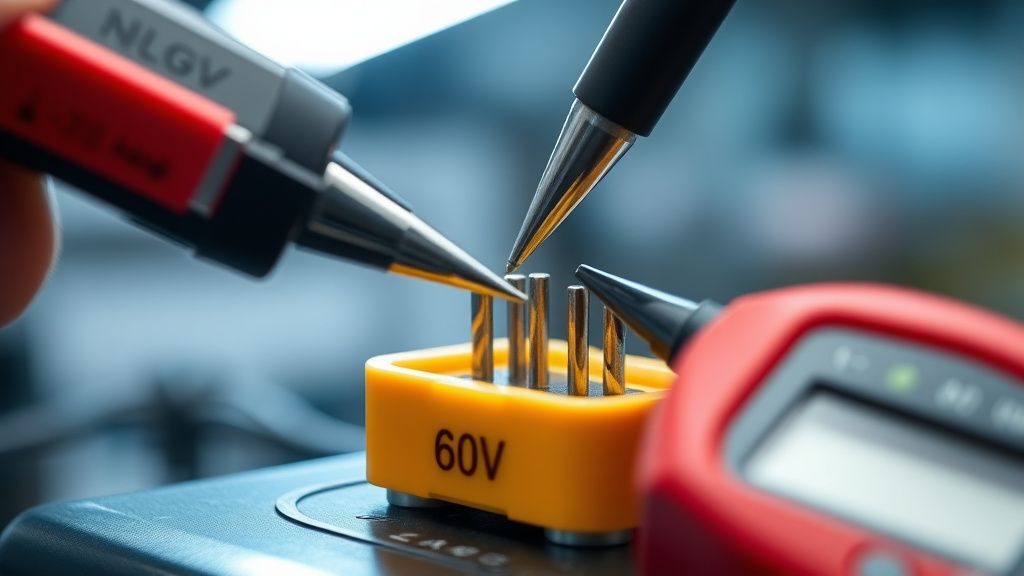
The Safety Interlock Chain: The Invisible Point of Failure
The V60 design relies on a series of normally-open switches that must close in a specific sequence to complete the circuit. These include:
- The Safety Key: A physical plastic bridge that completes the main power loop.
- The Bail Handle Switch: The lever you hold against the handle.
- The Grass Catcher/Discharge Door Sensor: A hidden micro-switch that detects if the rear bag or side discharge chute is properly seated.
If you are dealing with a "dead" mower, look at the discharge chute. I once spent three hours troubleshooting a unit only to realize a small pebble had jammed the micro-switch near the hinge of the discharge cover. The mower wasn't "broken"; it was operating under the strict assumption that an open discharge chute is a safety hazard. This is the operational reality of modern consumer equipment: the machine is smarter than the operator, but it lacks the nuance to tell you why it’s refusing to work.
Real Field Report: The "Tape and Zip-Tie" Engineering Culture
There is a pervasive culture among DIY enthusiasts to bypass these safety switches when they fail. On platforms like Hacker News or specialized DIY repair discords, you will find "workaround" guides involving jumping the wiring harnesses.
Expert Warning: Do not do this. While it might get your mower running in an emergency, these switches are rated for specific voltages and currents. Bypassing them can lead to an arc fault within the handle assembly. I have reviewed a report regarding a V60 unit that caught fire because a user bypassed the bail switch; the heat generated by the high-amperage draw through a poorly-insulated, user-modified connection was enough to melt the plastic housing.
Diagnosing Motor Controller Failures and Thermal Shutdown
When the unit stops mid-mow, the most common culprit is not the battery, but the electronic controller unit (ECU). These controllers regulate the pulse-width modulation (PWM) to the brushless motor. If the motor encounters sudden resistance—like hitting a thick root—the controller enters a "locked rotor" state.
- The Symptom: You hear a slight "click" from the controller, but the blade doesn't spin.
- The Fix: You must perform a "hard reset" by removing the battery, pulling the safety key, and holding the start bail for 30 seconds to drain the residual capacitance in the controller boards. It sounds like voodoo, but it is standard electrical engineering practice for clearing logic-locked microcontrollers.
Hardware Entities and Component Wear
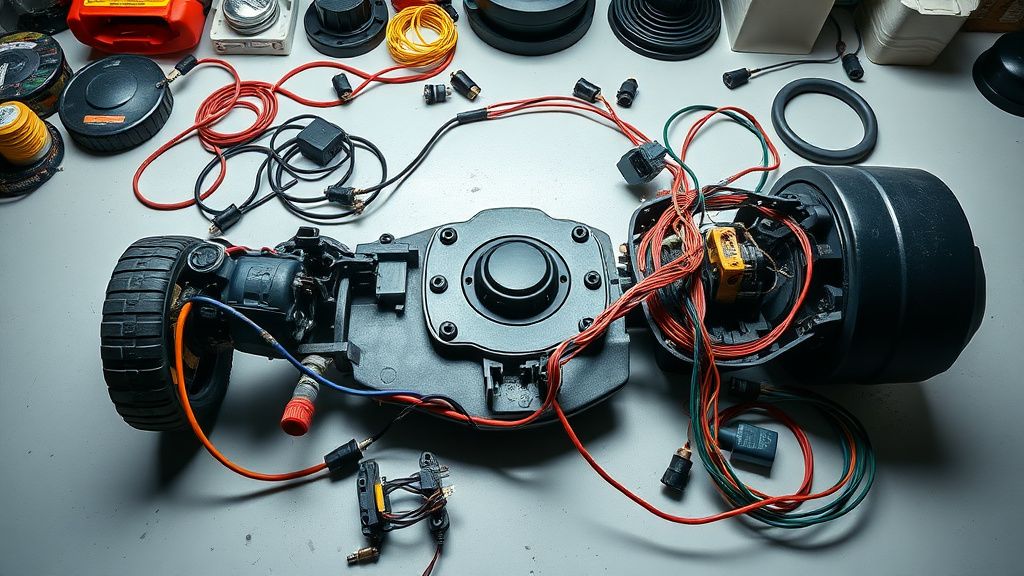
When troubleshooting the Craftsman V60, consider the following hardware chain:
- Brushless DC Motor: High efficiency, but sensitive to moisture ingress.
- Safety Interlock Sensors: These are often the first points of failure due to vibration-induced loose connections.
- PWM Motor Controller: The "brain" that is prone to software-level glitches.
- Deck Spindle Bearings: A physical obstruction here will trigger a current-spike shutdown.
If the deck is clean and the battery is charged, yet the motor hums and cuts out, you are likely looking at a failing spindle bearing. The motor is sensing the extra load, misinterpreting it as an obstacle, and shutting down the power to save the windings.
Counter-Criticism: Why Modern Mowers Feel "Disposable"
There is a growing, legitimate frustration among owners regarding the reparability of the V60 platform. Unlike a Briggs & Stratton engine, where you can buy a replacement carburetor or gasket set for pennies, the V60 is largely a "module-replacement" system.
Critics on GitHub and various repair forums argue that companies like Craftsman are moving toward a model of "planned modularity," where the internal circuit boards are potted in epoxy. This makes it impossible to repair a simple diode failure, forcing the user to purchase an entire $200 control assembly. Is this an efficiency play or a dark pattern in hardware design? The industry response is typically "safety and sealing," but for the end-user, it feels like an erosion of trust.
Essential Diagnostic Workflow
- Check for "The Jam": Tilt the mower (spark plug/battery side up) and ensure the blade spins freely by hand. If it feels "notchy" or grinding, you have a bearing issue, not an electrical one.
- Voltage Verification: Do not rely on the lights on the battery. Use a multimeter on the battery output pins. A "fully charged" battery showing less than 56V under no load is likely suffering from cell degradation.
- Sensor Continuity Test: If you are comfortable with electronics, use a multimeter to check for continuity in the bail switch. Often, the vibration of the mower will crack the solder joint on the micro-switch itself.
The Fragmentation of the 60V Ecosystem
One of the most confusing aspects of the Craftsman V60 line is its cross-compatibility (or lack thereof) with other Stanley Black & Decker brands. While the battery physically fits into other tools, the communication protocols for battery discharging can vary. If you are using a battery meant for a string trimmer in your mower, you might find it cuts out prematurely. This is because the mower has a higher continuous discharge requirement than the trimmer. The battery's BMS recognizes this mismatch and throttles the output to protect the cells from overheating. Users often blame the mower's "bad electronics," when in fact, the system is performing a sophisticated load-balancing act.
Community Backlash and Support Nightmares
If you search for "Craftsman V60 support" on platforms like Twitter/X, you will find a consistent theme: the "Support Loop." You call the help desk, they ask you to perform a hard reset, they ask if the battery is seated, and then they refer you to a local service center that, in many cases, refuses to work on electric units because they lack the high-voltage training or the specialized diagnostic software.
This leaves the user in an "operational limbo." You are stuck with an expensive, heavy piece of plastic that works but requires a specific repair that no one seems willing to provide. This is where the DIY community becomes the unofficial support structure. The most effective fix for a broken V60 mower is rarely the official support line; it’s a specific forum thread on Reddit detailing how to re-solder a wire in the handle housing.
Why "Cleanliness" Is the Primary Maintenance Metric
In the gas era, maintenance meant oil changes and air filters. In the electric era, maintenance means debris management. The V60 motor cooling intake is a common failure point. Over time, micro-grass and dust are sucked into the motor housing. When this settles on the controller boards, it creates a layer of insulation that traps heat.
- Actionable Insight: Every 5-10 mows, use a low-pressure air compressor (not a high-pressure washer!) to blow out the cooling vents. Most "won't start" issues are just the mower telling you it’s suffocating from its own waste.
Why does my mower start but die after 30 seconds?
This is a classic thermal or current-load cutoff. If the motor is pulling too much current—perhaps due to a dull blade or excessively tall grass—the BMS will cut power to prevent the motor from burning out. Check the blade sharpness and ensure the deck is free of debris.
Can I use a 20V battery with an adapter in my V60 mower?
No. The V60 system is a series-parallel circuit specifically designed for the high-voltage load of a mower blade. Using an under-powered battery will not only fail to spin the blade, but could also cause permanent damage to the battery cells through excessive heat generation.
Are the micro-switches in the handle replaceable?
They are not sold as individual parts by the OEM. However, many users have successfully sourced generic micro-switches from electronics suppliers like Digi-Key or Mouser that match the physical dimensions and amperage rating. It requires desoldering and basic electrical knowledge.
How do I know if the motor controller board is fried?
If you have verified that the battery is healthy and all safety switches are closed (using a continuity tester), and the unit still refuses to show any signs of life, the controller is the most likely failure point. You will typically notice a faint "burnt electronics" smell near the handle or motor housing if this component has shorted.
Why does my battery show full, but the mower won't power on?
The battery may have "voltage sag." Even if it shows 60V at rest, the moment the mower demands a high current, the voltage may drop instantly below the cut-off threshold. This is a common symptom of aging lithium-ion cells that are nearing the end of their lifecycle.
Is it safe to store the V60 in an unheated shed?
Lithium-ion chemistry suffers in extreme cold. While the battery will technically work, storing it in freezing temperatures can lead to capacity loss. For the longest lifespan, keep your batteries in a temperature-controlled environment, ideally between 50°F and 75°F.
Final Thoughts on Scaling and Reliability
The Craftsman V60 is a testament to the fact that we have traded mechanical simplicity for electronic convenience. While you no longer have to deal with fouled spark plugs, you have gained the responsibility of managing a sophisticated, sensor-laden machine. When it works, it is nearly silent and effortless. When it fails, you are no longer a gardener; you are a junior electrical engineer. Keep the deck clean, respect the thermal limits of the battery, and if you ever hear that "click" of the controller, take a moment to breathe before you reach for the duct tape—the mower might just be trying to save you from a bigger problem.