
The EGO Power+ 56V ecosystem represents a paradigm shift in residential lawn maintenance, successfully migrating the industry from gas-powered internal combustion engines to high-density lithium-ion battery architectures. However, as these machines age, the "dead mower" phenomenon has become a staple of suburban forum frustration. When your EGO mower refuses to engage, you aren't just facing a mechanical failure; you are navigating a complex intersection of thermal management sensors, proprietary safety interlocks, and BMS (Battery Management System) protocols that demand a systematic, almost forensic diagnostic approach rather than the brute-force hammering we once applied to pull-start engines, similar to troubleshooting other complex lawn care equipment.
The Anatomy of an EGO Power+ 56V Power Loss
To understand why your mower won't start, you must first stop viewing it as a simple "motor and blade" assembly and start seeing it as a high-voltage computing device. The EGO architecture relies on a handshake between the Battery Pack (ARC Lithium technology), the Handlebar UI/Control Board, and the Brushless DC Motor (BLDC).
Most "won't start" reports on platforms like Reddit’s r/lawncare or the EGO-specific Facebook groups trace back to three specific points of failure: a tripped thermal fuse in the handle, a misaligned microswitch on the safety bail, or a low-voltage cutoff triggered by the battery’s internal BMS, much like diagnosing why a DeWalt 20V Max drill won't spin.
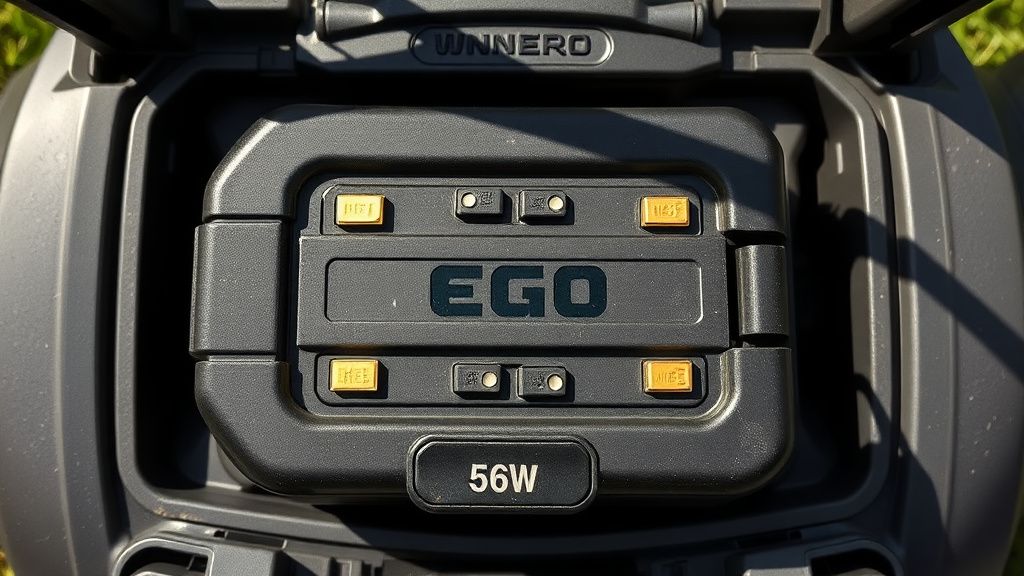
The Safety Bail Microswitch: The Most Common Point of Failure
The safety bail—the handle you must hold down to keep the motor running—is a deceptively simple plastic lever. Internally, it compresses a small, tactile microswitch. Over time, the structural integrity of the plastic housing can deform due to UV exposure or physical stress, preventing the switch from "clicking" into the closed position.
If the controller doesn't receive the "closed circuit" signal from the handle, it assumes the mower is in storage mode.
Diagnostic Step: With the battery inserted, engage the safety bail and listen for a faint, crisp click. If it feels mushy or silent, you have an mechanical alignment issue. Many users report that adding a small spacer or tightening the pivot screws on the handle assembly acts as a temporary "workaround" for this hardware drift.
The Thermal Cutoff and Handlebar Electronics Issues
The EGO handlebar assembly is the "brain" of the operation. It houses the LED indicators and the primary ignition logic. A frequent point of contention in user forums—specifically within the EGO Power+ Enthusiasts group—is the sensitivity of the internal circuit board to moisture. Even with IP-rated components, condensation from morning grass cutting can migrate into the switches.
When the system detects an internal short or a voltage anomaly, it enters a protective "limp mode." Unlike a car's check engine light, you get no diagnostic code; you simply get a dead machine.
- The Hard Reset Procedure: Remove the battery entirely. Hold the power button down for 30 seconds to drain any residual capacitors on the mainboard. Reinsert the battery and attempt to start. This effectively clears the transient memory of the controller.
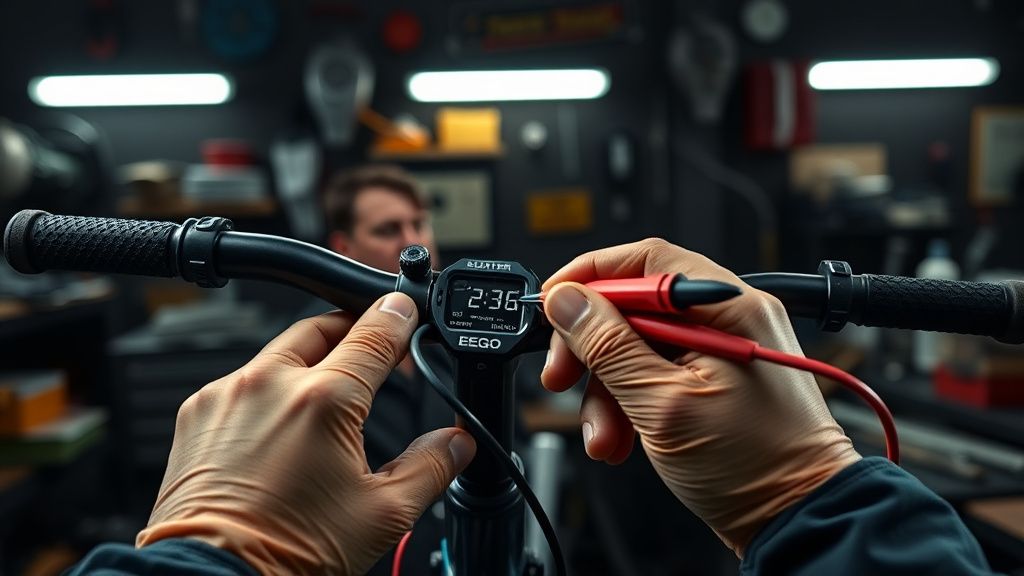
The Battery BMS: When the 56V Pack Goes "Ghost"
The most significant controversy in the EGO ecosystem is the proprietary nature of the battery’s Battery Management System (BMS). The cells inside are standard 18650 or 21700 lithium-ion, but the logic board that monitors cell balancing is locked down.
If a single cell group within your 56V pack drops below a certain voltage threshold, the BMS will "brick" the battery for safety reasons to prevent a fire hazard during charging, much like how one might troubleshoot a dead DeWalt 20V battery.
Field Report: Users on the DIYStack and Hacker News hardware threads frequently point out that once a battery is "bricked" by the BMS, EGO support often pushes for a replacement rather than a repair. There is no official "reset" button for the battery pack itself. If your mower won't start and the battery lights don't flash when you press the check button, the issue is almost certainly the battery, not the mower.
Counter-Criticism: Is the Modular Design Actually Sustainable?
There is an ongoing debate regarding EGO’s repairability. Proponents argue that the modular design (swappable components) is the pinnacle of consumer-grade electric machinery. Critics, however, point to the "planned obsolescence" inherent in the sealed handlebar units.
When a $500 mower fails because a $2 microswitch in the handle fails, the inability to replace just the switch—rather than the entire handle assembly—fuels the "Right to Repair" movement. This operational friction drives users to third-party 3D-printed handle extensions and unauthorized electrical bypasses, which are documented extensively on various GitHub repositories aimed at modding yard equipment.
Troubleshooting the BLDC Motor and Deck Debris
Sometimes the mower isn't "broken"; it is simply protecting itself. Brushless DC motors are incredibly efficient, but they are vulnerable to rotor stalling. If you have thick, wet clippings impacted around the blade spindle, the motor controller will detect an "over-current" state during the initial startup surge and instantly kill the power to prevent coil burnout.
- The "Clear and Spin" Test:
- Remove the battery.
- Flip the mower onto its side (always with the air filter facing up to prevent oil/fluid migration, though EGO mowers are less prone to this than gas models, it remains a best practice).
- Use a gloved hand to rotate the blade manually. It should spin with moderate resistance. If it’s seized or requires significant force, the issue is physical debris, not electrical.

Infrastructure Stress: Scaling and Seasonality
EGO users often report "startup amnesia" after a long winter storage. Lithium-ion batteries have a self-discharge rate, and if left in a cold garage, the voltage can drift low enough to trigger the BMS "storage sleep."
If you attempt to charge a battery that has been sitting at near-zero voltage for months, the charger may show a red error light. This isn't a failure—it's a deep-cycle initialization attempt. Leave the battery on the charger for a full 24 hours. If it doesn't wake up, the chemistry has likely been compromised by internal dendrite formation, a common failure mode in older 5.0Ah and 7.5Ah packs.
Why does my mower start for 5 seconds and then die?
This is a classic symptom of an "over-current" or "over-temperature" event. It indicates that the system is functioning but detects a resistance that exceeds safety parameters. Check for a stalled blade or a failing motor controller. If the deck is clean, your motor might be nearing its end-of-life cycle.
Can I bypass the safety switch to make it start?
While physically possible to jumper the microswitch, this is strongly discouraged. These safety interlocks exist to prevent "dead man" accidents where the mower could continue running while the operator is away from the handle. It also voids any remaining warranty and creates a significant liability risk.
Why does my battery show green lights but the mower won't engage?
This suggests the handshake between the battery and the controller is broken. Check the physical contact pins in the battery bay. If they look retracted, bent, or heavily corroded, you are not getting a full 56V signal to the motor controller. Use a contact cleaner and a soft brush to clear the debris.
Is the "Hard Reset" button on the mower real?
No. There is no physical reset button on any EGO mower deck. The "reset" is purely an electrical procedure of clearing the internal registers by removing the power source (the battery) and holding the activation switch to bleed off stored charge in the capacitors.
Does cold weather affect the starting process?
Yes, significantly. Lithium-ion batteries suffer from increased internal resistance in cold temperatures. If you store your mower in an unheated shed, bring the battery inside. If the internal cell temperature is below freezing, the BMS may refuse to pull the high-amperage draw required to kick-start the BLDC motor.
The Hidden Cost of "Smart" Features
As we move toward more integrated garden technology, the complexity gap widens. The EGO system is a masterclass in UX—it feels premium and intuitive—until the moment it fails. Unlike a carburetor that you can clean with a wire brush and a can of Seafoam, the EGO mower requires a diagnostic mindset rooted in electrical engineering.
When you encounter the "non-start" scenario, treat it as an informational request from the machine. Is the battery outputting voltage? (Use a multimeter on the pins). Is the switch closing the circuit? (Listen for the click). Is the motor free to rotate? If these three variables are checked and the system still fails, you are likely dealing with a failure in the main power PCB (Printed Circuit Board).
In the modern landscape, the repairability of these machines rests heavily on the availability of spare parts from companies like EGO. When they restrict the sale of individual sensors or board components, they effectively turn a $600 machine into a disposable commodity. As consumers, our leverage lies in maintaining the health of these units through seasonal storage discipline—specifically keeping batteries at 50% charge and indoors during the off-season—to prevent the very BMS failures that most often lead to permanent hardware retirement.