If your M12 drill chuck exhibits significant runout or "wobble," the culprit is rarely a manufacturing defect; it is almost always a combination of internal shaft bearing wear, debris accumulation in the jaw mechanism, or a loosened chuck screw, much like the common troubleshooting scenarios when a DeWalt 20V Max drill won't spin. Most cases can be resolved by reseating the chuck, cleaning the internal cam tracks, or, in extreme cases, replacing the jacobs-style chuck assembly.
The M12 platform, particularly the brushed and early-gen brushless drill-drivers, occupies a strange middle ground in the tool ecosystem, and users often face ancillary issues, such as when a Ryobi 40V battery is not charging. It is a "pro-sumer" staple that is pushed far beyond its intended torque specs by trade professionals who appreciate its form factor. When you see a Reddit thread on r/MilwaukeeTool with a title like "Why is my M12 chuck dancing like a ballerina?", you aren’t witnessing a universal product failure; you are witnessing the point where a compact sub-compact motor meets the physical limitations of its chuck mounting system.
The Physics of Runout: Understanding Chuck Geometry and Shaft Tolerances
Before grabbing a wrench, you have to understand that a "wobble" is often a diagnostic proxy for three distinct mechanical failures. The first is radial runout, where the chuck itself is off-center due to a bent spindle or a deformed chuck mount (typically a 1/2"-20 UNF thread). The second is axial play, where the chuck moves forward and backward due to thrust bearing fatigue. The third is jaw misalignment, which is a functional rather than mechanical issue where the three jaws of the chuck do not meet at a perfectly common center point.

In industrial engineering terms, the M12 series uses a tapered or threaded spindle interface. Because Milwaukee—and their OEM suppliers—prioritize cost-to-performance ratios for this specific line, the tolerance stack-up is tighter than a homeowner-grade drill but looser than a high-end metalworking lathe. This focus on performance often leads users to explore solutions for common power tool issues, such as when a DeWalt 20V battery is dead or experiencing charging problems. When you subject these tools to repetitive, heavy-duty impact force (often by using them with impact-rated bits), the harmonic vibration eventually migrates to the weakest point: the chuck-to-spindle junction.
Operational Reality: Why the "Wobble" Isn't Always the Chuck
Many users on forums like GarageJournal or HackerNews hardware sub-threads often complain that their brand new M12 has "wobble straight out of the box." Here is the uncomfortable truth: what you perceive as a bad chuck is often a result of bit geometry.
If you are using a long, hex-shank drill bit or a spade bit, even a 0.005-inch misalignment at the spindle is magnified by the length of the bit. This is a classic case of the "leverage effect." Before you disassemble anything, perform this diagnostic test:
- Insert a perfectly straight, verified-true drill bit or a hardened steel rod into the chuck.
- Spin the drill at a low, consistent speed.
- Observe the tip. If the base of the chuck (the collar) is stable but the tip of the bit is dancing, you have a bit-seating issue or a bent bit, not a chuck failure.
- If the collar of the chuck is visually oscillating, the spindle is likely the issue, or the mounting thread is compromised.
The Anatomy of the Repair: Step-by-Step Breakdown
If the diagnostic confirms the chuck itself is the failure point, you need to prepare for the "hidden" struggle of the M12 architecture: the left-hand threaded chuck retention screw.
1. The Retaining Screw Removal
Inside the hollow center of the chuck, at the base, there is a screw that anchors the chuck to the spindle. This is almost universally a left-hand thread (you must turn it clockwise to loosen it).
- The common failure point: Users try to force it counter-clockwise, stripping the Phillips or Torx head. Use a high-quality impact driver or a manual impact driver (the kind you strike with a hammer) to break the thread-locker loose.
- Engineering compromise: Milwaukee uses a high-strength thread-locker (like red Loctite) from the factory. If you cannot move it, you must apply localized heat via a heat gun—do not use a torch, or you will melt the plastic housing and fry the internal nylon gears.

2. Removing the Chuck
Once the internal screw is out, you need to remove the chuck from the 1/2"-20 spindle.
- Insert a large hex key (Allen wrench) into the chuck.
- Tighten the jaws onto the hex key.
- Strike the long arm of the hex key with a rubber mallet in a counter-clockwise direction. The leverage of the chuck's own mass usually allows it to "break" the thread-lock on the main spindle.
3. Cleaning and Inspection
Once removed, inspect the threads on the drill spindle. If they are galled or flattened, you have reached the "terminal failure" stage. A damaged spindle cannot be easily replaced without disassembling the entire transmission housing of the M12. At this point, the cost-benefit analysis shifts: for many, a full transmission replacement costs nearly as much as a new drill body on the secondary market.
Real Field Reports: The "Workaround" Culture
On platforms like Discord and specialized tool-repair subreddits, there is a persistent debate regarding "upgrading" the M12 chuck to a full-metal Rohm or Jacobs industrial chuck.
- The Pro-Upgrade Argument: Enthusiasts claim that swapping the plastic-cased stock chuck for a heavy-duty steel one turns the M12 into a precision instrument.
- The Reality Check (Counter-Criticism): Engineers from tool repair centers argue that the M12's lightweight transmission is not designed for the inertia of a heavier chuck. If you install a massive, high-precision chuck on a compact M12, you increase the "spinning mass," which places significantly higher stress on the motor brake and the plastic internal gear housing during rapid stops. You gain precision but lose longevity. This is the "Mass Inertia Conflict"—a classic trade-off where upgrading one component degrades the lifecycle of the parent system.
Troubleshooting the "Slipping" Phenomenon
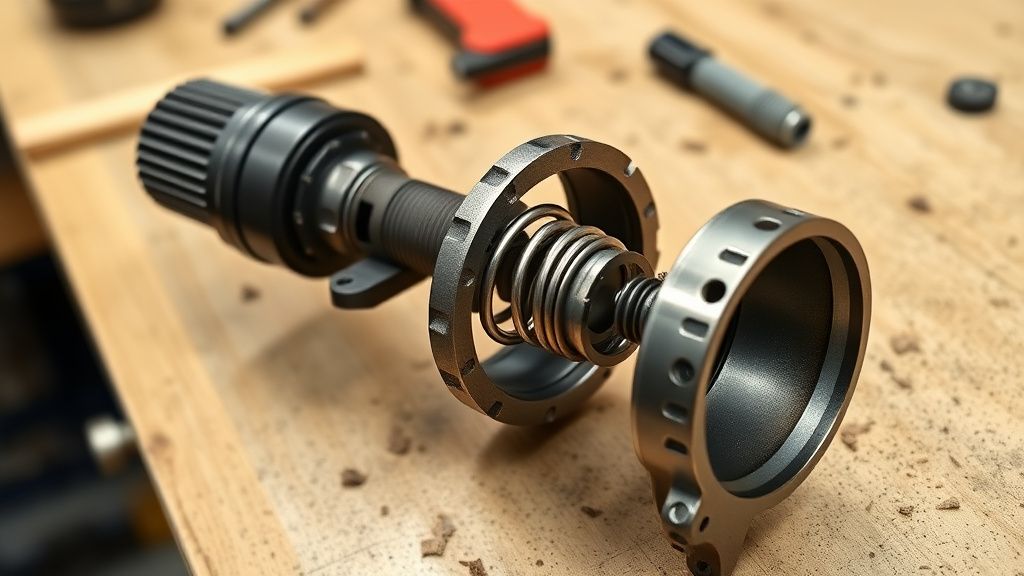
Sometimes, the "wobble" is accompanied by a clicking sound during high-torque applications. This is the ratcheting collar failure. The M12 chuck uses a series of plastic or metal teeth on the back of the chuck to "click" into place. If you have been over-tightening the chuck, these teeth can shear.
If your chuck is slipping under load:
- The Debris Trap: Small particles of masonry or wood dust can get lodged behind the collar. Use compressed air (cautiously) or a solvent-based parts cleaner to flush the chuck while rotating it.
- Internal Spring Fatigue: If the internal tension spring loses its temper (due to heat or overuse), the chuck will not "bite" down on the bit. There is no repair for this; it requires a full chuck replacement.
Policy and Support: The "Warranty vs. Wear and Tear" Controversy
Milwaukee (and the broader TTI conglomerate) classifies chuck wobble in two ways. If it occurs within the first few months, they often view it as a manufacturing defect and will honor a warranty replacement (the "Service Center" experience). However, if you are a professional using it for daily driving, they often classify it as "normal wear and tear."
The "Trust Erosion" happens when a user follows the official documentation, fails to fix the issue because the housing is seized, and then finds that the service center denies the claim because "unauthorized repair attempts" were made.
Advice from the trenches: If you are within the warranty period, do not touch the chuck screw. Send the unit to a service center. If you are out of warranty, you have nothing to lose—but be aware that M12 housing screws often strip their plastic threading if opened more than once.
Balancing Hype vs. Reliability: The Verdict
The M12 drill is a masterclass in ergonomics and power-density. Its failure points are not signs of a "bad" product, but signs of a tool being pushed into a "heavy-duty" category it was never meant to occupy. When the chuck begins to wobble, you are likely hitting the ceiling of what the 12V platform can physically manage.
- When to repair: If the chuck is visibly loose on the threads, a simple cleaning and re-Loctiting will often buy you another two years of life.
- When to replace: If the spindle itself is vibrating or the internal cam teeth are sheared, stop trying to repair it. The cost of labor and the risk of further damaging the internal gear train makes this a losing proposition.