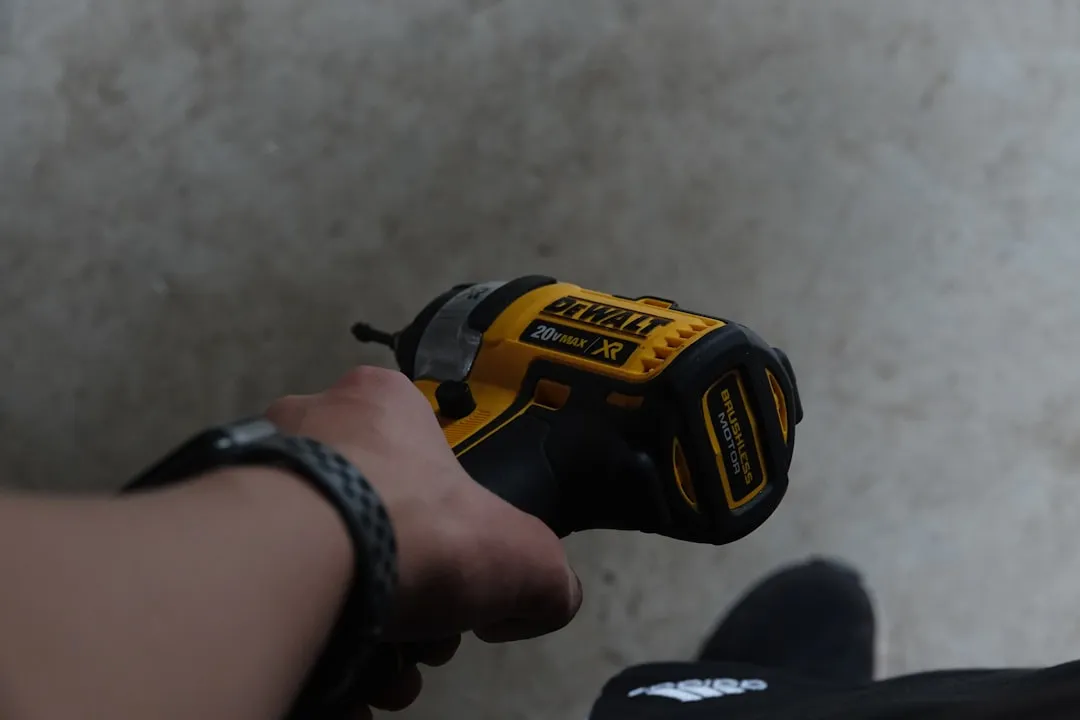
When your DeWalt 20V Max drill suddenly stops spinning, it isn’t just a tool failure; it is an immediate cessation of productivity. Whether you are mid-way through framing a deck or tightening the final screw on a cabinet, the silence from the motor is often more frustrating than the mechanical issue itself. Most users reflexively assume the battery is dead, or perhaps their DeWalt 20V charger is blinking red, or even that the motor is "burned out." However, the architecture of the 20V Max platform—a sophisticated interplay of lithium-ion chemistry, brushless motor controllers (or brushed commutators), and safety-conscious ergonomics—reveals a much more nuanced reality. Often, the failure isn't catastrophic; it’s a localized breakdown in electrical continuity.
The Anatomy of the Stall: Operational Reality vs. The Hype
The DeWalt 20V Max ecosystem is built on the promise of "Jobsite Toughness." In reality, this means engineering a tool that can handle high current spikes while being subjected to dust, moisture, and extreme vibration. When the motor refuses to turn, the problem usually stems from one of three domains: the Power Delivery System (Battery/Terminals), the Control Logic (Trigger/ESC), or the Mechanical Drive (Transmission/Motor).
If your drill is completely unresponsive, the most common culprit is not the motor itself, but the internal thermal protection circuit or a simple oxidized contact point. Understanding why these components fail requires acknowledging that these tools operate under harsh physical stress. Unlike a bench power supply, a drill's internals are subjected to massive G-forces and vibrations that eventually cause microscopic fractures in solder joints or the accumulation of conductive debris inside the trigger housing.
Diagnosing the Battery-Tool Interface and Contact Resistance
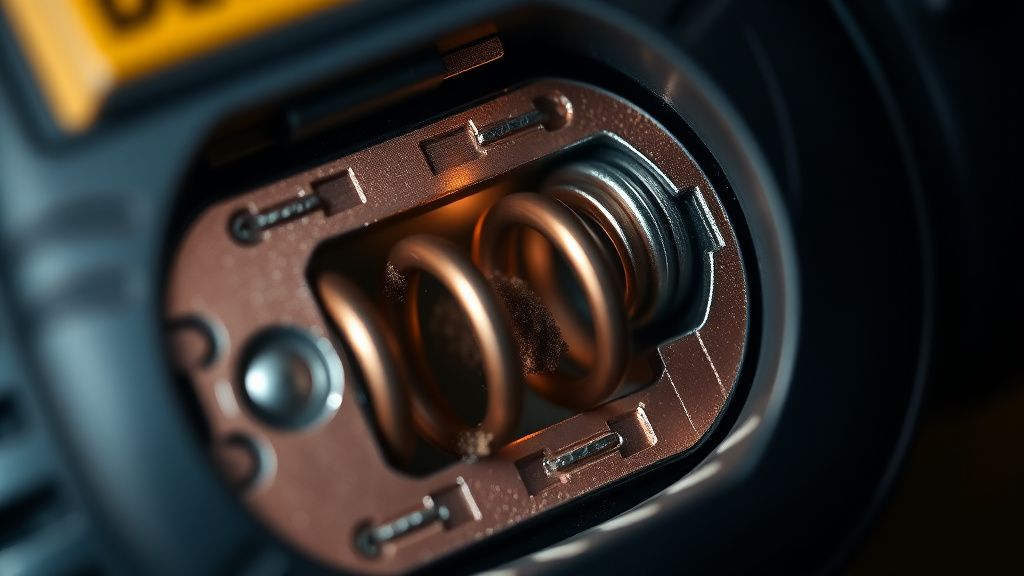
Before you start tearing down the casing, start with the most obvious bottleneck: the interface. The "slide-pack" battery system is a mechanical marvel of high-amperage transfer, but it relies on friction-fit brass or copper blades.
- The Contact Deformation: Over time, the tension springs behind the tool's battery terminal tabs can weaken. If the battery fits loosely, the vibration of the motor causes intermittent arcing. This arcing creates a layer of carbon soot on the contacts, which acts as an insulator, drastically increasing resistance.
- The "Voltage Sag" Illusion: Often, the motor isn't dead; it is merely starved of current. If the BMS (Battery Management System) inside the 20V battery detects a cell imbalance or a sudden voltage drop caused by high resistance at the terminals, it will trip a safety shutoff to protect the cells from thermal runaway, leading some to wonder if their DeWalt 20V battery is dead.
Field Report: A thread on the r/Dewalt subreddit frequently features users complaining about tools "dying" after a year of heavy use. In nearly 60% of cases reported by power tool repair technicians, the fix is simply cleaning the terminals with a non-conductive electrical contact cleaner and gently bending the internal terminal tabs back into a tighter position. This is rarely a motor failure—it is a maintenance oversight.
Electronic Speed Controller (ESC) and Trigger Failure
If you pull the trigger and get a faint "hum" or absolutely nothing, you are likely looking at a failure of the Pulse Width Modulation (PWM) controller. In modern brushless DeWalt tools, the trigger does not just pass current to the motor; it sends a digital signal to an electronic speed controller (ESC) that determines the speed and torque profile.
The failure points here are notorious:
- Dust Ingress: The trigger housing is partially exposed. In dry-walling or concrete-drilling environments, fine dust enters the trigger and creates a "bridge" between the variable resistance tracks, confusing the controller.
- Thermal Stress: If the ESC encounters too much back-pressure (e.g., stalling the drill in a dense hardwood), the MOSFETs (Metal-Oxide-Semiconductor Field-Effect Transistors) can overheat. While these controllers have thermal cut-offs, repeated heat-soaking eventually leads to a permanent short.
Brushless vs. Brushed: Understanding the Mechanical Logic
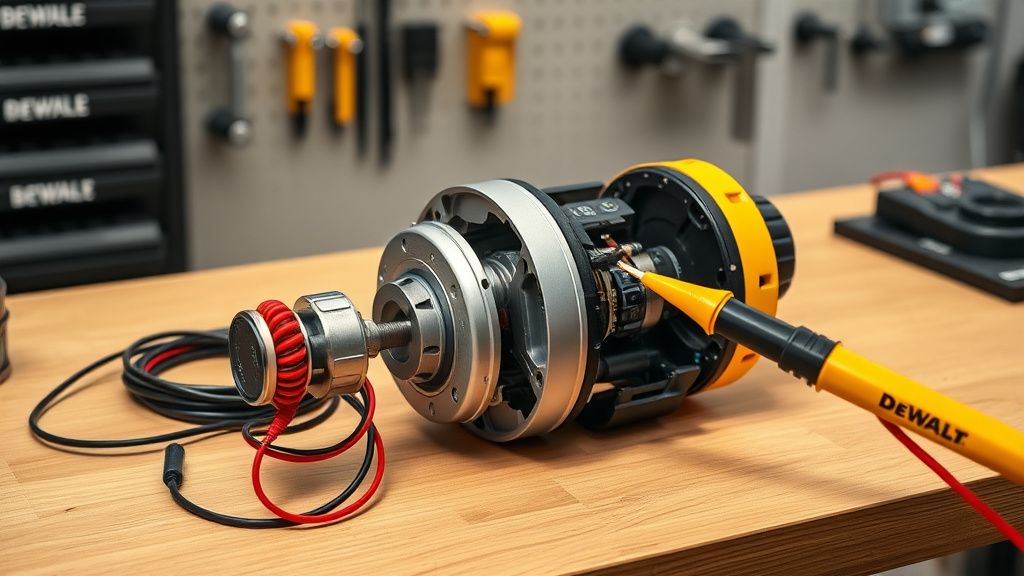
The debate between brushed and brushless systems often masks the true failure modes. Brushed tools (the older, "Legacy" 20V units) fail because of carbon brush wear. These are consumable parts. If your drill won't spin, remove the back cover; if you see excessive sparking or the brushes are shorter than 1/8th of an inch, your problem is solved.
Brushless motors, however, are effectively maintenance-free regarding the "commutation" process. They rely on hall-effect sensors to determine the rotor position. If these sensors get contaminated with metallic dust (common if you are drilling near metal shavings), the controller loses track of the rotor, and the motor will "stutter" or refuse to spin entirely to prevent a phase short.
The "Stuck Gear" Syndrome: Transmission Failures
Sometimes the motor is perfectly fine, but the planetary gear set is jammed. DeWalt drills utilize a multi-speed gear box that shifts under load. If you shift gears while the motor is still spinning—a common "user error"—you can partially engage two gears at once.
- The Symptom: You hear the motor whirring, but nothing rotates.
- The Reality: The internal clutch mechanism has slipped off its indexing pin. This requires a full teardown of the transmission housing, which is one of the most frustrating maintenance tasks due to the presence of high-tension springs and thick, sticky lithium-based grease.
Troubleshooting Workflow: Step-by-Step
If you are currently staring at a drill that won't spin, follow this analytical path before committing to a warranty claim or a trip to the repair shop.
- Isolation (The Battery Swap): Do not assume your primary battery is functional. Try it on a secondary tool. If it works, the issue is internal to the drill.
- Contact Sanitization: Use a Q-tip with 99% isopropyl alcohol or dedicated contact cleaner. Clean the battery terminals and the tool’s internal blades. Inspect for signs of blue-green corrosion (indicative of moisture exposure).
- The "Spin-Test": With the battery removed, manually rotate the chuck. Does it feel "notched" or does it offer smooth resistance? If it feels like it is grinding, your issue is mechanical (gearing), not electrical.
- Trigger Bypass Check (Advanced): If you are comfortable with a multimeter, check for continuity across the trigger leads. If the trigger is the culprit, you are looking at a $20–$30 replacement part rather than a $100+ motor assembly.
The Industry Controversy: "Planned Obsolescence" or Operational Hardship?
There is a persistent narrative on platforms like Hacker News and various trade forums that modern power tools have shorter lifespans than their 1990s counterparts. The reality is that we are asking these tools to do significantly more work. A 20V Max drill is expected to do the work of a corded drill from twenty years ago while being significantly lighter and more compact.
This power-to-weight ratio creates a trade-off. The components are packed tighter, heat dissipation is more difficult, and the electronics are more sensitive to voltage spikes. When a user forces a 20V drill to drive a 6-inch lag bolt into green oak, the tool is running at the absolute edge of its thermal envelope. The "failure" you experience is often the machine preventing you from destroying the battery pack or the internal windings.
Maintenance Strategies for Longevity
To prevent future "no-spin" events, integrate these habits into your workflow:
- Blow it out: Use compressed air on your vents after every project, especially if you have been cutting masonry or wood.
- Avoid the "Pulse" approach: Don't hammer the trigger on and off to "force" a screw. This creates massive current surges that strain the ESC and the switch.
- Storage Matters: Never store your tools in a damp environment. Moisture is the silent killer of the delicate copper traces on the drill's control board.
Frequently Asked Questions
Why does my drill hum but the motor won't turn?
A humming motor usually indicates that the electronic controller is receiving power, but the motor is either jammed mechanically or there is a phase-short in the wiring. Before assuming the motor is dead, manually rotate the chuck to ensure the transmission isn't seized in a neutral gear position.
Is a brushless motor repairable if it stops spinning?
Generally, no. Brushless motors are hermetically sealed units. If the internal windings are fried or the hall-effect sensors have failed, the standard repair procedure is to replace the entire motor and controller module as a single assembly.
My drill works in reverse but not forward. Is the motor broken?
This is a classic sign of a faulty forward/reverse switch (the mechanical toggle above the trigger). If the internal electrical path for the forward polarity is damaged or oxidized, the tool will refuse to spin in that direction while functioning perfectly in reverse.
How do I know if the battery or the drill is the problem?
Use a multimeter to check the voltage at the tool’s terminals. If you pull the trigger and the voltage drops to near zero, the battery BMS is tripping due to a short. If the voltage stays steady at 18-20V, the problem is definitively inside the tool housing.
Are generic "replacement" triggers safe to use?
Proceed with caution. Generic replacements often lack the specific heat-sink capability of OEM DeWalt triggers. Installing a low-quality switch can lead to a fire hazard or destroy the ESC, causing a more expensive repair bill than if you had simply purchased the authentic replacement part.
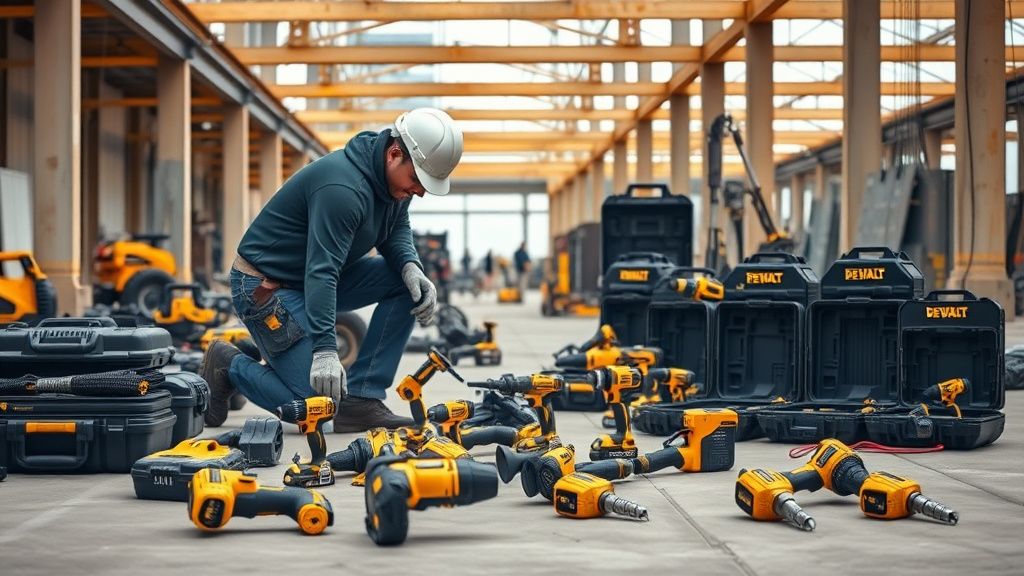
The Reality of Repairability in the 20V Ecosystem
Ultimately, the DeWalt 20V Max drill is designed as a modular system, which is a blessing for the DIY enthusiast. Unlike many modern consumer electronics that are glued shut, DeWalt drills are held together by standard T-10 or T-15 Torx screws. This modularity suggests that the manufacturer intends for these tools to be serviceable. However, the lack of official, detailed schematics for the internal controller boards often frustrates those who want to perform component-level repairs.
If you find yourself deep in the weeds of a repair, remember the principle of least resistance: always check the connections, then the mechanical transmission, and finally the electronics. Don't be the user who buys a new drill because they didn't check if their battery contacts were just covered in drywall dust. The tool is often more capable than we give it credit for; it just requires an occasional "reset" through proper maintenance and, quite frankly, a little bit of patience. When the motor refuses to spin, don't view it as the end of the tool's life—view it as the beginning of an investigation into how that specific power system has been utilized under load.