
To build a high-margin energy retrofit business focusing on legacy HVAC systems, you must move beyond simple "install and forget" hardware models, much like the precision required when you build a high-margin business restoring mechanical keyboards. Success hinges on a recurring revenue model built on granular data analytics, similar to how agencies are scaling an AI automation agency by mastering complex system integrations.

The Reality of Legacy Infrastructure: The "Dark" HVAC Problem
Most legacy buildings—those constructed between 1980 and 2010—operate in what engineers call "blind mode." They have mechanical systems that are physically sound but functionally archaic. You aren't just selling sensors; you are selling the illumination of this darkness.
The core challenge isn't technical; it's operational friction. When you walk into a mechanical room, you aren't greeted by a clean, documented rack of servers. You are greeted by frayed wiring, proprietary RS-485 protocols that haven't seen a firmware update since the Bush administration, and facility managers who view your "smart" solution as a potential threat to the stability of their already fragile, held-together-with-tape systems.
The "Workaround" Economy: Experienced techs often rely on "hardware translation" layers (like Modbus to BACnet gateways). You will spend 40% of your time trying to get data out of a system that was never intended to share it. If you build your business model assuming plug-and-play installation, you will fail, just as any founder ignoring the need to automate business finances for 2026 is doomed to operational inefficiency. Your margins are found in the customization of these data bridges.
Scaling the "Sensor-as-a-Service" Model
High-margin businesses in this space are moving away from one-off equipment sales, a pivot mirrored by those who have discovered how royalty-backed assets are changing passive wealth creation. The equipment is a loss leader or a break-even point. The margin resides in the 36-month subscription for the analytics dashboard that turns raw MQTT streams into actionable maintenance alerts.
- Avoid the "Alert Fatigue" Trap: If your dashboard sends a notification for every minor deviation, your client will mute the app within a week. High-margin services focus on predictive failure—identifying a bearing that’s vibrating outside of its harmonic baseline before the motor burns out.
- The Interoperability Nightmare: Be prepared for the fragmentation of communication protocols. You will deal with BACnet IP, MSTP, LonWorks, and proprietary manufacturer-specific languages. If you don't have an in-house firmware engineer who can write custom parsers for these "zombie protocols," your scaling efforts will hit a hard wall.
Real Field Report: The "Sensor Drift" Crisis
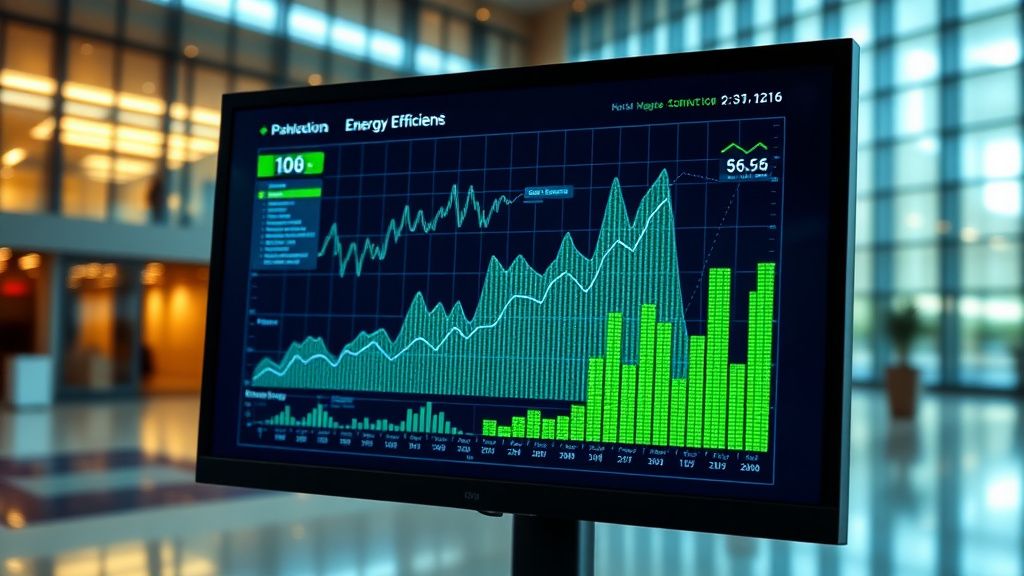
Last year, a mid-sized retrofit firm in Chicago attempted a rollout of low-cost environmental sensors across 20 office floors. The promise was "plug-and-play" energy optimization. Within three months, the system reported a 15% efficiency gain. By month six, the system began flagging catastrophic failures that didn't exist.
The Diagnosis: The sensors were non-calibrated mass-market units. Over time, heat soak from the ductwork caused the thermistors to drift. The algorithm, assuming the data was "ground truth," started throttling the chilled water valves, leading to hot/cold complaints from tenants. The business had to spend $40,000 in labor to swap out the units and fix the reputations.
The Lesson: Never trust the hardware out of the box. In this business, "precision" is your only currency. If you aren't performing a secondary calibration check using certified handheld tools before permanent mounting, you are building your business on a lie.
Addressing the Human Element and Institutional Resistance
You aren't just selling to the building owner; you are selling to the onsite maintenance staff. They are your greatest allies or your most effective saboteurs. If they perceive their role is being replaced by automation—a common fear during the 2026 AI employment crisis—they may actively sabotage your implementation. your sensor network as a tool for "monitoring their performance," they will find ways to ensure the sensors fail—often by "accidentally" bumping them or covering them with dust-laden tape.
- The In-App Reward System: High-margin retrofitters create dashboards for the maintenance staff that make their jobs easier, not harder. If a sensor points out exactly which actuator is failing, the technician looks like a hero to the landlord. You must align your data with their workflow.
- The Trust Gap: Years of "smart building" promises have left facility managers jaded. They’ve seen expensive, proprietary systems get abandoned after the sales team disappears. Prove your longevity by being transparent about your tech stack. Use open APIs. Let them know they aren't being locked into a walled garden.

The Economics of Retrofitting: Beyond "Energy Savings"
Don't anchor your sales pitch solely on "reducing electricity bills." In many markets, the ROI for energy savings alone is 5–7 years, which is too long for most modern capital expenditure cycles.
- The Pivot to Asset Longevity: Shift the pitch to "Capital Deferral." If your sensors prevent a $50,000 chiller replacement by extending the life of the compressor through predictive maintenance, you have just saved the client a massive expenditure.
- The Regulatory Hedge: Cities are increasingly passing "Building Performance Standards" (BPS). Use this. Your sensors become the compliance engine for city-mandated carbon reporting. You are no longer an "energy-saving gadget"; you are an "insurance policy against regulatory fines."
Counter-Criticism and Industry Debate
The "Smart Sensor" hype cycle is currently under heavy scrutiny from engineers who argue that more data is not always better data.
- The "Data Overload" Critique: Critics argue that retrofitting legacy HVAC with thousands of sensors creates a "noise floor" that obscures real problems. If you have 500 sensors, you have 500 potential points of failure. Are you spending more time maintaining your sensors than the HVAC equipment they were meant to monitor?
- Privacy Concerns: In commercial settings, occupancy sensors (often used to optimize airflow) raise privacy eyebrows. If you track where employees move throughout the day, expect the HR department to intervene. Your business must have a rock-solid, audited data-privacy policy, or you will be kicked out of the building.
Scaling Challenges: The "Support Nightmare"
Scaling this business means moving from "technician-as-installer" to "remote-monitoring-as-a-service."
- The Connectivity Friction: Do not rely on client Wi-Fi. It is the bane of the industry. It’s unstable, segmented by IT for security, and constantly changing. Use cellular (LTE-M or NB-IoT) gateways as your standard. If you rely on the building’s network, your support tickets will be dominated by "system offline" errors, which are entirely outside of your control and impossible to bill for.
- The API Paradox: If you want to integrate with legacy BMS (like Tridium or Metasys), you are entering a world of licensing fees and "integration partner" hurdles. You will need to account for these costs in your margin.
Final Recommendations for Long-Term Success
- Own the Data Pipeline: Do not rely on third-party black-box analytics platforms. If you lose control of the dashboard, you lose the customer relationship.
- Standardize the Hardware: Pick one manufacturer and learn every single failure mode of their sensors. Do not try to offer a "custom hardware" catalog; your inventory will become a liability.
- The "Fail-Safe" Default: Always design your system so that if the sensor network goes offline, the HVAC system defaults to its local, hard-coded logic. Never allow your "smart" layer to be the single point of failure that prevents heating in the middle of winter.