
The mechanical keyboard niche has morphed from a hobbyist subculture into a high-stakes ecosystem of premium hardware. Today, a custom-built board can cost upwards of $800, and as the value proposition of these devices rises, so does the demand for specialized restoration. Liquid damage—the silent killer of tactile switches and complex PCB matrices—represents one of the few repair verticals that commands premium pricing, largely because it is a "high-anxiety" service. Clients aren't paying you for the parts; they are paying for the retrieval of their irreplaceable artisan keycaps, custom-lubed switches, and the psychological relief of saving a sentimental piece of hardware.
The Anatomy of the Damage: Beyond the Surface
When a customer spills soda, coffee, or even plain water into a mechanical keyboard, the disaster is rarely instantaneous. Unlike a laptop that might short-circuit immediately, a keyboard often continues to function in a degraded state for days or weeks. This is the "corrosion window," and it is where the majority of repair shops fail.
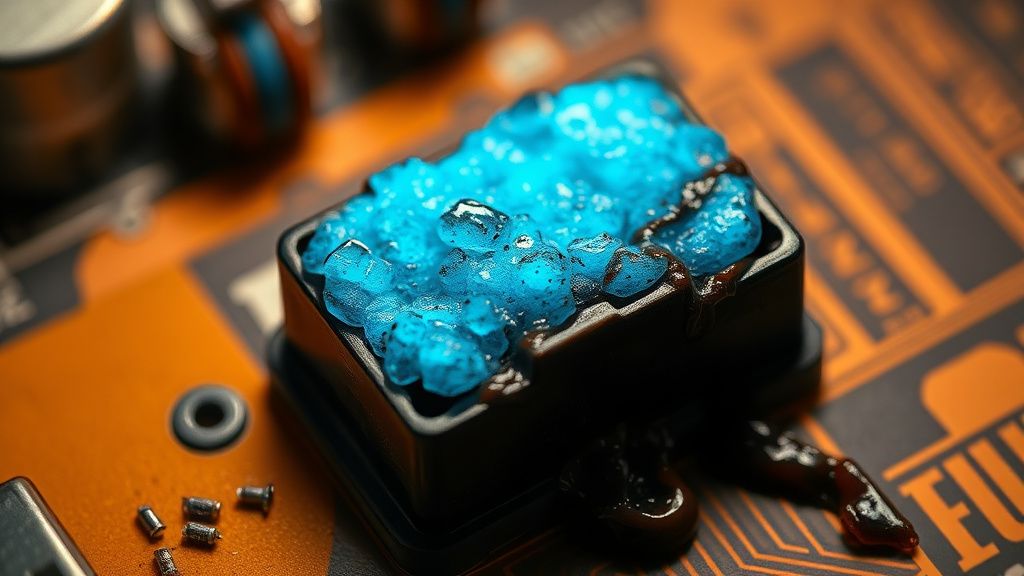
Liquid enters through the gap between keycaps. Once it hits the plate, it wicks down the switch stems. Because most mechanical switches use a leaf-spring mechanism for actuation, a single drop of sugary liquid can turn into a sticky, conductive trap. Over time, the electrolyte-rich fluid creates a bridge between the pins on the PCB, leading to phantom keystrokes, key chatter, or complete row/column failure in the matrix.
The Operational Reality: Why Most Shops Fail
To turn this into a high-margin business, you must move away from the "swap and pray" mentality. Most generic repair shops treat keyboard repair as a component-swapping game, failing to see the value in niche service—a mistake similar to the one companies make when they ignore how to turn proprietary data into a recurring revenue stream. If the switch is broken, they desolder it and put in a new one. This is a losing strategy. In a high-end mechanical keyboard, the switches are often hand-lubed and filmed. Replacing them with stock equivalents ruins the user's specific "feel" and destroys the value of the board.
Your business model should revolve around ultrasonic restoration and microscopic trace repair.
- Diagnostic Friction: Users often misdiagnose the problem. They might think their PCB is fried, but they actually have a faulty daughterboard (JST connector) or a bridged capacitor. Your primary diagnostic tool should not be a multimeter alone, but a logic analyzer to map the matrix failure.
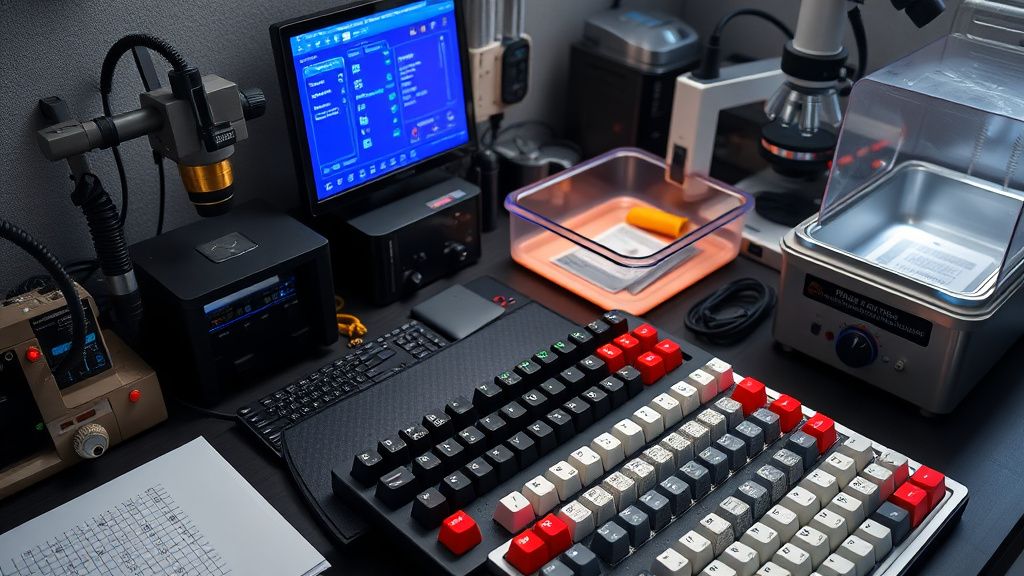
- The "No-Clean" Fallacy: Never assume the board is clean just because it looks dry. Liquid leaves conductive salts behind. An ultrasonic cleaner filled with high-grade isopropyl alcohol or specialized electronics cleaning solution is not optional. It is the core asset of your business.
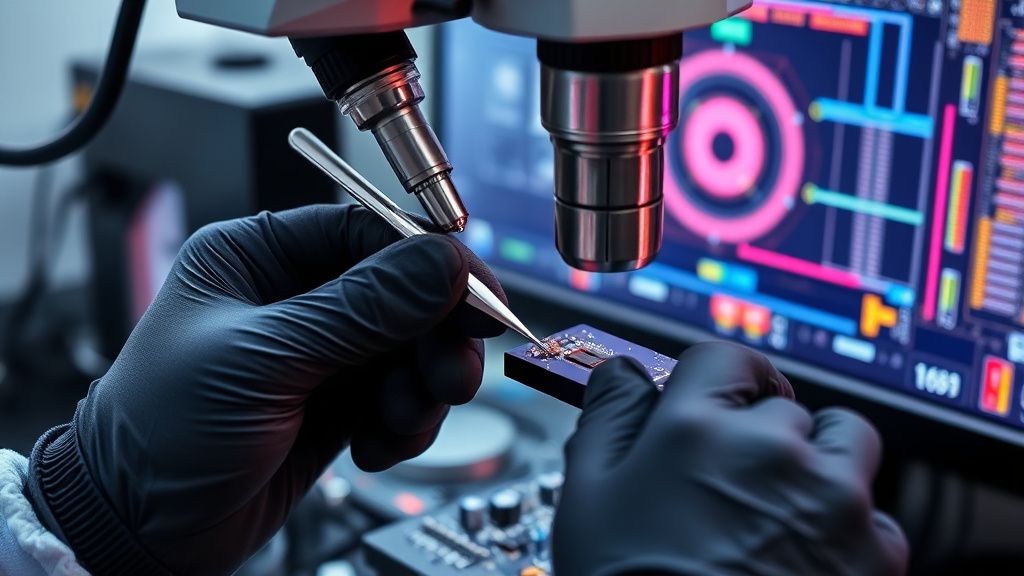
- Liability and Expectation Management: Mechanical keyboards are modular, but they are also fragile. You must document the board's condition under magnification before touching a single screw. One slip of a soldering iron on a $400 CNC-machined brass plate can cost you more than the repair bill.
Scaling the Workflow: The Assembly Line of Restoration
To maintain high margins, your throughput must be efficient. You cannot spend 10 hours on a single repair. Develop a "Tiered Restoration" menu:
- Tier 1 (Surface Cleaning): For spills that haven't hit the PCB. Includes switch housing cleaning and ultrasonic cleaning of the plate.
- Tier 2 (Logic Repair): Focuses on trace reconstruction and SMD (Surface Mount Device) component replacement.
- Tier 3 (Total Reconstruction): For boards that have suffered severe oxidation, requiring complete desoldering, switch disassembly/cleaning, and re-lubrication.
Counter-Criticism and The "Gatekeeping" Debate
If you spend time on r/MechanicalKeyboards or various Discord servers, you will encounter the "Repair vs. Replace" debate. Purists often argue that a board affected by liquid damage will never be the same and that the reliability of a corroded PCB is permanently compromised.
They aren't entirely wrong. Electrolytic corrosion is insidious. If you don't remove 100% of the oxidization, it will return. There are documented cases—found in abandoned GitHub issues for custom PCB projects—where repair shops "fixed" boards by simply bypassing a broken trace with a jumper wire, only for the board to fail again three months later due to latent corrosion in the vias.
The Lesson: Your reputation is built on transparency. If a board is too far gone, don't take the money. High-margin businesses are built on trust. If you successfully restore a board that another shop labeled "dead," you gain a customer for life who will market your services to their entire community.
Technical Challenges: The "Ghost" Problems
You will inevitably face the "ghost key" issue. This occurs when liquid creates a high-resistance bridge between two points in the matrix, causing the processor to think two keys were pressed when only one was.
- The Workaround: Don't just clean the top of the PCB. You must clean under the hot-swap sockets or the switches themselves. If you are dealing with a soldered board, the only way to ensure success is to desolder every suspect switch. Yes, it’s tedious. Yes, it’s where your profit margin can shrink if you don't use professional desoldering stations (like an HAKKO FR-301).
Marketing to the "Enthusiast" Persona
You aren't selling repair; you are selling preservation. Your marketing should reflect this. Avoid language like "we fix keyboards." Instead, use "Precision Restoration for Custom Peripherals."
Engage with the community by posting high-quality "before and after" photos. Reddit's r/MechanicalKeyboards or GeekHack are not places for ads—they are places for proof. Post a time-lapse of a PCB coming out of an ultrasonic cleaner or a video of you repairing a torn trace on a $600 board. The community values transparency and technical competence above all else.
Economic Realities and Pitfalls
- Parts Procurement: You cannot source custom PCBs from Amazon. You need to develop a network of donor boards or learn how to source compatible microcontrollers (usually STM32 or ATmega series).
- Turnaround Time (TAT) Pressures: Customers will push you for speed. Do not rush. Liquid damage restoration requires a "burn-in" period. After cleaning and repair, the board should sit for 48 hours to ensure no short circuits develop as humidity changes. If you skip this, you will have "come-backs," and come-backs are the death of margin.
- The "Custom Firmware" Variable: Many high-end boards run on QMK or ZMK. If the controller chip is damaged, you don't just need to fix the hardware—you need to flash the firmware. You must have the ability to re-flash and re-map the matrix, or your "repaired" keyboard will function like a paperweight.
Addressing Failures: When Things Go Wrong
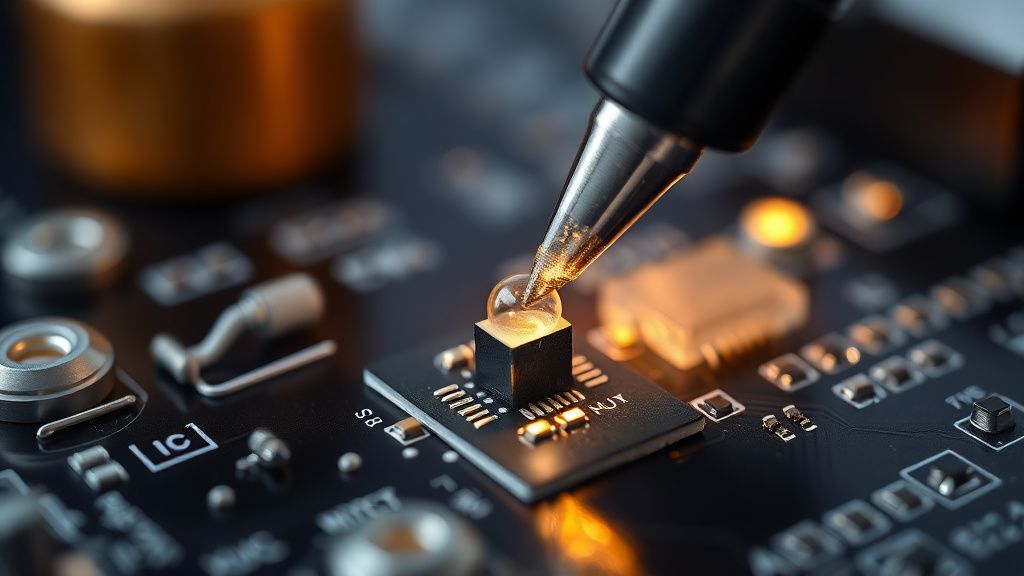
Even the best technicians experience "board death." Maybe a trace was too thin and lifted off the substrate, or a controller chip failed under heat stress. How you handle these failures defines your business.
- The Policy of "No Fix, No Fee": While some shops charge a diagnostic fee, a high-margin model often benefits from a flat-rate structure where you only charge if the board is restored to 100% functionality. This lowers the entry barrier for the customer and forces you to be honest about your capabilities.
- Documentation as Defense: Always record the serial numbers and take photos of the PCB's condition upon arrival. There have been incidents in the repair industry where customers blame the technician for a failure that was actually pre-existing. Protect yourself with a simple "Intake Form" that the customer must sign.
The Future of the Niche
As the mechanical keyboard market shifts toward "hot-swap everything" and away from solder-heavy designs, the nature of your repair work will shift toward PCB matrix analysis and switch housing restoration. The entry of mainstream brands (Logitech, Razer, Corsair) into the mechanical space means the volume of boards will increase, but the prestige of the repairs will remain with the boutique customs.
Focus on the boutique segment. The guy who owns a $1,000 Keycult keyboard will pay $150 for a professional restoration without blinking. The guy who owns a $50 entry-level board is not your customer.
How do I estimate the repair cost for liquid damage?
Use a tiered pricing model. Tier 1 (Light spill) at a flat base rate, Tier 2 (Logic/Trace repair) at an hourly rate or flat fee, and Tier 3 (Full reconstruct) as a premium service. Always add a "parts-only" surcharge if the PCB needs a new microcontroller.
Is ultrasonic cleaning safe for all mechanical keyboard PCBs?
Generally yes, provided you remove the microcontroller (if it's not soldered/is sensitive) and use a high-quality, non-conductive electronic cleaning solution. Always ensure a 24-hour drying period using a forced-air setup. Never leave a board in a bath for more than 5-10 minutes.
What is the biggest mistake newcomers make?
Underestimating the "sticky switch" problem. You can fix the PCB, but if the switch stems are still coated in dried soda, the board will feel terrible. You must either clean the switches individually or replace them, which is why your initial quote must be clear about whether you are including "Switch Restoration" or just "PCB Restoration."
Do I need a Class 100 cleanroom to do this?
No. You need an anti-static (ESD) safe environment. A clean, well-lit workbench with a grounding mat and wrist strap is sufficient. The "cleanroom" aesthetic is just marketing; the "cleanliness of your technique" is the reality.
How do I handle customers who try to "fix" it with a hair dryer?
Most customers will try this. When they do, they usually melt the keycaps or push the liquid deeper into the switch stems. Add a "DIY Attempt" surcharge to your intake form; fixing a heat-damaged board is significantly harder than fixing a simple liquid spill. Always ask "Have you attempted any repairs?" during the intake process.
Is it possible to scale this business?
Scaling is difficult because this is a highly skilled labor vertical. You can scale by creating standardized SOPs (Standard Operating Procedures) for desoldering and cleaning. Hire for attention to detail, not for speed. A slow, perfect technician is an asset; a fast, sloppy one is a liability that will destroy your reputation.