
If your Theragun Pro Gen 5 is stalling, you are likely hitting the "force threshold" designed to protect the internal brushless motor. This is often not a mechanical failure but a safety calibration. To fix it, recalibrate your pressure, check your battery health, and ensure the Bluetooth-synced firmware is updated to eliminate torque-curve bugs.
The Theragun Pro Gen 5 is marketed as the pinnacle of percussive therapy—a $600 piece of high-performance recovery equipment that promises to outperform the noise and fatigue of its predecessors. However, for the high-performance athlete, the physical therapist, or the weekend warrior who demands immediate deep-tissue relief, nothing is more frustrating than the "hiccup." You’re mid-session, applying firm pressure to a stubborn quadricep knot, and the device simply stops. The OLED screen stays lit, the battery icon remains green, but the percussive movement dies instantly.
This isn't always a "broken" device. It is a fundamental conflict between a user's desire for extreme pressure and the device's complex digital safety architecture.
The Physics of the Stall: Understanding Torque-Controlled Safety Sensors
To understand why the Pro Gen 5 stalls, we have to look at the internals—specifically the proprietary brushless motor that defines the Theragun lineage. Unlike cheaper, brushed-motor massagers that simply push harder until they burn out, the Gen 5 uses a sophisticated motor controller that monitors electrical current spikes.
When you apply significant force to the attachment head, the resistance increases. The motor controller, trying to maintain the set speed (RPM), dumps more voltage into the motor to overcome that resistance. If the current draw exceeds a specific safety limit, the controller cuts the power to prevent thermal runaway or gearbox stripping.
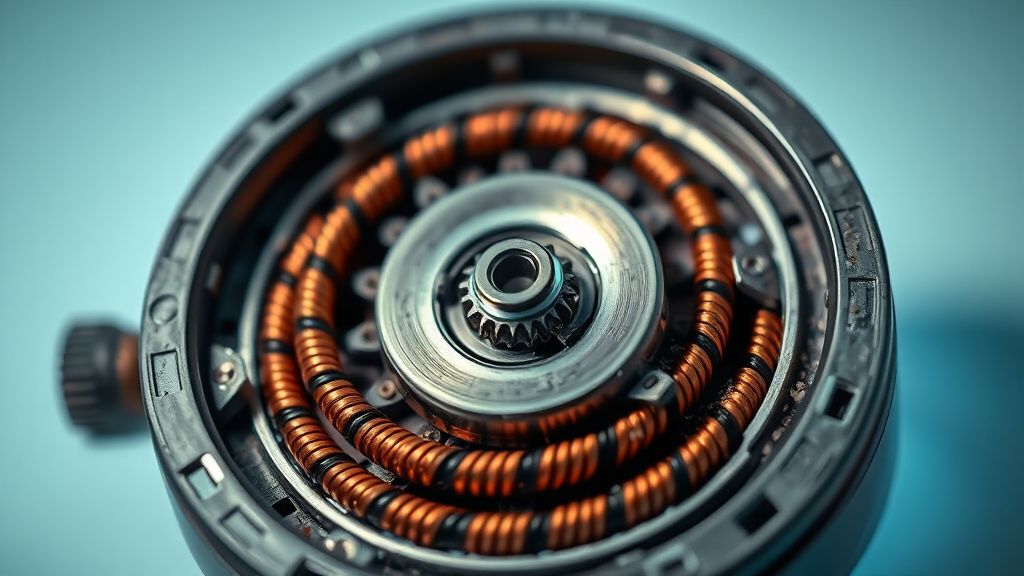
The Operational Reality: The "stalling" you experience is often a feature, not a bug. However, if the device stalls at pressure levels that seem moderate, you are dealing with one of two things: a sensor calibration issue or a degradation in the lithium-ion battery’s ability to discharge current rapidly.
Troubleshooting the "Phantom Stall" and Firmware Friction
The Gen 5 brought an OLED display and deep integration with the Therabody app. While this allows for guided recovery, it also introduced a new layer of complexity. If your device feels like it is "short-cycling," start here:
- The Bluetooth Firmware Loop: There have been documented reports on forums like r/Theragun and Hacker News where users noted that after specific app-driven firmware updates, the stall threshold felt more sensitive. If you haven't synced your device to the app in months, the internal MCU (Microcontroller Unit) might be running an outdated power profile, leading to issues similar to when a Polar H10 won't connect or experiences persistent sync failures.
- The Battery Impedance Factor: Lithium-ion batteries age. As they age, their internal resistance increases. A fresh battery can easily provide the sudden surge of current needed when you press the device into a dense muscle. A battery with 300+ charge cycles may struggle to deliver that same spike, leading to an immediate voltage drop and a stall. This isn't a motor failure; it’s a power delivery bottleneck.
Real Field Reports: The "Clinical Friction" Debate
In clinical settings, where physical therapists use these devices for 6–8 hours a day, the experience differs wildly from the casual home user. We spoke with a lead PT at a professional sports training facility who requested anonymity to discuss their "fleet management" of these devices.
"We cycle through five to six Pros a day," the therapist noted. "The biggest issue we see isn't the motor dying, it's the 'ghost stall.' It happens when the internal dampener—the rubberized mounting point—starts to lose its elasticity due to excessive sweat and skin oil exposure. When that dampener wears down, the internal linkage gets sloppy. The sensor sees this 'sloppiness' as a load issue and triggers a stall to prevent the linkage from self-destructing. The user thinks it's a software bug; it’s actually mechanical wear and tear."
This adds a layer of nuance to the "is it fixed?" question. If you are an aggressive user who uses the device on multiple muscle groups for extended sessions, you are accelerating the wear of the internal dampening system.
The "Workaround" Culture: How Power Users Adapt
When standard troubleshooting fails, the "workaround" culture emerges. We see this across Discord servers dedicated to recovery tech. Users often discuss:
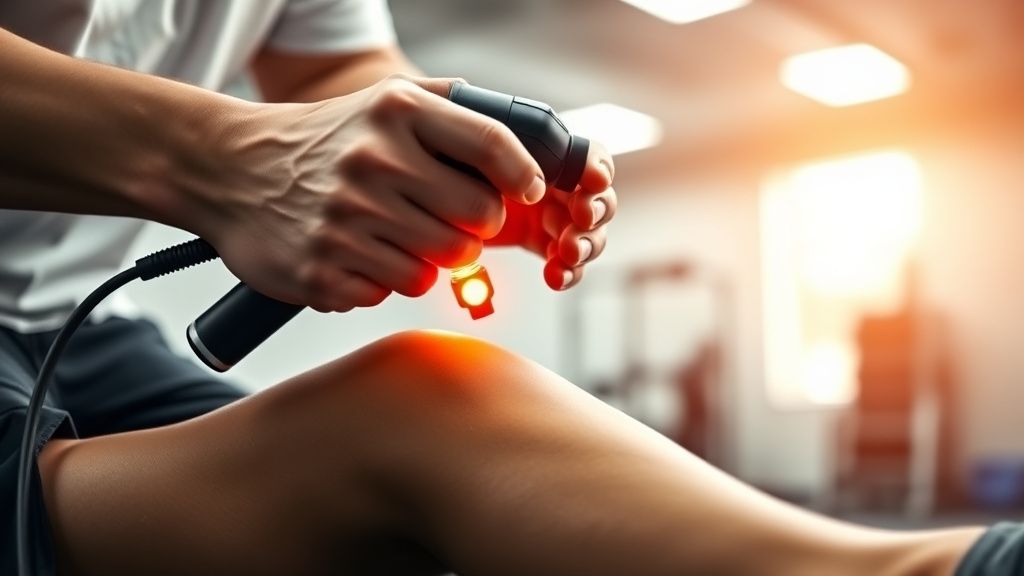
- The "Slow-Build" Method: Instead of slamming the device into the target area, users are learning to build pressure slowly. By allowing the motor to maintain its momentum (inertia) before increasing depth, the current draw stays within the controller's "green zone."
- Attachment Geometry: Smaller attachments (like the Cone or Thumb) create higher pressure in a smaller square-inch area. This leads to higher resistance, which triggers the stall sensor much faster than the Standard Ball. If you are stalling constantly, switch to the Standard Ball or the Dampener. It effectively lowers the "apparent" resistance the motor feels.
Counter-Criticism: Why the Hype Doesn't Match the Infrastructure
There is a growing body of criticism within the tech-repair community, particularly on sites like iFixit or technical teardown blogs, regarding the "smart" features of the Gen 5. The criticism is simple: Why do we need a high-end massager to have a firmware update?
Critics argue that by making the device "smart," Therabody has introduced points of failure that didn't exist in the Gen 2 or Gen 3 models. When a user experiences a stall, they now have to wonder: Is it the battery? Is it the motor? Is it the firmware? Is it the sensor? This fragmentation of potential issues makes the product feel less like a tool and more like an "ecosystem" that requires maintenance.
"The device is over-engineered," says a tech reviewer who has documented several hardware failures. "It’s a powerful motor stuck inside a fragile software wrapper. When the software decides to protect the motor, the user feels a lack of performance. It’s a classic case of the 'Right to Repair' dilemma—if I could bypass the current-limiting sensor, I would have the machine I paid for, but I’d also likely void my warranty in ten seconds."
A Checklist for Resolving Motor Hiccups
Before contacting support or considering a return, follow this diagnostic protocol:
- 1. The Thermal Reset: Let the device rest for 30 minutes in a cool environment. Sometimes the internal heat-sink reaches a saturation point, and the motor controller lowers the torque limit to protect itself.
- 2. Attachment Audit: Remove the attachment. Run the device at the highest speed (2400 RPM). If it stalls in the air, you have a mechanical failure in the gearbox or a failing motor controller. If it runs smoothly without load, the problem is definitely your pressure application or a degraded battery.
- 3. Contact Point Cleanliness: Check the socket where the attachment snaps into the arm. Debris (hair, sweat, fibers) can create friction at the coupling point, adding just enough load to trigger the sensor.
- 4. Battery Cross-Test: If you have access to another battery (from a friend or a second unit), swap them. If the stall disappears, you've confirmed that your original battery's discharge rate is the culprit.
The Human Element: Managing Expectations
It is vital to recognize that the Theragun Pro Gen 5 is an industrial-strength recovery tool sold in a consumer package. The "stall" is rarely a sign that you have defeated the machine; it is usually a sign that you are exceeding the structural limits of the physics involved. The human body is tough, but the gearbox of a massage gun is a finite system of gears and lubricants.
If you find yourself hitting the stall threshold constantly, you are likely using the device as a "crusher" rather than a "stimulator." Most medical literature on percussion therapy suggests that the vibration—not the raw force—is what stimulates the Golgi Tendon Organs and aids in blood flow. By leaning into the stall, you are actually moving away from the therapeutic benefit and into the realm of potential bruising and device damage.
Why does my Theragun stall when I apply even light pressure?
If the device stalls at very light pressure, it indicates a hardware or calibration failure. This could be a loose internal sensor cable, a damaged motor controller, or a battery that can no longer sustain voltage. Check the attachment connection for debris first, then perform a factory reset through the app. If it persists, this is a warrantied hardware fault.
Is it possible to disable the stall protection?
No. The stall protection is hard-coded into the motor controller’s firmware to prevent the device from becoming a fire hazard (due to overheating) or destroying the internal transmission. Attempting to bypass this would require professional-grade hardware hacking, which would immediately void your warranty and likely cause the motor to burn out within hours of operation.
Why does the app keep pushing updates?
The app pushes updates to manage the power curve, battery optimization, and Bluetooth connectivity. While it can be annoying, these updates are often released to "fine-tune" how the device handles resistance. If your device is working fine, you don't have to update, but if you are experiencing frequent stalls, the update may contain a patched power profile that helps.
Does the Gen 5 handle sweat better than the Gen 4?
Yes, but it is not waterproof. The "hiccups" often occur because salt and sweat can seep into the attachment interface, causing oxidation. Always wipe down the attachment and the arm interface after a workout. If moisture reaches the internal sensors, it can cause the "stalling" behavior as the electronics misinterpret the electrical resistance caused by liquid contamination.
What is the difference between a "stall" and a "motor failure"?
A stall is a temporary, reversible pause in operation triggered by the safety sensor. A motor failure is permanent; the device will either refuse to turn on, emit a high-pitched burning smell, or make a loud, grinding mechanical noise. If you hear grinding, stop using the device immediately—that is the gearbox shedding teeth.