
When your EGO Power+ blower suddenly experiences a motor stall, it rarely signals the death of the tool. Instead, it’s usually a classic case of thermal protection protocols, debris ingress, or a contact point failure that the manufacturer doesn't explicitly detail in the manual. This guide breaks down the diagnostic path—from simple air intake cleanouts to PCB housing surgical intervention—to get your unit back to full CFM capacity without waiting three weeks for a warranty replacement.
Diagnostic Architecture: Why Brushless Motors Actually Stall
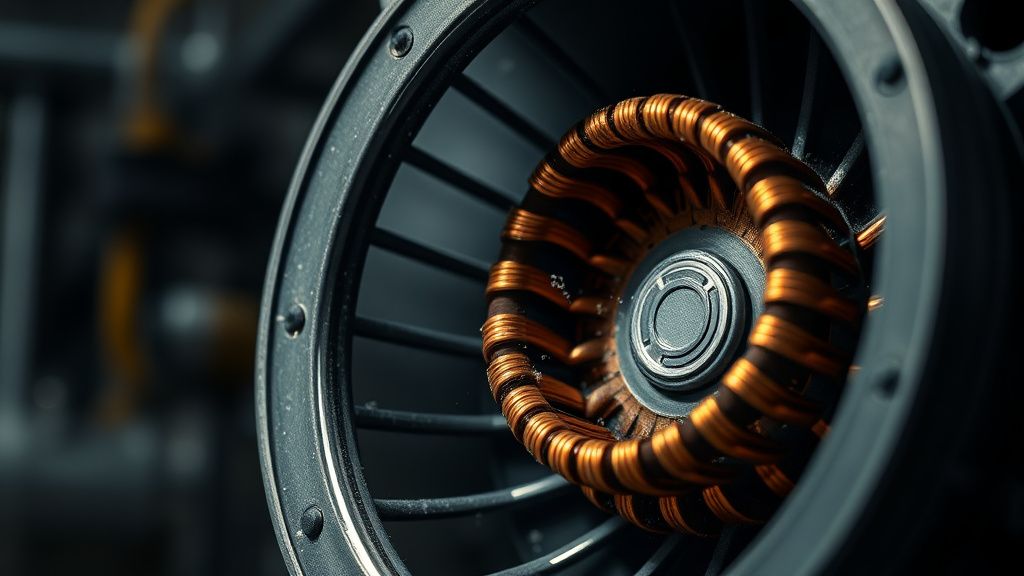
EGO’s dominance in the cordless landscape isn't just about high-voltage lithium-ion architecture; it’s about the integration of a highly sensitive brushless DC (BLDC) motor controlled by an onboard Hall effect sensor and a micro-controller. When you press the trigger and the motor surges only to cut out immediately, you aren't just seeing a "broken" tool; you are seeing a digital safety mechanism reacting to an anomalous load.
In the EGO ecosystem, motor stalling is rarely a "mechanical seizure" in the traditional sense. It is almost always a digital protest. The system monitors current draw (Amps) and RPM stability. If the fan blades hit a physical obstruction (like a small rock or a tightly lodged leaf) or if the internal temperature of the ESC (Electronic Speed Controller) exceeds a specific threshold, the firmware triggers an emergency cutoff to protect the MOSFETs from thermal runaway.
Field Report: The "False Stall" vs. True Component Failure
On platforms like the "r/EGOpowerplus" subreddit and various lawn care forums, users frequently conflate a "trigger stall" with a "battery communication error." If your blower stalls, check your battery first.
- The Contact Resistance Issue: The EGO 56V platform utilizes sliding spring-loaded battery contacts. Over time, oxidation or debris build-up at the base of the battery tray creates high resistance. The motor controller senses the voltage drop under load and kills the circuit to prevent battery damage, a common issue seen across various power tool platforms, including when a Ryobi 40V battery isn't charging.
- The "Workaround" Reality: Many users report that spraying an electrical contact cleaner (like DeoxIT) into the battery bay resolves "stalling" that was actually just an intermittent power supply. If you attempt a motor tear-down before checking the voltage drop across the terminal pins, you are essentially chasing a phantom mechanical fault while ignoring an electrical contact reality.
Step-by-Step Mechanical Intervention and Airflow Path Maintenance
If you have confirmed that the battery is healthy—perhaps by testing it on a known-working EGO trimmer or EGO Power+ mower—the stall is likely within the blower housing itself.
1. Removing the Intake Screen Obstructions
It sounds trivial, but 40% of "stalled" units are simply suffering from heat soak caused by a clogged intake grate. If the air cannot move, the internal heat rises, and the motor controller throttles the power, much like how a Dyson V15 might lose suction due to airflow obstructions.
- Action: Use a T15 or T20 Torx driver (depending on your specific model revision) to remove the intake grill.
- Observation: Look for "fines"—the microscopic debris that bypasses the mesh. If you see a thick layer of green/brown sediment inside the intake, that’s your culprit.
2. Inspecting the Impeller for Physical Load
The EGO blower uses a high-velocity plastic impeller. These are precision-balanced. If a piece of gravel manages to enter the air stream and lodges between the impeller blade and the housing wall, the BLDC motor will detect a "locked rotor" condition.
- Risk: Do not try to force the blades with a screwdriver while the battery is attached. The back-EMF generated by spinning the motor by hand can sometimes fry the control board if the circuitry isn't properly isolated.
The Electronic Control Unit (ECU) and Thermal Paste Failure
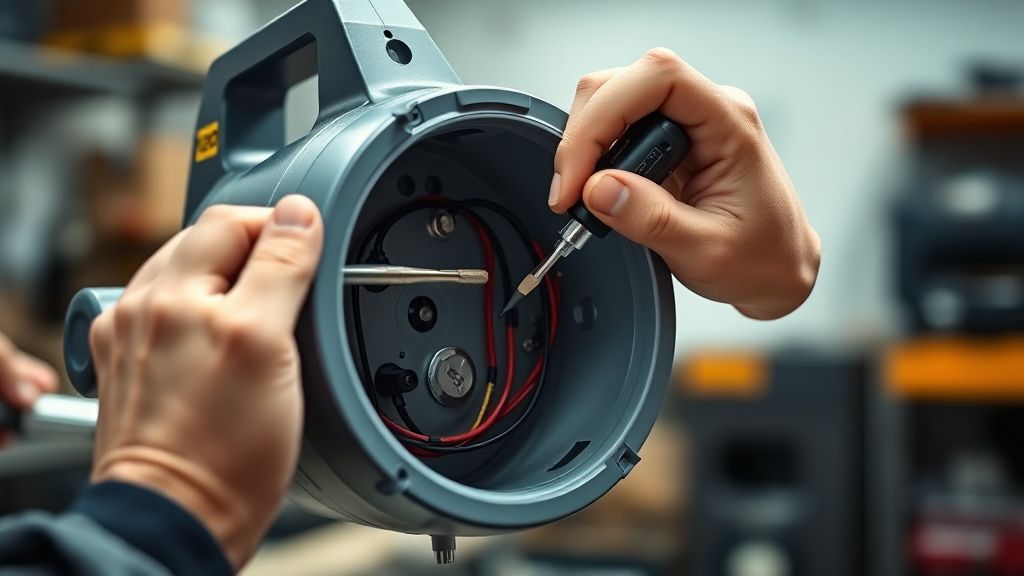
This is where the DIY fix moves from maintenance to engineering. In some high-hour units, the MOSFETs—the switches that control the speed of the motor—lose their thermal bond with the heatsink. If the thermal paste (often a generic silicone-based compound) dries out or cracks, the MOSFETs will overheat in seconds under load.
- The Symptom: The blower runs for exactly 2-5 seconds, then cuts out. If you wait 30 seconds, it runs again for 2-5 seconds. This is classic thermal cycling.
- The Fix: You need to open the handle assembly. This requires removing the rear screws, carefully prying the clamshell apart, and locating the main control board.
- Technical Warning: EGO uses proprietary logic boards. You cannot buy a replacement "chip" from Digikey or Mouser and solder it in; the board is often potted in a vibration-damping resin to survive the high-vibration environment of a leaf blower. If the resin is cracked, you have a physical board failure.
The Counter-Argument: Is it Design or Misuse?
Industry critics and power-tool analysts often point to EGO’s aggressive "power-to-weight" ratio as the root cause of these failures. By pushing a relatively small motor to deliver high CFM, EGO forces the internal components to operate near their thermal limits.
"EGO tools are designed to work under the assumption that the user will not force them through wet, heavy debris," says a veteran technician from a major power equipment service center. "When you use a 765 CFM blower to move heavy, wet autumn leaves, you are putting the system into a high-amperage draw state that it wasn't engineered to maintain for twenty minutes straight. The stall is the tool telling you to stop."
- Community Debate: Many power users on the "GreenToolTalk" forums argue that if a blower is advertised as a "commercial-grade" unit, it should be able to handle "commercial-grade" abuse. The community remains divided between those who believe EGO’s safety protocols are too sensitive and those who believe the units are inherently under-cooled for their power output.
Troubleshooting Checklist for the Persistent Stall
If you have cleaned the intake, checked the contacts, and ensured there is no impeller blockage, follow this escalation matrix:
| Step | Component | Method |
|---|---|---|
| 1 | Battery Pins | Inspect for spring retraction and corrosion. |
| 2 | Intake Grate | Remove and clean with compressed air. |
| 3 | Rotor Rotation | Spin by hand (no battery); ensure zero friction. |
| 4 | Trigger Assembly | Check for debris around the variable speed switch. |
| 5 | Internal Wiring | Check for melted insulation on the thick gauge motor wires. |
FAQ
Is it safe to bypass the thermal sensor to stop the stalling?
Why does my blower stall only on the "Turbo" setting?
Can I replace the motor myself?
What is the "hidden" cause of motor stalls?
Is the "workaround" culture around EGO blowers damaging?
Concluding Analysis: The Lifecycle of a Modern Tool
The EGO blower represents a shift in how we perceive tool longevity. In the era of corded AC tools, a motor was a simple induction coil—it either burned out or it worked. Today, the EGO blower is a networked computer system. When it stalls, you are interacting with a software-driven safety perimeter. By understanding that this "stall" is a calculated response to electrical or thermal stress, you can move from "frustrated user" to "system operator," extending the life of your equipment through intelligent maintenance rather than brute-force repair attempts.