
If your Dyson V15 Detect is losing suction, it is almost never a motor failure; it is a breakdown in airflow management. The fix is usually a 10-minute maintenance cycle involving the HEPA filter, the bin cyclone seals, and the primary brush head roller. Forget complex diagnostics—start with the washable filter, then check for blockages in the wand and bin inlet.
The Physics of Airflow: Why Dyson Systems Fail Under Pressure
Dyson’s proprietary "Root Cyclone" technology relies on centrifugal force to separate dust from the air stream before it ever touches the filter. On paper, it is a masterclass in fluid dynamics. In the real world, it is a delicate balance of pressure differentials. The V15 Detect is engineered with an incredibly sensitive Piezo sensor that calculates the size and number of dust particles, adjusting suction automatically, highlighting the critical role of sensors in modern appliances, much like the sensor issues that can trigger an E15 error in a Bosch 800 Series dishwasher. However, when the post-motor filter becomes clogged with microscopic particulate matter, the system compensates by ramping up the motor, leading to the dreaded "pulsing" effect or a complete shutdown.
When users report "loss of suction," they are often experiencing a pressure-drop event, similar to when a Moen faucet has low water pressure. The vacuum’s logic board detects resistance—either from a blockage or a saturated filter—and initiates a safety cut-off to prevent motor burnout. This isn't a defect; it is a defensive programming feature.
The "Filter Fatigue" Paradox and Maintenance Reality
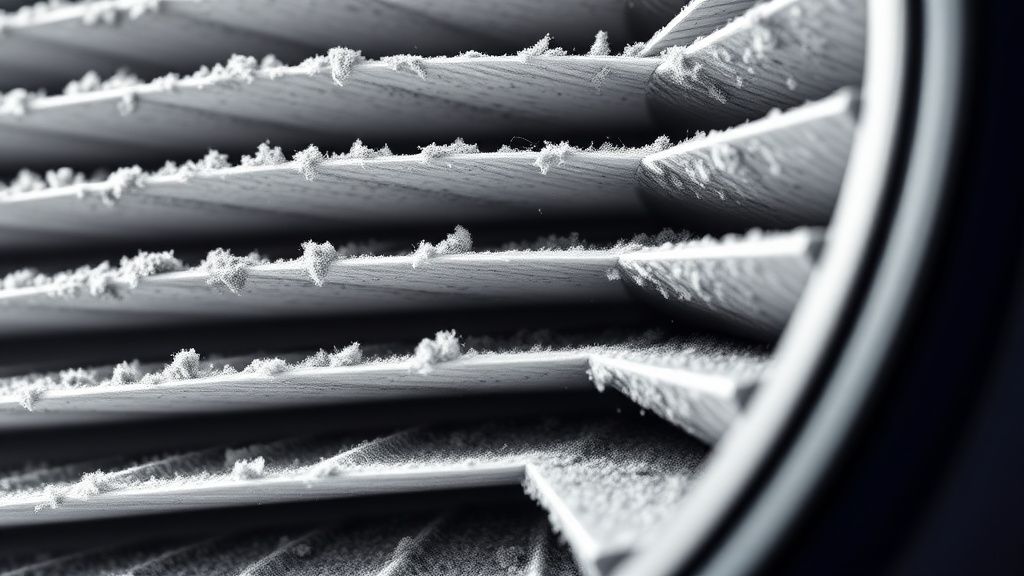
Many owners mistakenly believe the "washable" filter is a set-and-forget component. Even if you rinse it monthly, the fine dust eventually creates a permanent bridge across the filter's pores, increasing internal resistance.
- The Drying Error: Most failures originate from reinserting a damp filter. Moisture allows fine dust to cake into a concrete-like substance within the pleats. If your V15 smells like wet dog after a month, you are likely putting the filter back in while it is still damp, leading to mold growth and restricted airflow.
- The Seal Degradation: The rubber gaskets around the filter housing often accumulate hair and debris. Even a 1mm gap in these seals can cause a massive loss of suction due to air leaking into the system before it reaches the cyclonic separation chamber.
Systematic Troubleshooting: A Step-by-Step Field Guide
To restore the "out-of-the-box" suction, follow this hierarchy of intervention, approaching the task systematically from input to output, much like how a professional would approach repairing a leaking Kohler kitchen faucet.
- Step 1: The Wand and Bin Check. Detach the wand. Place your hand over the end of the machine. If the suction feels strong at the base of the bin but weak at the end of the wand, the blockage is in the tube. Look for high-density items like coins or pet hair bundles—these are notorious for snagging in the transition zones of the telescopic wand.
- Step 2: The Cyclone Crown. Use a soft brush to clean the metallic screen inside the clear bin. This is the "primary separation" stage. If this screen is coated in a layer of fine, oily dust (common in kitchens), the centrifugal force is being compromised.
- Step 3: The Deep Filter Clean. Do not just rinse it. Submerge the filter in lukewarm water, squeeze it gently, and leave it in a well-ventilated area for at least 24-48 hours. If you live in a high-humidity environment, consider keeping a spare HEPA filter to rotate them.
Real Field Reports: The "Ghost Clog" Phenomenon
On forums like Reddit’s r/Dyson and various vacuum enthusiast discord servers, a common point of contention is the "Ghost Clog"—a scenario where the machine reports a blockage, but the path is visibly clear.
"I spent three hours taking the entire cyclone head apart," writes a user in a popular Dyson repair thread. "I found nothing. It wasn't until I looked at the bottom of the bin seal that I saw a tiny crack in the rubber gasket. That tiny leak was enough to drop the pressure so much the sensor thought the pipe was blocked."
This highlights a fundamental vulnerability: the V15 relies on complex seals that are prone to mechanical fatigue. In high-usage households (e.g., those with multiple pets), these seals are subject to constant vibration and thermal expansion, which leads to micro-tears that are invisible to the naked eye but catastrophic for pressure-based sensor readings.
The Engineering Compromise: Sensor Sensitivity vs. Durability
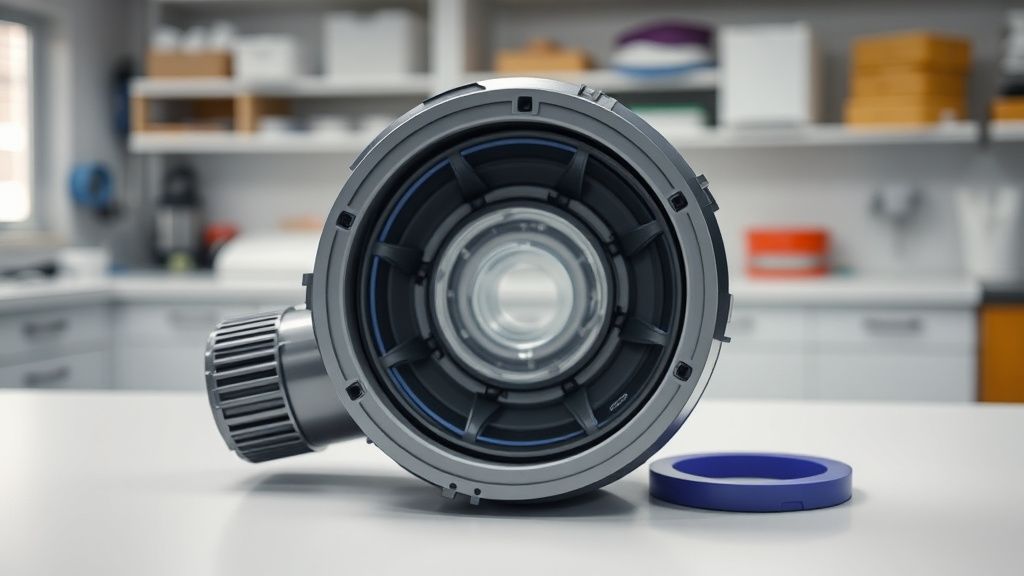
The V15 is essentially a computer that happens to be a vacuum. This brings us to the Piezo Sensor controversy. Critics argue that the sensor is a "gimmick" that prioritizes marketing data over actual durability. When the sensor fails, the vacuum often defaults to a low-power state or exhibits erratic behavior, regardless of the physical cleanliness of the machine.
Engineers at Dyson have long defended this as a way to extend battery life and motor longevity. However, the operational reality for the user is that there is an extra point of failure. If your machine is constantly toggling between suction levels during flat surface cleaning, it is likely the sensor is coated in dust. Using a compressed air canister (very carefully) to clear the sensor chamber can sometimes act as a "hard reset" for your suction logic.
Troubleshooting Hardware Entities: Beyond the Basics
If you have ruled out the filter and the blockages, the issue might lie within the Digital Motorbar head or the bin inlet valve.
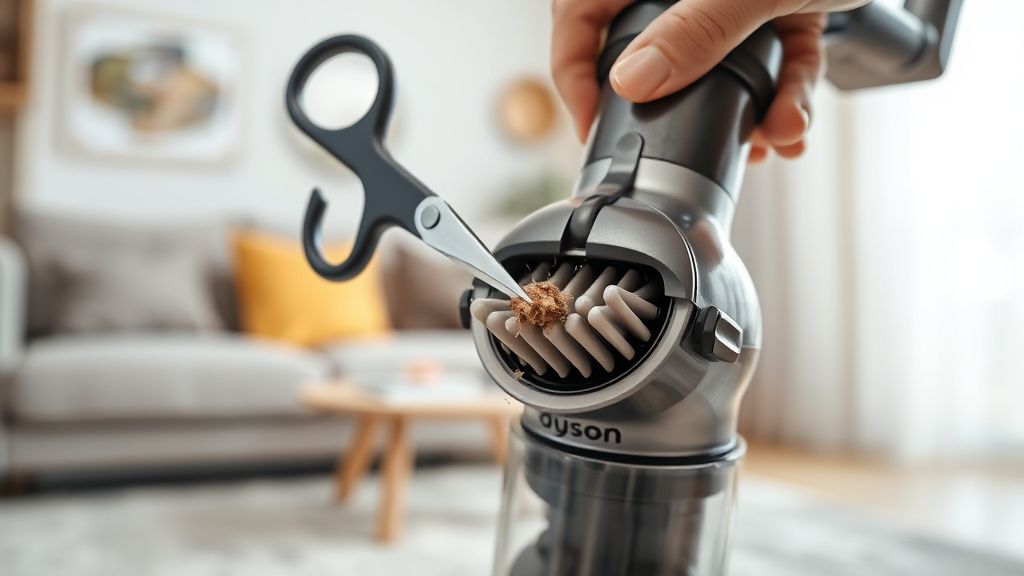
- The Brush Head Resistance: The V15’s motorbar is designed to detect resistance—that’s how it knows if it’s on carpet or hardwood. If the hair-removal vanes are clogged, the motor will throttle back to prevent the belt from snapping. Remove the brush bar and use a seam ripper to clear the hidden fibers wrapped around the internal bearings.
- The Inlet Valve: There is a flap in the bin inlet designed to stop dust from falling out. If this flap gets stuck in a semi-open position due to debris, it creates a turbulence zone, significantly reducing the efficiency of the cyclonic separation.
Counter-Criticism: The "Disposable" Design Debate
A recurring debate in the repair community is whether the V15 is designed to be truly serviceable. Critics point to the non-removable nature of the primary cyclone unit for deep cleaning as a "dark pattern" of design.
"The V15 is a masterpiece of engineering for the first 12 months," one lead technician stated in a widely circulated GitLab issue discussion regarding vacuum maintenance. "But the moment you need to deep-clean the internal cyclone array, you realize you're fighting plastic clips that are designed to fail if you try to open them. It’s an appliance designed for a 3-year lifecycle, not a 10-year one."
This observation is vital for users. If you are experiencing persistent suction loss that is not resolved by a filter clean, you may be hitting the physical limit of the machine’s design—specifically, the internal caking of the cyclone chambers that are not intended for consumer-level disassembly.
The Impact of Humidity and Material Science
It is rarely mentioned in official documentation, but geographic location plays a role in V15 performance. In high-humidity environments, household dust becomes sticky, adhering to the walls of the cyclone assembly much faster. This "stickiness" creates a coating that reduces the velocity of the air, directly impacting the machine’s ability to "detect" dust.
Users in coastal regions often report having to clean their cyclonic separators twice as often as those in arid, high-altitude regions. If you live in a humid area, consider upgrading to a HEPA filter that is slightly more breathable or increasing the frequency of your deep-clean cycles by 30%.
Managing Expectations: When to Call Support
There is a point where manual cleaning is no longer effective. If your V15 is giving you a "Blockage" error code but you have verified the airflow is clear, the problem is likely the PCB (Printed Circuit Board) interpreting the sensor data incorrectly.
Do not attempt to solder or modify the internal boards of a V15 unless you are an expert. The V15 contains a complex array of voltage-sensing components, and a mistake can easily brick the machine. If the sensor is indeed faulty, the cost of repair usually mandates a professional service.
Why does my Dyson V15 pulse and stop after a few seconds?
This is a classic "pressure switch" response. The machine is telling you it cannot move air. 90% of the time, this is a filter that is either dirty, damp, or not seated correctly. Check the filter first, then ensure the bin inlet flap is not obstructed.
How often should I truly deep-clean the Dyson V15?
Dyson suggests monthly, but "field" performance suggests that if you have pets or high-shedding rugs, you should perform a deep rinse of the filter every two weeks. The "washable" filter is an consumable item; expect to replace it every 12-18 months regardless of cleaning.
Can I use compressed air on the cyclone assembly?
Be very careful. While it helps dislodge fine dust that water can’t reach, high-pressure air can potentially damage the internal rubber seals or push dust deeper into the sensor chambers. Use short, controlled bursts rather than a continuous stream.
Is suction loss a battery issue?
Rarely. A failing battery will manifest as a shortened runtime or a machine that cuts out when on "Boost" mode. It will not cause a gradual, consistent loss of suction. If the machine runs for a normal duration but picks up nothing, focus exclusively on airflow and blockages.
Why does the sensor light stay on even after I clean the bin?
The Piezo sensor can sometimes get "blinded" by a fine film of dust or oil. If a manual wipe-down of the sensor intake area doesn't clear the error, you may be dealing with a software glitch. Try a full power cycle: remove the battery for 30 seconds, then re-seat it. This resets the logic board's calibration.
Should I use soap when washing the filter?
No. Use only cold or lukewarm water. Soap residue is extremely difficult to rinse out of the pleated fibers of a HEPA filter. Once the soap dries, it creates a permanent film that drastically restricts airflow and creates a sticky surface that attracts more dust immediately.
The Role of User Behavior in Maintenance
Ultimately, the longevity of your V15 Detect is a reflection of your cleaning habits. We often treat vacuums as "dumb" tools, but the V15 is a diagnostic machine. If it is struggling, it is because the operational environment has changed—perhaps you’ve introduced a new rug, moved to a dusty home, or simply haven't accounted for the accumulation of microscopic debris in the cyclone seals.
By treating the maintenance of your vacuum as a form of "system hygiene" rather than a chore, you move from being a frustrated user to an informed operator. Understand that the machine is a series of trade-offs: massive power and advanced sensing in exchange for a complex, sensitive airflow path that requires attention. When you respect the system's need for unhindered airflow, the performance difference is immediate and measurable.