
If your Weber Genesis fails to spark, the issue is rarely a "broken" grill; it is almost always a breakdown in the continuity of the ignition circuit, much like when an EGO Power+ Blower keeps stalling and requires DIY troubleshooting. Focus first on the battery connection—ensure the cap is tightened—then inspect the ceramic igniter electrode for grease buildup or hairline cracks. If the wire is disconnected or the module has suffered thermal fatigue, replace the module, not the grill.
The Weber Genesis is widely regarded as the "Toyota Camry of backyard cooking"—reliable, parts-available, and structurally sound. Yet, every summer, tens of thousands of users find themselves standing over their stainless steel monument to outdoor dining, pressing a button that yields nothing but the hollow, rhythmic click of plastic, a frustration similar to when a Craftsman V60 mower won't start due to power and safety failures. The frustration is not just about the convenience of electronic ignition; it is about the sudden transition from "grill master" to "someone fiddling with a match while the guests look on."
The Engineering Reality of Piezoelectric and Battery-Powered Ignitions
To understand why these systems fail, you must first stop viewing the Genesis as a single machine and start viewing it as a delicate electrical circuit living in a harsh, corrosive environment. Most modern Genesis models utilize an AA or AAA battery-operated pulse ignition system. Unlike the older, manual "piezo" clickers that relied on physical force to strike a crystal, modern pulse modules are essentially small, high-voltage transformers.
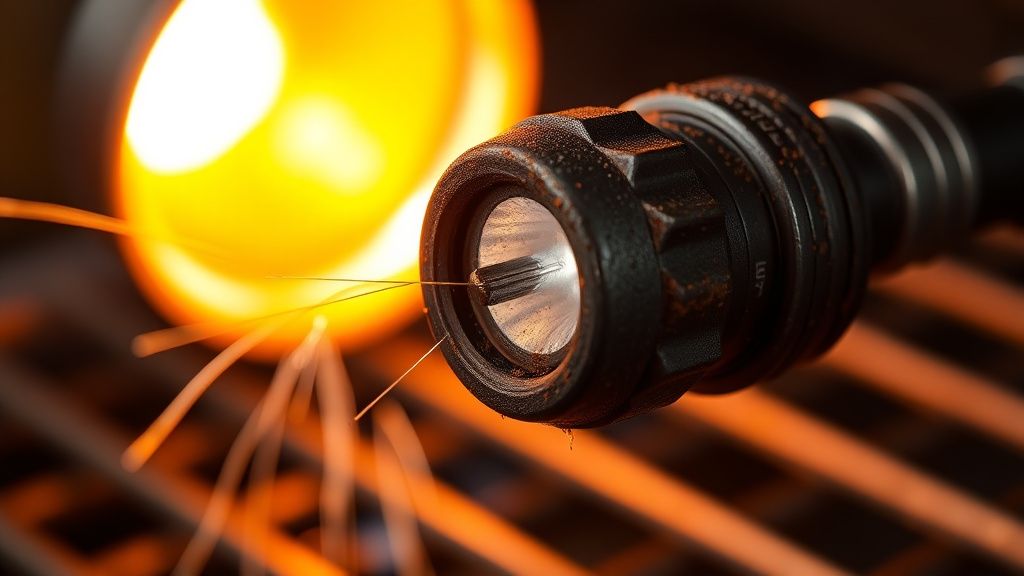
When you press that button, you are closing a circuit that sends a rapid series of high-voltage sparks across a gap near the burner tube. The physics of this spark depends entirely on the path of least resistance. If that path is obstructed by a microscopic layer of carbonized fat or a displaced wire, the spark will simply refuse to jump.
Operational Failure Point: The Battery and Module Interface
The most common point of failure is, ironically, the one users ignore: the battery cap, a problem akin to troubleshooting a dead DeWalt 20V battery before buying a new one. On many Genesis series, the igniter button doubles as a battery compartment cap. It is made of plastic, threaded into a metal or plastic bezel. Because it sits on the exterior of the grill, it is exposed to rain, humidity, and the occasional blast from a pressure washer.
- The Oxidation Trap: If the battery contacts inside the module exhibit even a slight white or green film, conductivity drops. Even if the battery is "new," the resistance caused by surface-level corrosion at the contact point can prevent the module from delivering the 3–5 volts required to trigger the pulse.
- The "Tightening" Myth: Users often report that their igniter "magically" works if they push on the button harder or crank the cap with pliers. This isn't magic; it’s a temporary bypass of poor contact. If your button requires a "firm press," your spring-loaded contact inside the battery box has likely lost its tension or has become fouled.
Field Report: The "Grease-Bridge" Phenomenon
We spoke with a lead technician from a specialized appliance repair group in the Midwest, who noted a recurring issue in high-frequency users: "The igniter electrode is a ceramic insulator. If you do a lot of high-fat searing, airborne lipid particulates condense on that ceramic. Over time, that thin layer of grease—and the carbonized soot from the flame—creates a conductive bridge. The spark doesn't jump the gap; it leaks across the ceramic surface back to the frame. It’s an electrical short-circuit caused by a bratwurst."
This is why scrubbing the electrode with a dry, clean toothbrush or a light pass with fine-grit sandpaper often solves the problem instantly. It’s not a mechanical failure; it’s an environmental contamination issue.
Troubleshooting the Wiring Harness: Behind the Control Panel
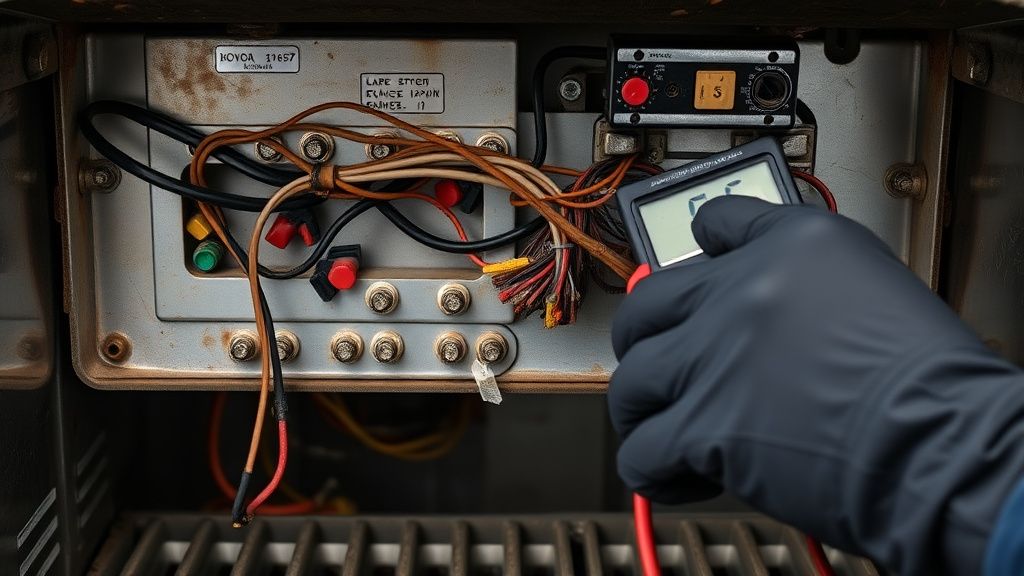
If the battery is fresh and the electrode is clean, you are likely looking at a failure in the harness. The Genesis design involves wires snaking behind the control panel, through the frame, and into the burner manifold area. Heat is the primary enemy here.
- Terminal Corrosion: The spade connectors (the small metal clips) that attach to the igniter module are prone to heat-induced oxidation. If your grill sits near the ocean, salt-air corrosion is almost certainly the culprit.
- The "Wire-Kink" Edge Case: During assembly or after a deep cleaning, wires can get pinched between the heat shield and the firebox. If the wire insulation is nicked, the high-voltage pulse will arc to the stainless steel chassis instead of the burner. You won't see this; it happens behind the facade.
When the Module Itself Dies: Is It Planned Obsolescence?
There is a persistent debate in DIY communities—such as the r/webergrills subreddit—regarding the longevity of the pulse ignition modules. Some argue that these components are under-engineered for the temperature fluctuations of a grill. Others argue that they are simply electronic components in a "non-electronic" environment.
The reality? Most modules are sealed units. If the internal capacitor fails, you cannot repair it. You replace it. The debate arises when users attempt to find aftermarket universal modules. "I bought a $10 module off Amazon," writes a user on a popular grill enthusiast forum, "and the mounting holes didn't align, and the spade connectors were a different size."
The "Workaround Culture" here is prevalent: instead of using the factory-designed module, many experienced grillers are now hardwiring automotive-grade push-button igniters. While these are more robust, they often lack the multi-port output required if your grill features a dedicated "Sear Station" igniter. Always prioritize the OEM (Original Equipment Manufacturer) part if you want to maintain the specific timing and spark gap efficacy designed by Weber’s engineering team.
Step-by-Step Diagnostic Protocol
If you are currently facing a dead igniter, follow this sequence. Do not skip steps, as they are ordered from "simplest point of failure" to "systemic breakdown."
1. The Power Continuity Test
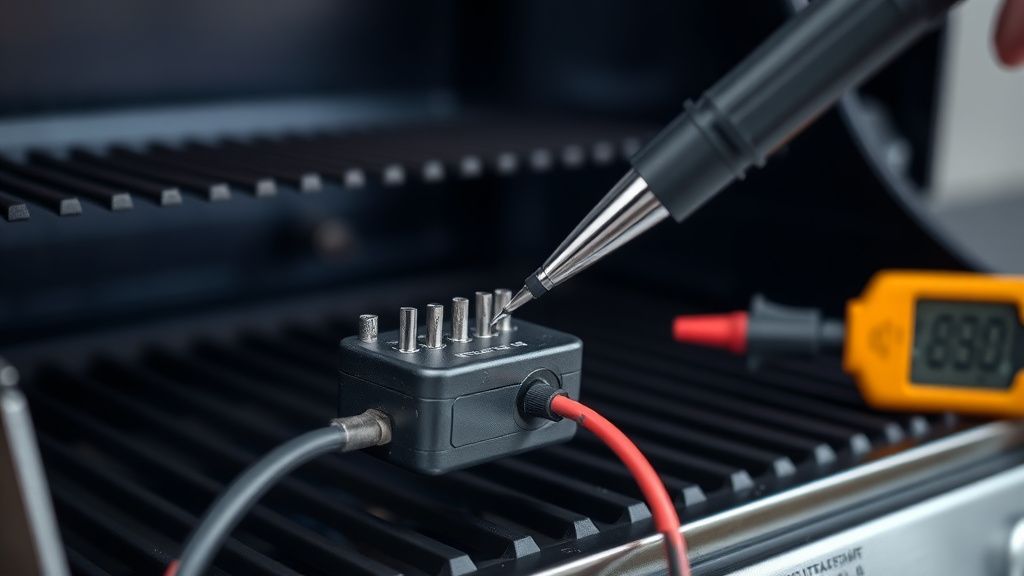
Check the battery. Do not just look at it. Use a multimeter set to DC voltage. A 1.5V AA battery that reads 1.2V might operate a remote control, but it may fail to cycle a high-voltage pulse module. Replace with a premium, high-leakage-resistant battery.
2. The Electrode "Gap" Inspection
Inspect the tip of the electrode. It should be positioned approximately 1/8th of an inch from the burner tube. If it is touching the burner, the spark will be grounded before it can ignite the gas. If it is too far away, the arc cannot jump. Adjust with needle-nose pliers, but be gentle—ceramic is brittle.
3. The Connector "Clean and Reseat"
Unplug the spade connectors from the module. If they look dull or grey, use a small wire brush or a nail file to clean them. Apply a tiny amount of dielectric grease (not conductive grease) to the connection. This prevents future oxidation.
Counter-Criticism: Why "Just Use a Lighter" is Valid Advice
There is a vocal minority in the barbecue world that advocates for abandoning the igniter entirely. They argue that relying on an electronic system is a crutch that masks potential gas flow issues. "If you can’t light your grill with a long-reach lighter, you shouldn't be lighting it at all," says one prominent BBQ blogger.
This perspective has merit. Using a lighter forces the operator to manually verify gas flow before introducing a flame, which is a safer operating procedure. However, for the average Genesis owner, the convenience of the igniter is a primary value proposition. The failure of the igniter is not a "catastrophic failure," but it represents a loss of the user experience that defines a premium product. When the igniter breaks, the grill feels "cheap."
The "Scaling Up" Problem: Multi-Burner Sync Issues
In larger Genesis models, the igniter module often serves 3 to 4 burners. When users complain that "only the middle burners light," they often blame the igniter. This is almost never the igniter's fault. If the igniter sparks, it sparks everywhere simultaneously (or through a sequential rail).
If only one burner lights, check the crossover tubes. These small metal channels are the first to clog with carbon or rust. If the gas can’t reach the spark, it won’t ignite. This is a common failure point that is frequently misdiagnosed as an electrical issue.
Managing Expectations: The Lifecycle of a Genesis
No amount of maintenance will make an ignition module last forever. You should expect an ignition module in a frequently used grill to last 3 to 5 years depending on climate. If you live in a coastal area, that timeline shrinks to 2 years.
Pro-Tip: If you are storing your grill for the winter, remove the battery. Batteries left in the module during freezing winters are prone to leakage, which will destroy the internal contacts of the module—a non-warranty, non-repairable death sentence for the component.
Q: Why does my igniter click, but no flame appears?
The clicking sound confirms the module is receiving power and the circuit is closing. If no flame appears, it is a gas-flow issue, not an ignition issue. Check if the burner ports are blocked by debris or if the crossover tube is obstructed. Additionally, ensure the gas supply is turned on and that you have purged the lines.
Q: Can I use a generic igniter module from a hardware store?
While technically possible, generic modules often lack the specific mounting interface and the multi-port configuration required for Weber Genesis models. You risk a sloppy installation that may not hold up to the heat of the firebox. It is almost always better to source the specific OEM part for your model number.
Q: My wires look fine, but the igniter is dead. What now?
If the battery is new and the connections are clean, the internal capacitor of the module has likely reached its end-of-life. These are non-serviceable components. Replacing the module is the only reliable fix. Ensure you take a photo of the wire configuration before disconnecting the old one to avoid confusion during the swap.
Q: Is the igniter covered under the Weber warranty?
Weber offers a comprehensive warranty, but igniters are often considered "consumable" parts under the terms of specific model warranties after the first year or two. Check your manual; however, in practice, most users find that replacing the module themselves is faster than going through the standard warranty claim process.
Q: Is it safe to leave the igniter button pressed?
Never hold the igniter button down for more than 5–10 seconds. Excessive "clicking" without ignition can cause gas to pool in the firebox, creating a significant "flashback" risk when the flame finally does catch. If it doesn't light in 5 seconds, turn the gas off, wait 60 seconds for the gas to dissipate, and try again.
Conclusion
The Weber Genesis is a system of compromises. It attempts to marry the ruggedness of a cast-iron firebox with the precision of gas valves and the convenience of electronic ignition. When one part of that chain—the igniter—fails, the entire illusion of the "push-button" lifestyle shatters. By understanding that your grill is an electrical environment susceptible to heat, grease, and corrosion, you move from being a frustrated user to an informed operator.
Maintenance of the ignition system is not about "fixing a broken thing"; it is about preserving the standard of convenience for which the product was purchased. Keep the ceramic clean, keep the battery fresh, and keep the connections tight. If you do this, the "click" will remain the reliable herald of your next meal, rather than the sound of a weekend plan going up in smoke.