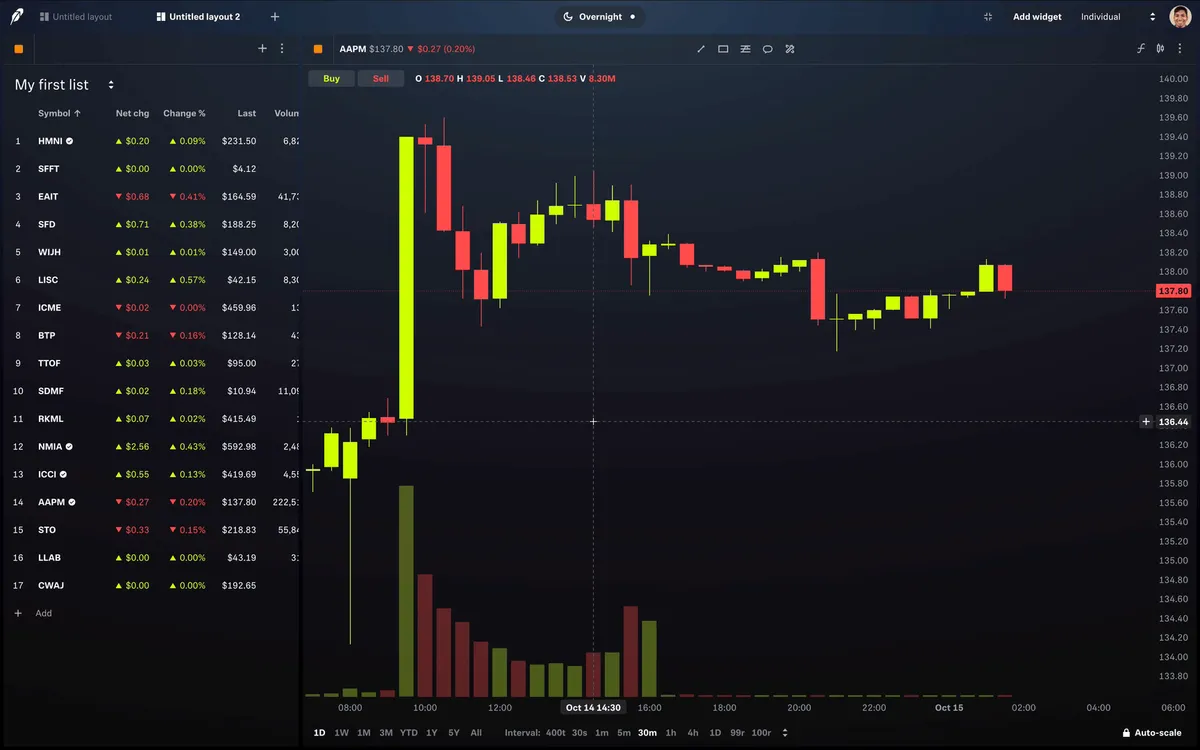
The interface is sleek, the colors are iconic, and the haptic feedback on your smartphone when a trade executes is engineered to trigger a dopamine release. Yet, for the retail investor in 2026, the silence—that agonizing, pixelated freeze on the Robinhood trading dashboard—is a visceral reminder that beneath the gamified veneer of modern fintech lies a fragile, multi-layered infrastructure prone to catastrophic latency. When the market moves, your connection doesn't just lag; it effectively evaporates.
We are living in an era where high-frequency trading (HFT) firms utilize microwave towers to shave microseconds off their execution times, while the average retail trader, sitting on a standard fiber connection, is often left navigating a black box of API failures and order-routing bottlenecks. When Robinhood—or any neobroker—reports a "connection lag," you aren't just experiencing a technical glitch; you are witnessing the collision of massive algorithmic volume and legacy server architecture that simply wasn't built to handle the volatility of a post-AI-market-sentiment world.
Anatomy of the Infrastructure: Why Order Execution Fails During High Volatility
To understand why your "Buy" button stops responding, one must look past the UI and into the plumbing of the system. In 2026, the reliance on Cloud-Native microservices has become a double-edged sword. While these systems are infinitely scalable in theory, they introduce "cold start" latency and distributed system coordination issues that become glaringly obvious during market anomalies.
When a news event triggers a sector-wide selloff, the internal request queue for order routing doesn't just increase linearly—it explodes exponentially. If the websocket responsible for your real-time price stream loses synchronization with the matching engine, the app enters a defensive state. It stops accepting trades because it can no longer guarantee the "price" you are clicking on is the price that exists in the dark pools or the lit exchanges.
The Latency Trap in API Gateway Orchestration
Engineers at major brokerages frequently deal with what they call "The Thundering Herd" problem. When the VIX index spikes, millions of concurrent users hit the same API endpoints. If the load balancer is misconfigured—or if the downstream data provider experiences a ripple effect from a central exchange outage—the error propagates back to your mobile device as a "Connection Error 404" or a silent, infinite spinning wheel.
"The reality is that we are building sophisticated frontends on top of aging exchange infrastructure. The bottleneck isn't usually our app; it's the handshake between our clearing firm's risk engine and the liquidity provider's API. When the market turns violent, those handshakes take milliseconds longer. In trading, milliseconds are an eternity." — A former backend engineer at a leading retail brokerage, speaking on condition of anonymity.
Field Report: The "Flash Freeze" of Q1 2026
In mid-February 2026, a cascading failure in a popular semiconductor ETF caused widespread panic among retail portfolios. Reddit’s r/Robinhood and several Discord trading communities turned into digital triage centers. Users were reporting that their portfolios were showing unrealized gains of 0% while the underlying assets were down 15%.
The "fix" for most was not a software update but a desperate, manual intervention: clearing the app cache, switching from 5G to a high-speed VPN to bypass ISP routing throttling, or, in the most extreme cases, abandoning the app entirely to call the execution desk—which, inevitably, was also swamped. The irony of the 2026 trading experience is that the most "digital" solution often ends in the most "analog" desperation.
How to Navigate and Mitigate Connection Lags
If you are currently facing a lag, the first step is to diagnose the source. Is it your hardware, your local network, or the platform itself?
- Isolate the Network: Use a tool like MTR (My Traceroute) to identify where packets are being dropped. Often, it is not your ISP, but a congested node between your provider and the AWS/Azure region where the broker hosts its services.
- Web vs. Mobile: In almost every documented instance of major brokerage downtime, the web-based desktop terminal (accessible via a browser) remains functional longer than the mobile application. The mobile app has to manage UI state, push notifications, and biometric authentication; the browser interface is a thinner layer.
- Order Type Discipline: During high-latency events, using "Market Orders" is financial suicide. The system is struggling to match your order; if it finally goes through after a 30-second delay, you will almost certainly be filled at an unfavorable "slippage" price. Always stick to Limit Orders when the market is unstable.
The Institutional Critique: A System Built for Profit, Not Resilience
There is a growing debate among financial analysts regarding the "Gamification of Trading" versus "Operational Integrity." Critics argue that companies like Robinhood have prioritized the aesthetic experience over the robust, high-availability architecture required for professional-grade trading.
The Information and 404 Media have both highlighted that while these platforms excel at user acquisition and behavioral nudging, their internal engineering teams are perpetually under pressure to keep costs low—often at the expense of redundant private data lines. When you pay "zero commission," you are the customer, but the order flow is the product. When that flow is interrupted, the platform’s business model breaks, and the "fix" often involves throttling traffic to preserve the integrity of the firm’s own internal ledgers.
"We see the community threads on Hacker News every time an outage occurs. The common consensus is that the infrastructure is 'held together with tape.' While that’s an exaggeration, it’s not far from the truth regarding how some of these systems handle extreme concurrency. They prioritize keeping the system from crashing entirely over ensuring every single user has a snappy, real-time experience." — Senior Systems Architect, Fintech Security Research Group.
Scaling Issues and the API Drama
One of the most persistent issues in the retail trading sector is the "API fragmentation" problem. Platforms rely on a mesh of third-party data providers (like Polygon.io or Alpaca) for live price feeds. If the provider suffers a bottleneck, the brokerage’s app reflects "frozen" data, even if the actual exchange is still trading.
When you see "Connection Lost," it is often because the brokerage’s backend is waiting for an acknowledgement from a third-party microservice that has timed out. The user, meanwhile, sees a spinning icon. This creates a feedback loop: the user, panicked, attempts to log out and log back in, forcing the brokerage’s authentication server to work harder, further degrading system performance.
The Future of Retail Reliability
Is a "lag-free" trading experience even possible? Not in a decentralized, internet-based market. However, we are seeing a shift toward "Offline-First" architectures in newer, niche trading platforms, which allow for pre-compiled orders that execute locally when a connection is restored. Until such paradigms become industry standard, the retail trader remains tethered to the whims of data center traffic.