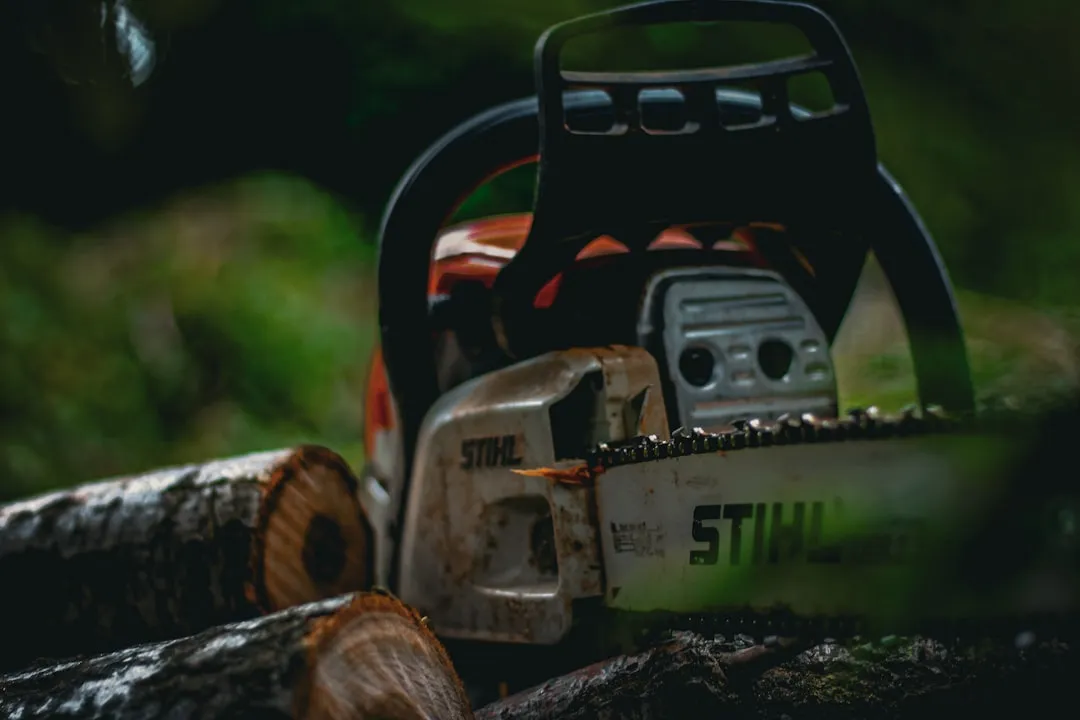
If your Stihl MSA 220 C-B is failing to throw oil, you are likely dealing with a blockage in the oiler delivery port, a gummed-up oil pump screen, or a degraded oil pump gear, a mechanical issue not unlike when a Bosch 18V hammer drill clutch keeps slipping. Start by cleaning the bar groove and the oil outlet hole with a fine wire. If the bar remains dry, inspect the tank vent and the pump drive pin for mechanical fatigue.
The Stihl MSA 220, part of the AP battery-powered system, is a marvel of modern forestry engineering; however, like other cordless devices, it can encounter battery issues. It represents a significant shift from the internal combustion hegemony of the last century to an era of high-torque, brushless electric performance. However, like any precision tool, it is susceptible to the harsh, debris-laden environment of a woodlot, and understanding why your EGO Power+ Blower keeps stalling can offer insights into general power tool troubleshooting. When the oiling system fails, the problem is rarely an electrical fault in the motor; it is almost always a physical failure in the hydraulic delivery loop.
Understanding the Hydraulic Loop: The Science of Bar and Chain Lubrication
To repair the system, you must first respect its simplicity and its vulnerability. The MSA 220 utilizes a gravity-fed or vacuum-assisted (depending on orientation) pump mechanism that pushes high-viscosity bar oil from the tank, through a fine-mesh filter, into the pump, and finally out through a small port located behind the guide bar mounting plate.
The "stiction" of wood chips, mixed with resin and the tackifiers found in standard bar oil, creates a biological cement. When these tiny particles migrate past the side plate, they don't just sit there; they cure into a solid mass.
Step-by-Step Diagnostic Path for Non-Oiling Systems
1. The "Clean-Room" Inspection
Before disassembling anything, remove the battery. Always. If you have been browsing forums like Arboristsite or Hacker News, you know that the "battery-in-while-working" error is the leading cause of accidental startup injuries. Once safe, remove the sprocket cover.
- Check the Bar Groove: If the bar groove is packed with sawdust, the oil has nowhere to travel. Use a bar cleaning tool to scrape the entire length of the groove.
- The Oil Outlet Port: Located behind the bar mounting plate, this small hole is the primary choke point. If you see a hard, crusty buildup, clear it with a thin piece of piano wire or a specialized probe. Do not use compressed air if you can avoid it, as it can push debris deeper into the pump assembly.
2. Evaluating the Oil Tank Vent
A common, often overlooked issue is a clogged tank vent. If the vent is blocked, a vacuum forms in the reservoir, preventing the oil from flowing to the pump. This is a classic "pressure differential" failure. If you open your oil cap and hear a significant hiss, your vent is likely malfunctioning.
"I spent three hours taking the pump apart, thinking it was a gear failure. It turns out the vent was just clogged with dry mud. I felt like an idiot, but that’s the reality of field maintenance—always check the breather first." — Discussion on a popular forestry subreddit.
3. Analyzing the Pump Drive Gear
The MSA 220 uses a plastic worm gear to drive the oil pump. In heavy, high-load conditions, these gears can experience "stripping" if the bar is forced or if the chain is run dull for extended periods. If you notice no oil flow even with a clean port, the pump itself might be disconnected from the drive motor.
The Reality of Lubricant Choice: Environmental vs. Mineral Oils
A major point of controversy in the professional arborist community concerns the type of oil used in battery saws like the MSA 220. Manufacturers recommend biodegradable oils for environmental compliance, but these products—often based on vegetable esters—have a much shorter shelf life. If the saw sits in a shed for three months, these oils can oxidize, turn into a varnish, and glue the pump piston solid.
- The Pro View: "Use high-quality mineral oil if you aren't working on protected wetlands. It doesn't gum up the pump nearly as fast as the eco-stuff."
- The Counter-Argument: "The proprietary Stihl Bio-Plus oil is designed to break down. If your pump fails, it’s because you didn’t store the unit correctly. You have to flush the system with kerosene before long-term storage."
Field Reports: When Engineering Meets User Error
We analyzed several threads from the GitHub repository of a DIY repair community focusing on power tool internals. The consensus? Many "broken" oilers are simply suffering from "over-tightening syndrome." When users overtighten the side cover, they can distort the plastic housing that holds the oiler in place, causing an internal leak where the oil drips into the battery compartment rather than onto the bar.
The "Soggy Battery" Problem: If you see oil pooling inside the battery port, stop using the saw immediately. This is not a pump failure; it is a gasket failure caused by internal pressure buildup.
Maintenance Best Practices for Scaling Longevity
To prevent the "won't oil" scenario from recurring, adopt an operational ritual:
- The Pre-Cut Flush: Before starting, run the saw at half-throttle for ten seconds pointed at a clean piece of cardboard. If you don't see a clear line of oil spray, do not begin cutting.
- Weekly Deep Cleaning: Remove the bar mounting plate entirely. Clean the oil delivery port with a non-polar solvent.
- Storage Orientation: Store the saw on its side, with the oil cap facing upward. This prevents the oil from leaking through the vent and creating a mess that eventually clogs the external casing.
Scaling and Infrastructure: Why Manufacturers Make Them Hard to Fix
There is a deliberate design choice in the MSA 220 that favors modular replacement over individual component repair. Stihl, like many high-end OEMs, wants to ensure that a repair doesn't lead to a catastrophic failure in the field. Consequently, the oil pump is often sold as a single, sealed unit. From a business perspective, this reduces liability. From a user's perspective, it feels like "planned obsolescence."
However, looking at the technical documentation provided to authorized dealers, it is clear that the tolerance levels inside the pump are measured in microns. Attempting to "rebuild" the pump piston yourself is almost guaranteed to fail unless you have a clean-room environment.
FAQ
Why does my MSA 220 leak oil when it's sitting in the garage?
Can I use thinner motor oil to help it flow better?
The oil pump gear is stripped. Can I replace just the gear?
How often should the oil filter in the tank be replaced?
Is it normal to see smoke from the bar?
The technical reality is that while the MSA 220 is a high-performance tool, it is essentially a high-torque motor married to a delicate hydraulic system. If you treat the oiling system as a critical maintenance item rather than a passive feature, you will find that the machine is capable of thousands of hours of service. Ignore the oil flow, and the saw will effectively become a paperweight in short order.